| Total Weight |
0.480 kg |
| Weight without Saya |
0.363 kg |
| Blade Weight |
0.201 kg |
| Full Blade length (Toshin) |
30.40 cm |
| Nagasa |
21.30 cm |
| Nakago Length |
9.10 cm |
| Sori (curvature) |
0.2 cm |
| Kissaki Length |
1.94 cm |
| Moto Haba |
2.50 cm |
| Saki Haba |
1.54 cm |
| Moto Kasane |
A = 0.71 cm
B = 0.52 cm |
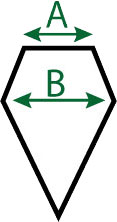 |
| Saki Kasane |
A = 0.52 cm |
| Curvature |
Mu Sori (without curvature) |
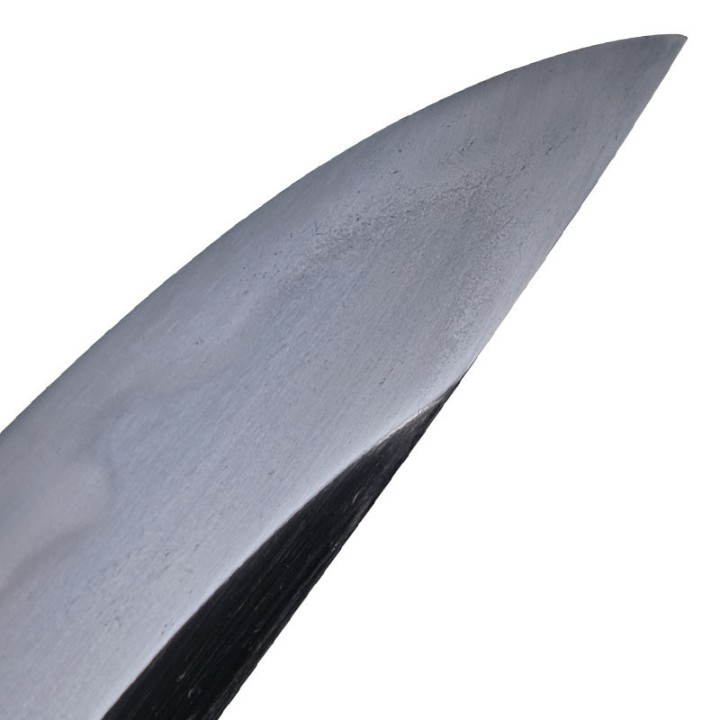
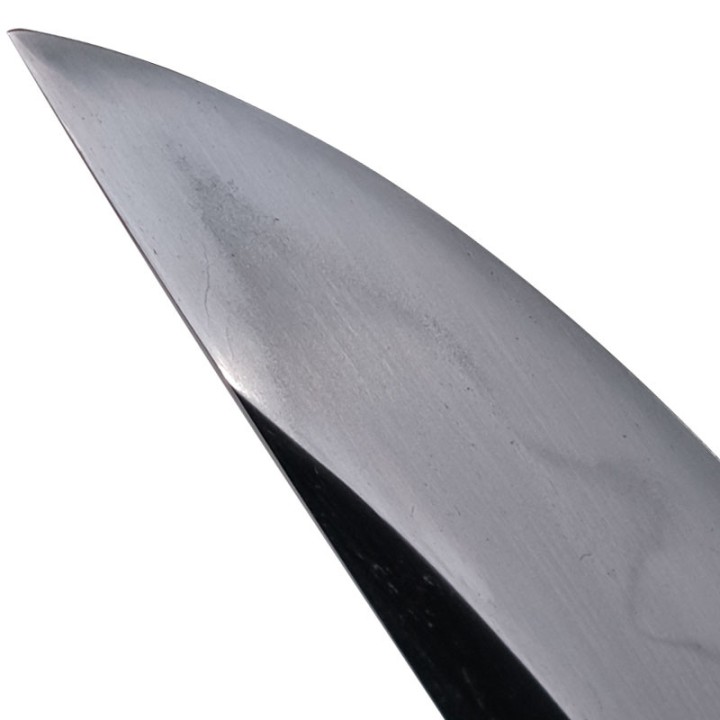
| Type Kissaki |
O Kissaki |
| Blade Structure |
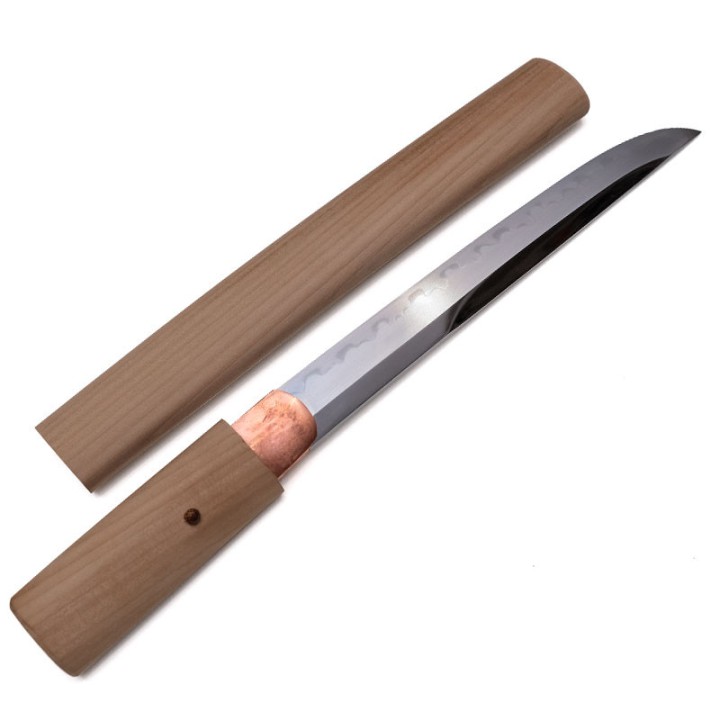
U No Kubi Zukuri (Cormorant neck shape) |
| Mune |
Iori Mune (triangular) |
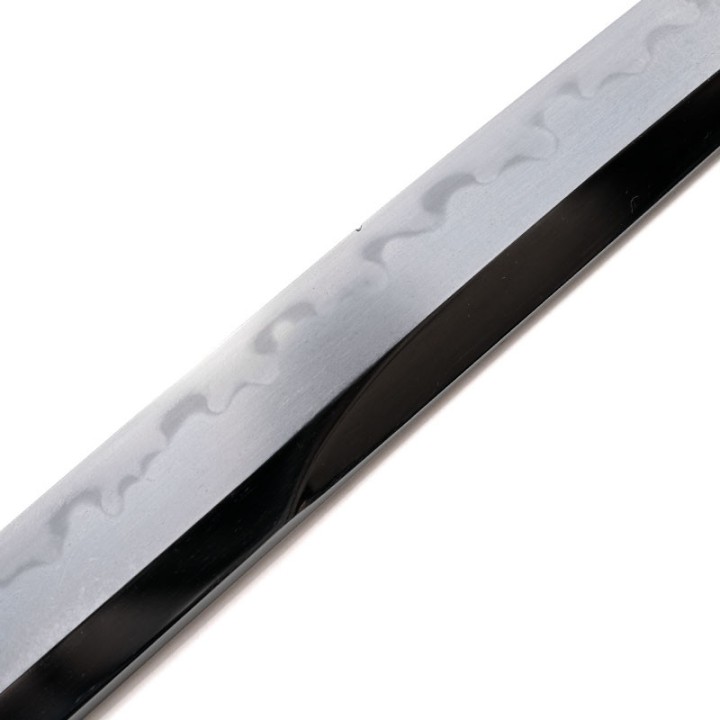
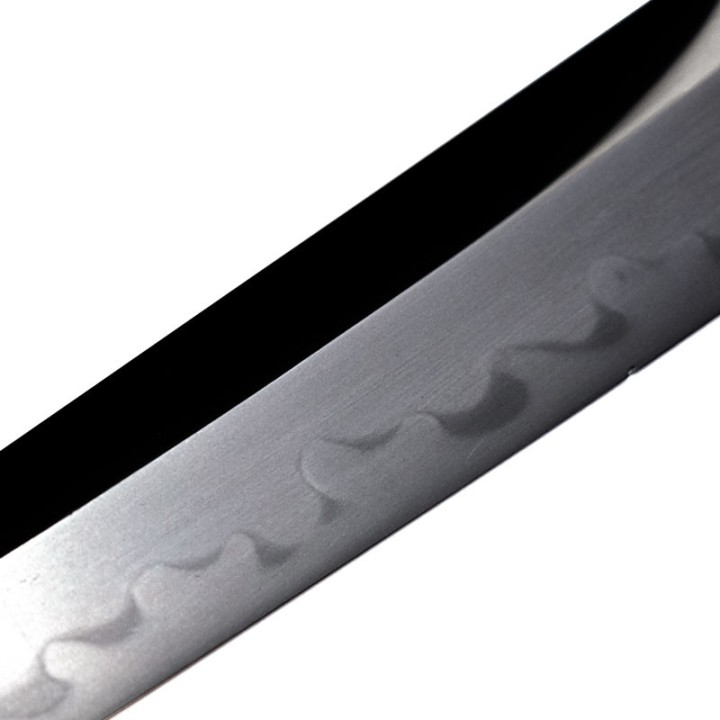
| Hamon |
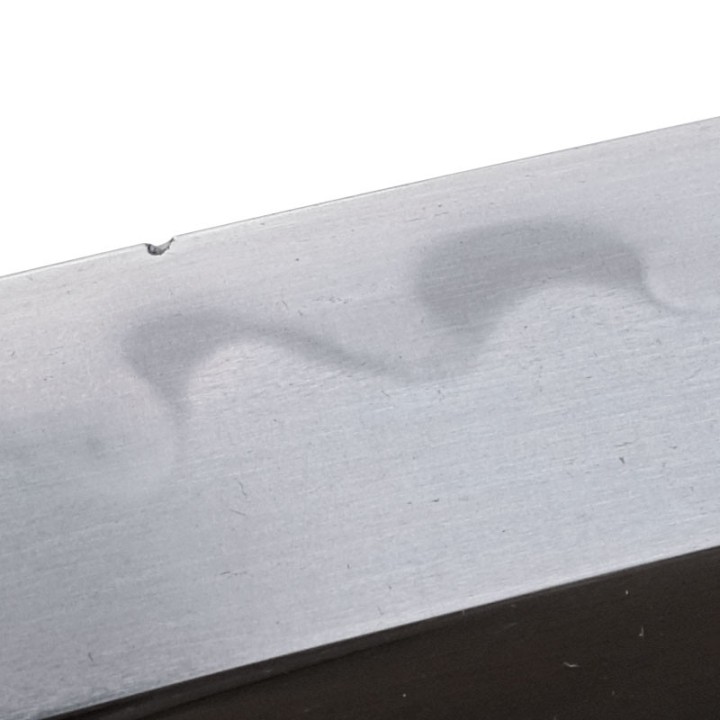
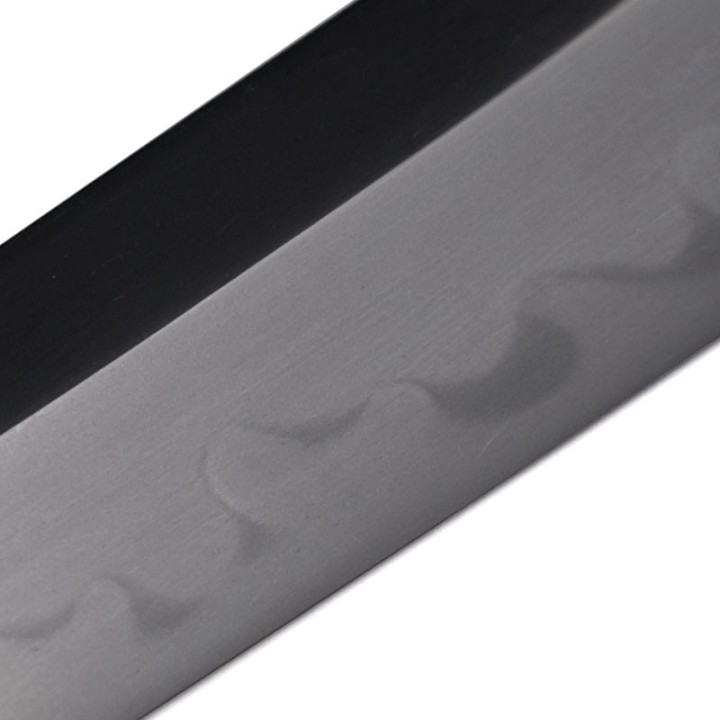
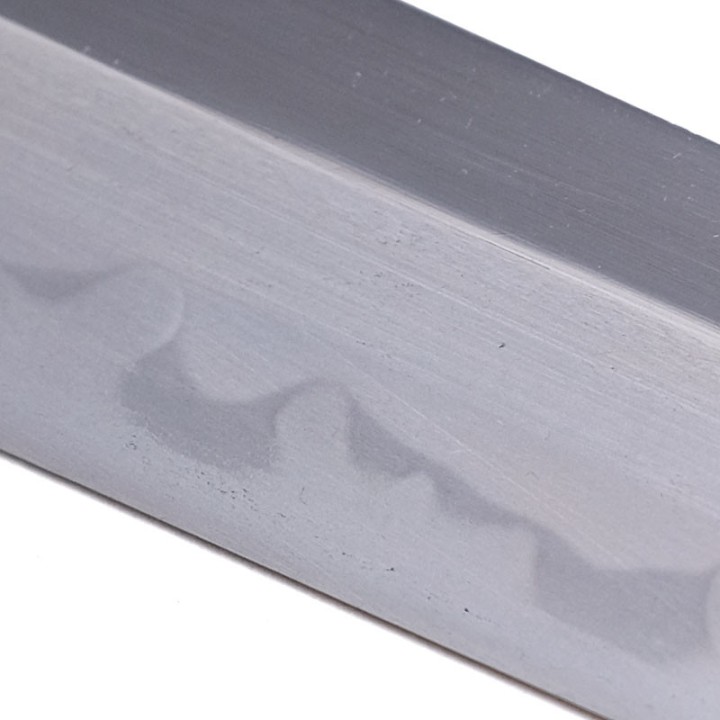
Mimi Gata type Gunome (ear shape) |
| Hada |
Ko Itame very thin, almost Muji |
| Boshi |
Omote: Ko Maru with Kaeri
Ura: Ko Maru pointed Kaeri
(Kaeri: return of quench along the Mune) |
| Nakago |
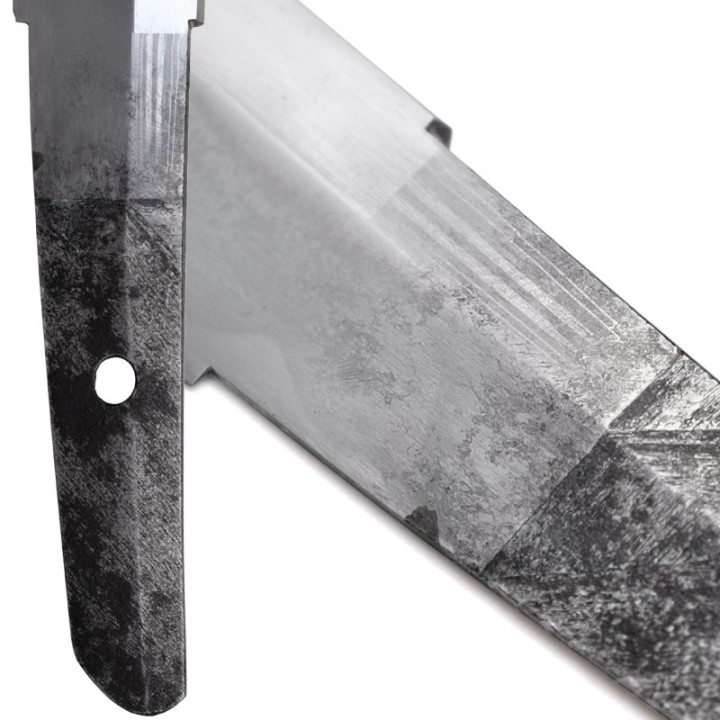
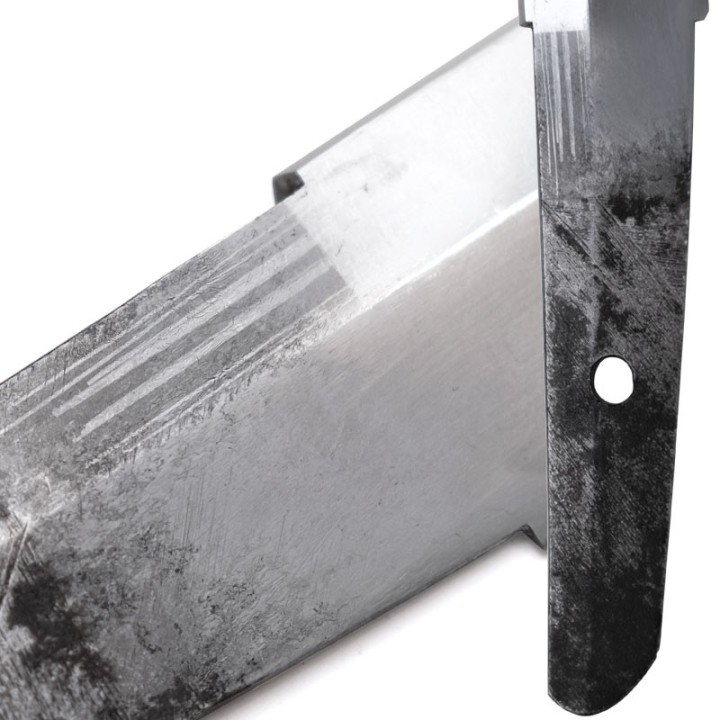
Mumei (Unsigned), 1 Mekugi Ana, Futsu Gata Classical Form, Yasurime O Sujikai (Pronounced Oblique), End in Ha Agari Kurijiri (U Dissymmetric) |
| Saya |
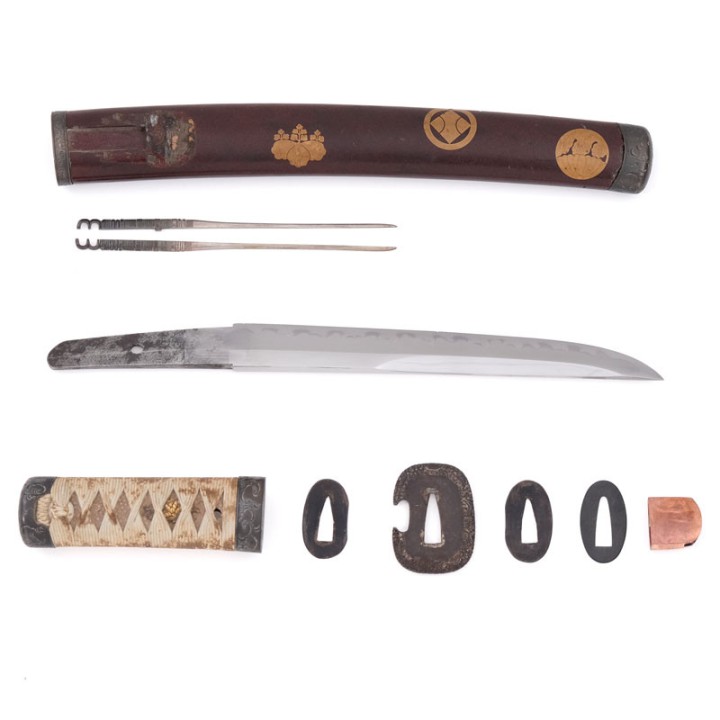
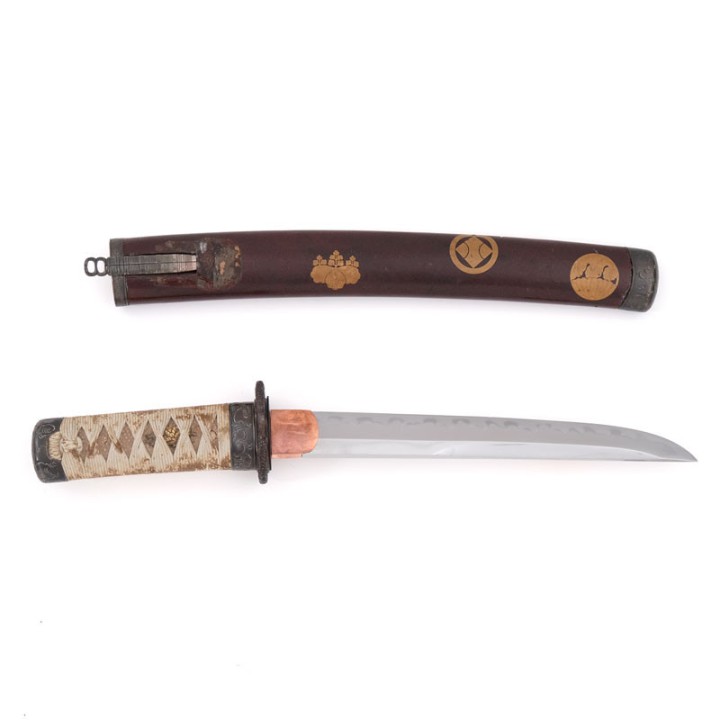
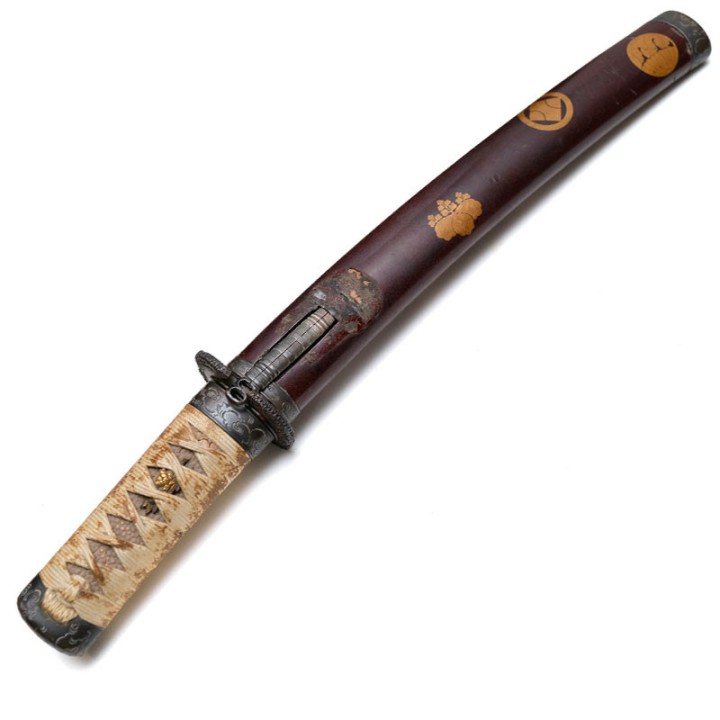
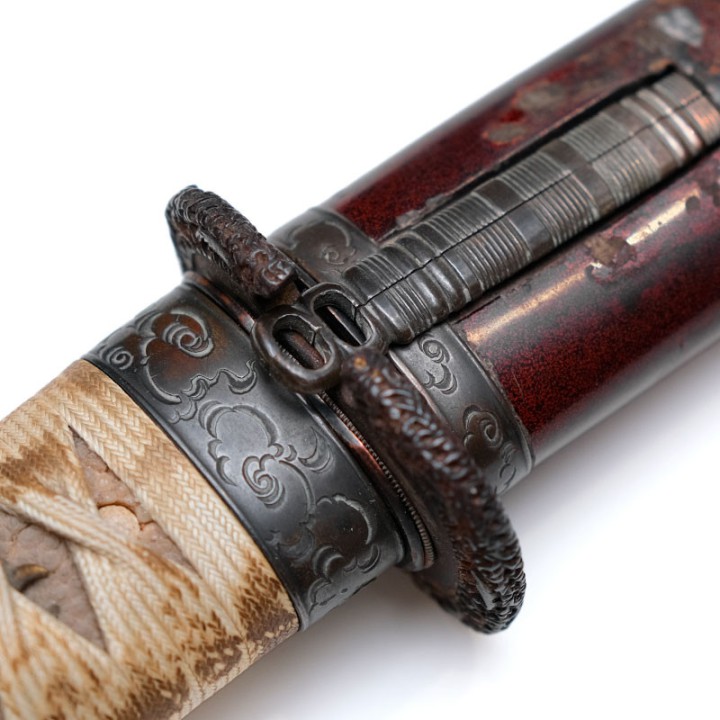
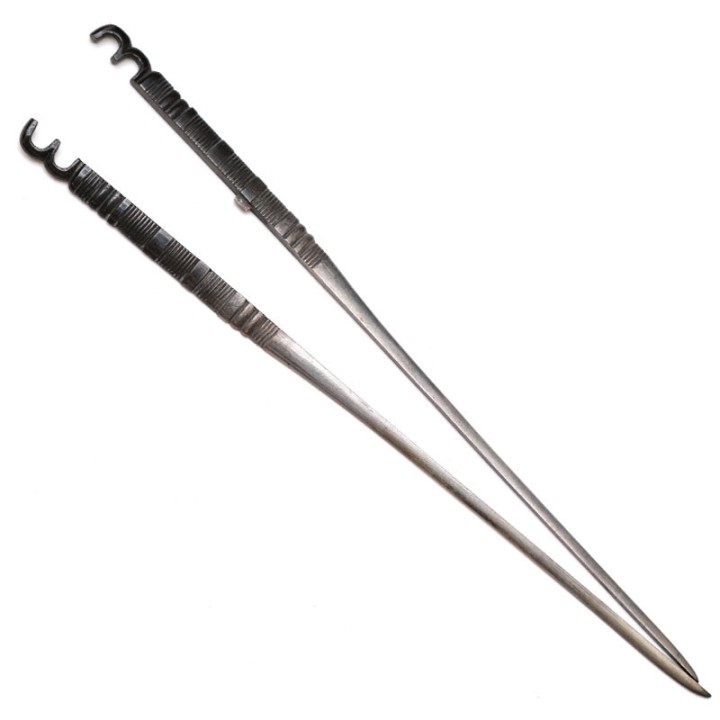
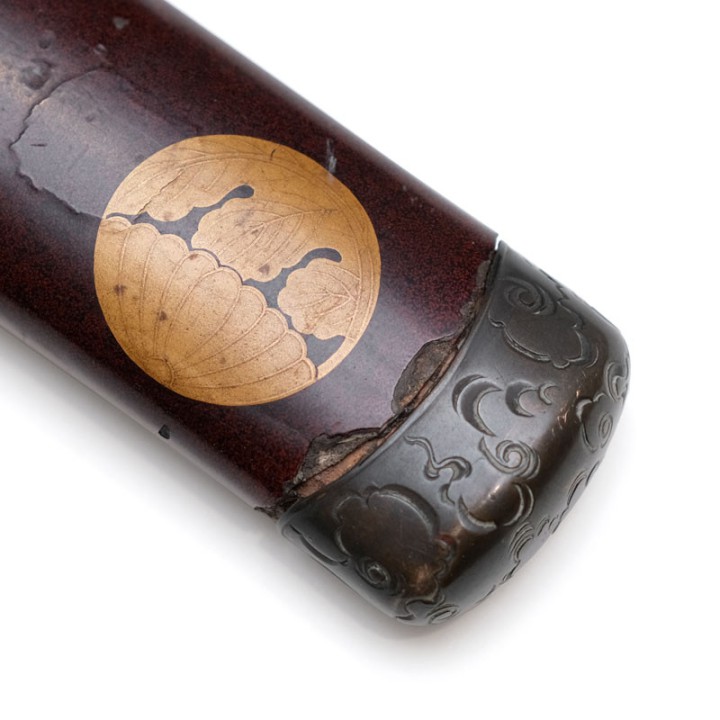
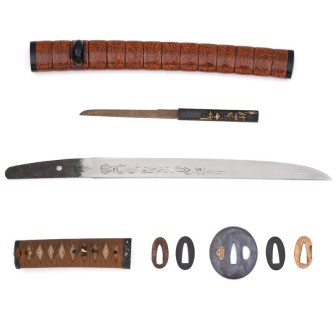
Weight 100g, Length 29.8cm, Dark burgundy lacquer with black dots, Presence of golden Mon in Maki-e, Kojiri and Koiguchi in black patinated copper with cloud patterns (following with the Fuchi Kashira. Presence of a silver-plated copper Wari Kogai, composed of 2 parts, weight 17g. |
Tsuka
&
Tosogu
(Tsuba,
Menuki,
Fuchi Kashira) |
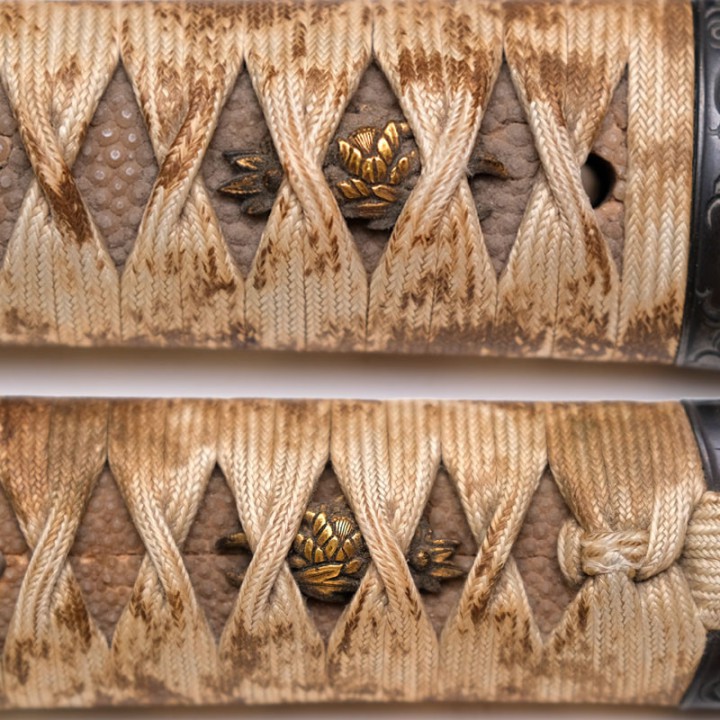
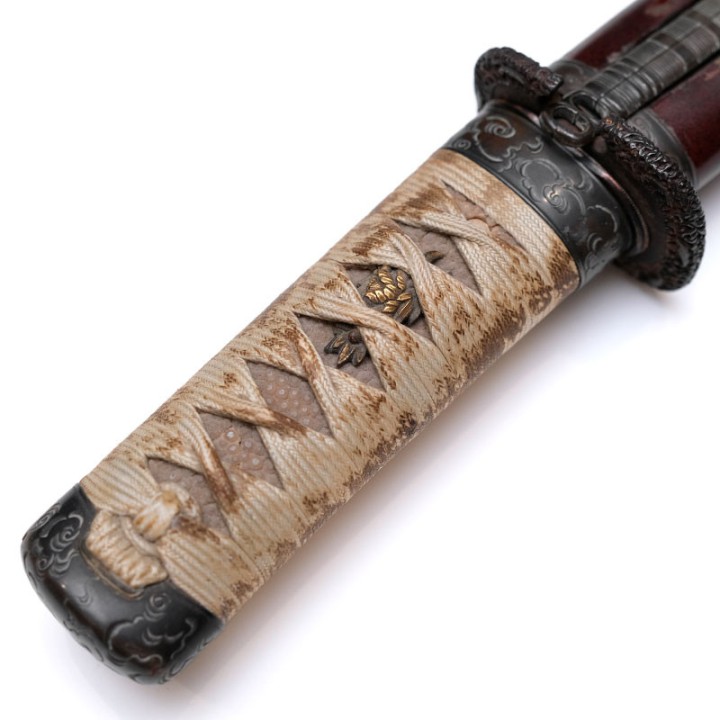
- Tsuka: Weight 76g, Length 11.77cm, Woven Tsumami maki in white silk, Same whole, Golden Menuki with floral pattern, Fuchi Kashira in black patinated copper with cloud pattern (followed by Koiguchi and Kojiri).
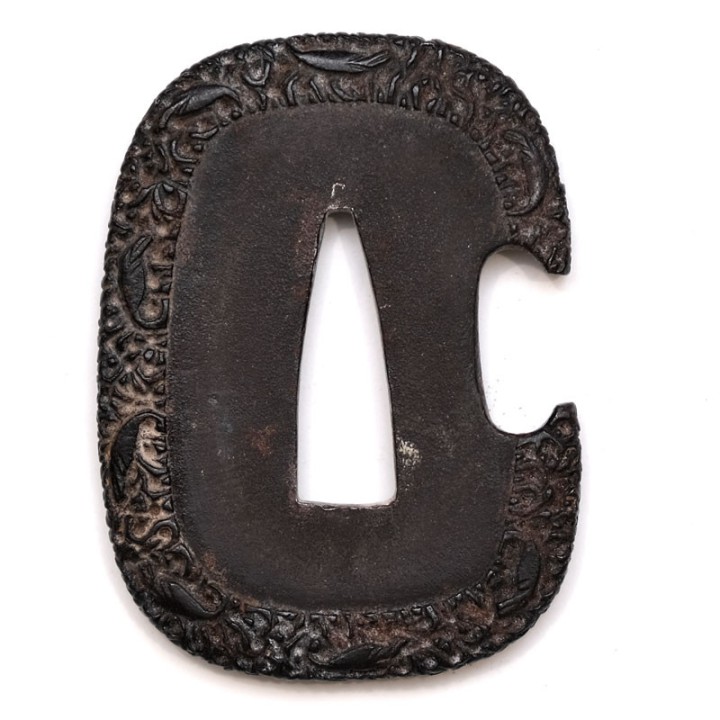
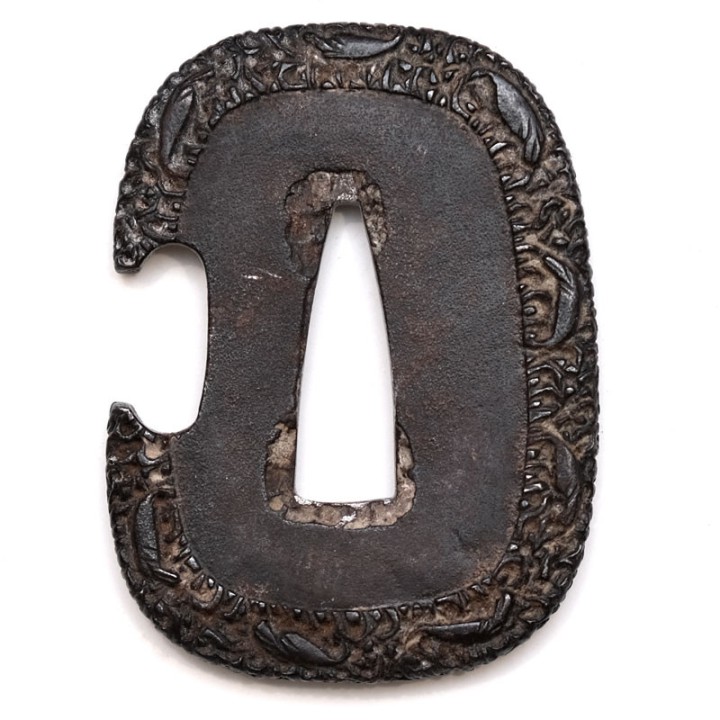
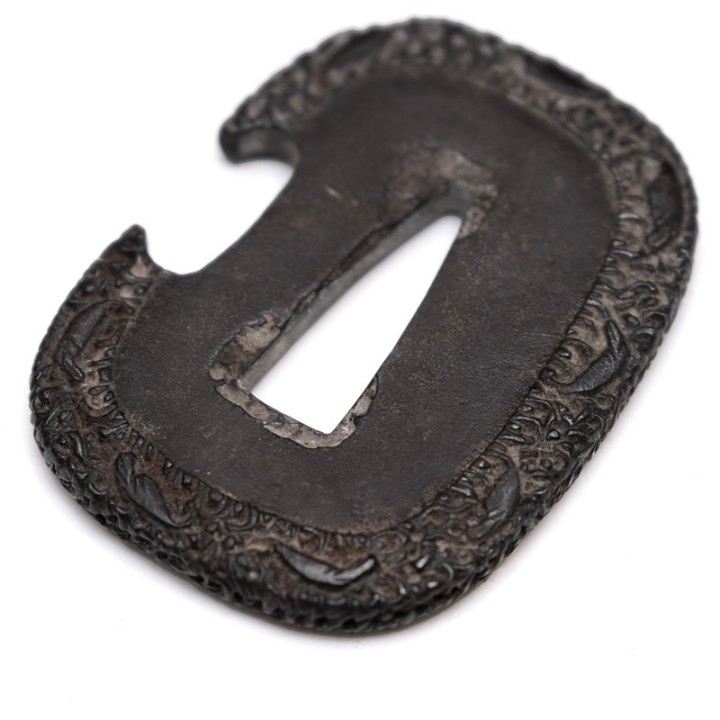
- Tsuba: Weight 51g, Dimensions 5.20 x 4.2 x 0.42cm, Aori Gata Shape (convex quadrilateral), Maru Mimi Border (rounded) with Nanban type pattern with squid patterns on Karakusa background (ivy).
- Habaki: Weight 17g, in copper, Muji (without patterns).
- Seppa: Total weight 16g (3 Seppa), black patinated copper. |
Study
&
Team Review |
This piece is a beautiful set from the 19th century.
The shaped blade U No Kubi 鵜の首, or ‘Cormorant neck’, is a tribute to ancient times. This type of blade is indeed typical of the late Kamakura period 鎌倉時代 (1185-1333) and especially during the Muromachi period 室町時代 (1336-1573). These are elegant blades, and especially very robust, made for the battlefield in armor.
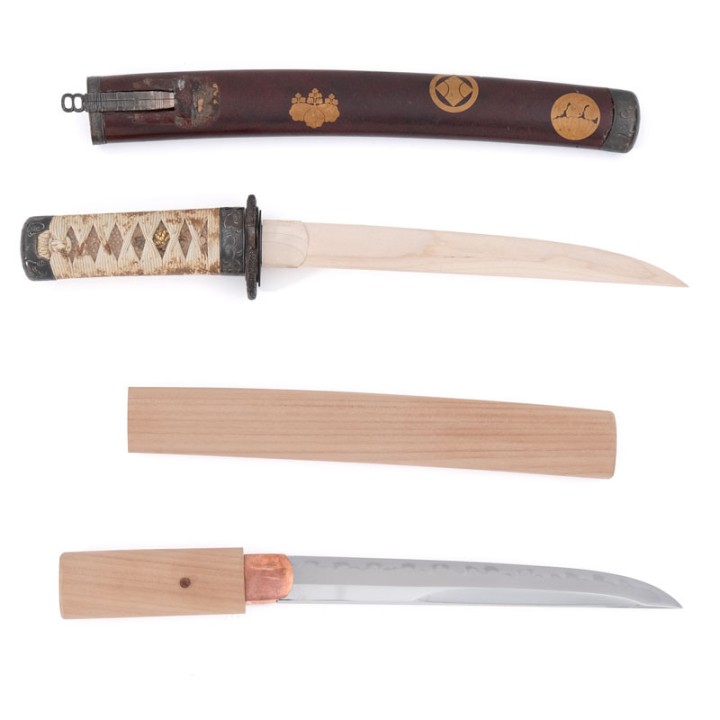
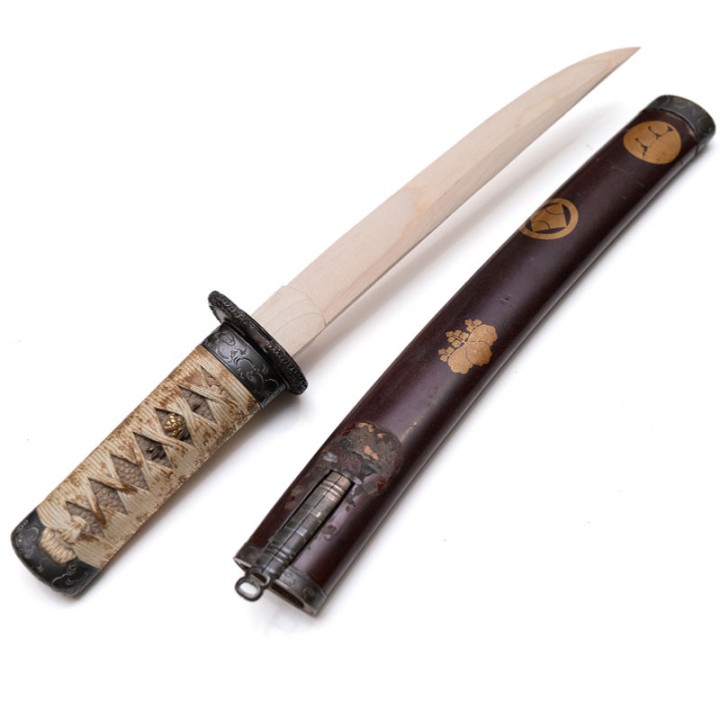
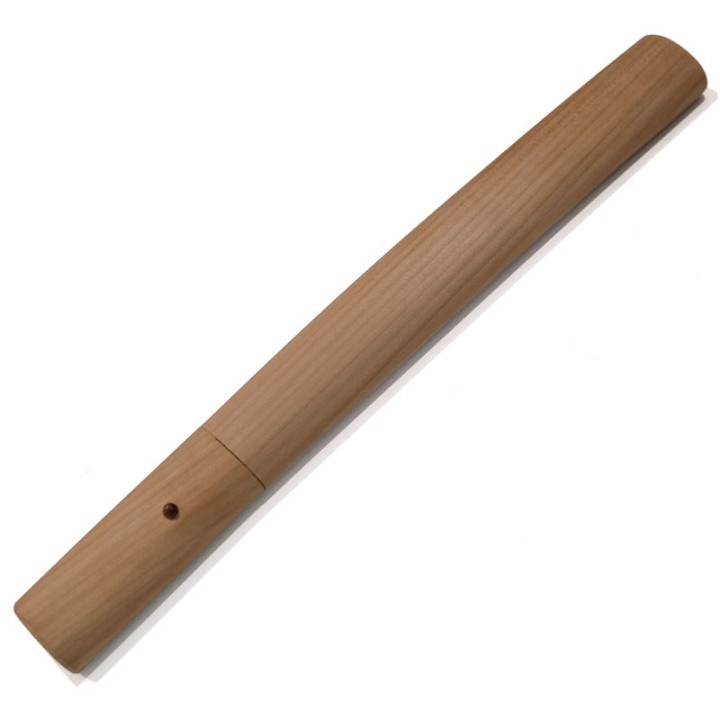
We had this blade repolished, and put it in Shirasaya for better preservation. We wanted to preserve the assembly in its condition, to keep it authentic.
This assembly is also very elegant, with its white silk braiding and dark burgundy lacquer.
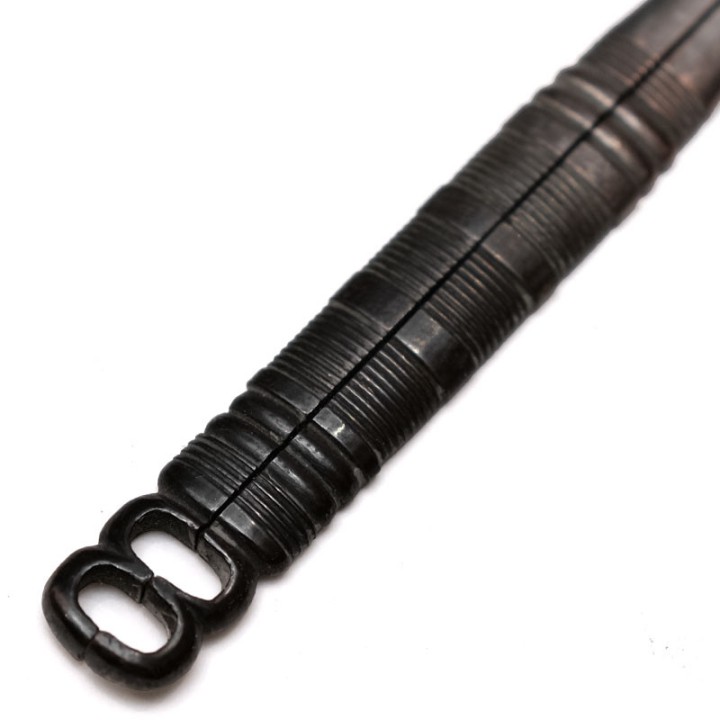
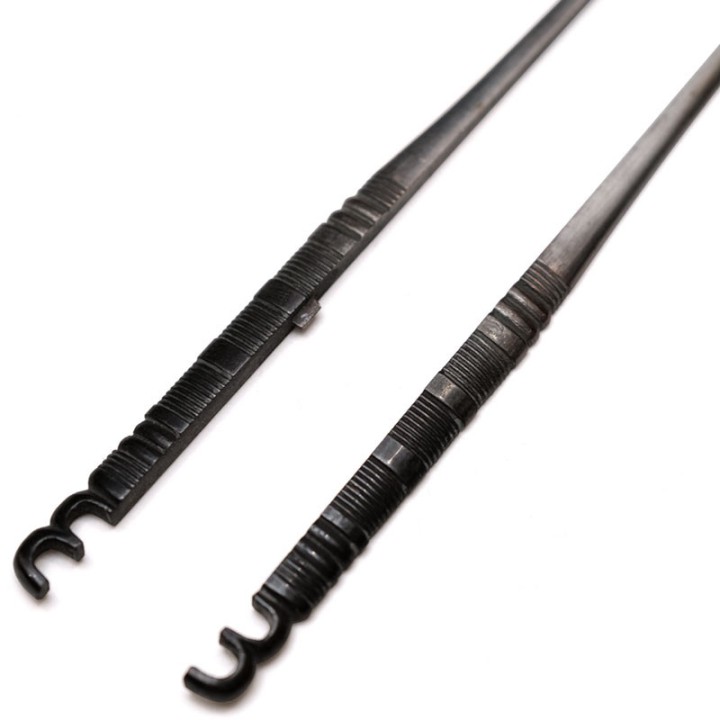
The Wari Kogai 割笄 is a Kogai that divides into two parts, in the manner of Japanese chopsticks. The Kogai was used to clean the ears and as a hairpin. It was also simply an accessory to show the richness of the assembly and its owner.
The Wari Kogai, Kogai in two parts, can also be interpreted as a representation of the two ritual wands used in Shinto and Buddhist religious ceremonies, the Gomabashi 護摩箸.
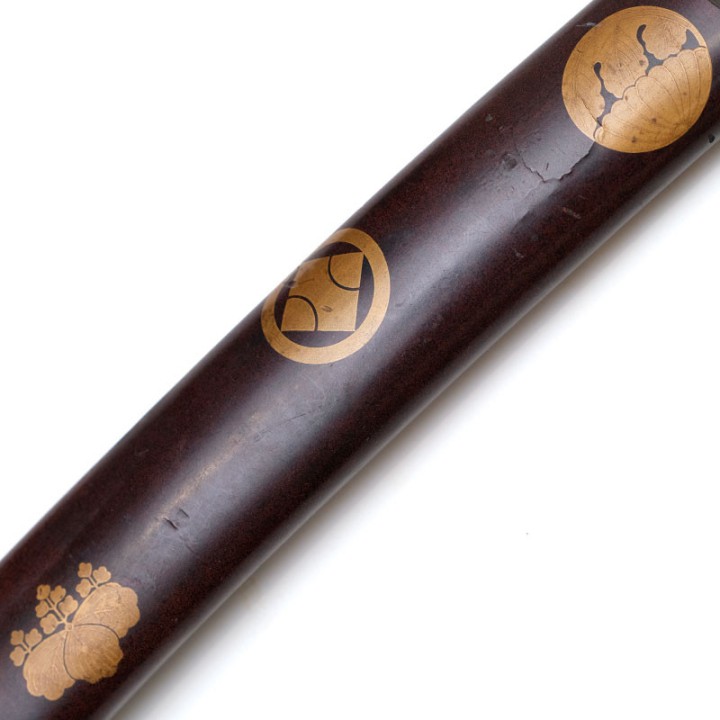
On the sheath, we find 3 Mon, family heraldic symbols also called Kamon.
The Gosan No Kiri 五三桐, depicts a paulownia leaf and 3 flowering branches of 3-5-3 flowers. This composition, widely used during the Edo period, is today the symbol of the headquarters of the imperial guard.
The Han Kikuba 半菊葉, represents a half of chrysanthemum flower topped with leaves. The chrysanthemum represents the emperor and the imperial family. It is also a symbol of eternity and happiness.
|