| Total Weight |
1.280 kg |
| Weight without Saya |
1.040 kg |
| Blade Weight |
0.763 kg |
| Full Blade length (Toshin) |
89.60 cm |
| Nagasa |
68.40 cm |
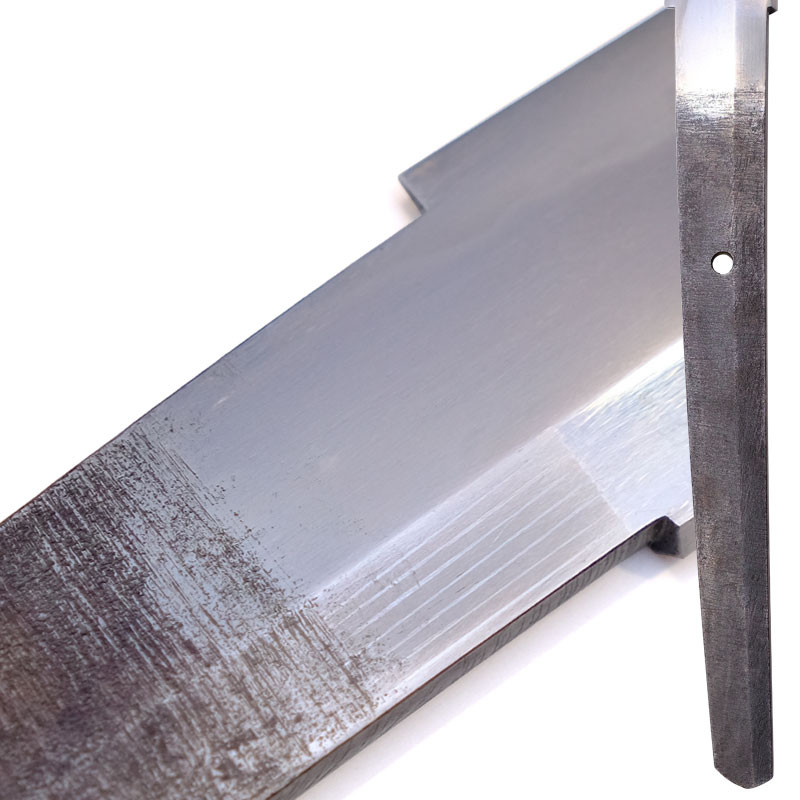
| Nakago Length |
21.10 cm |
| Sori (curvature) |
1.92 cm |
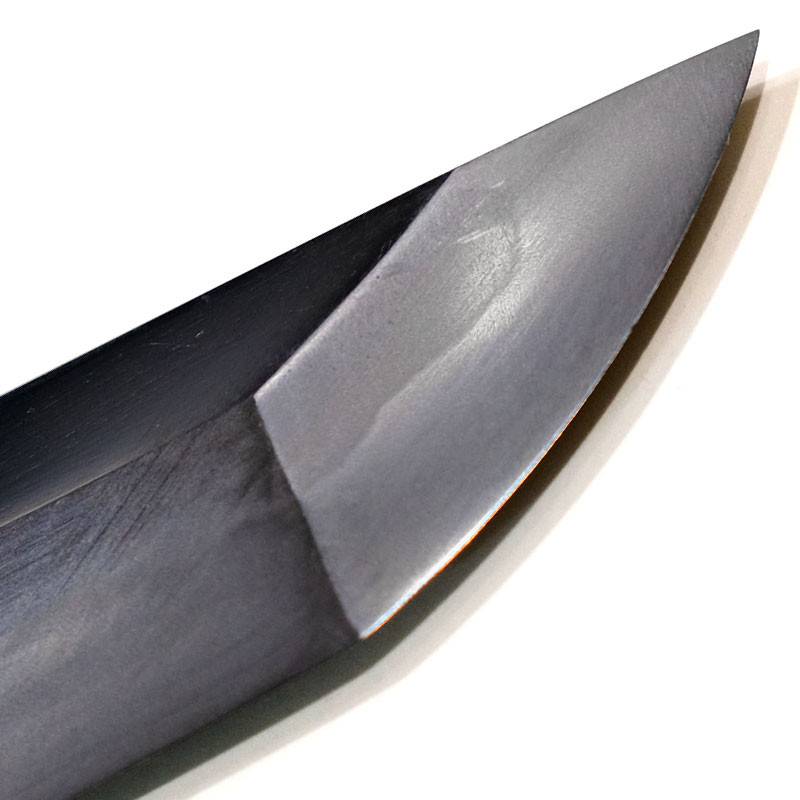
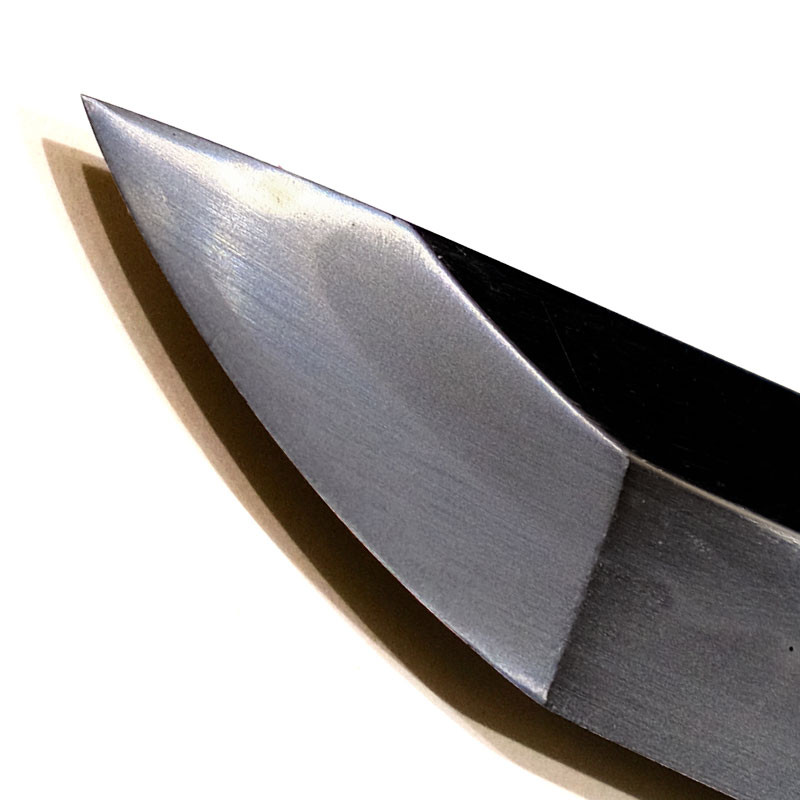
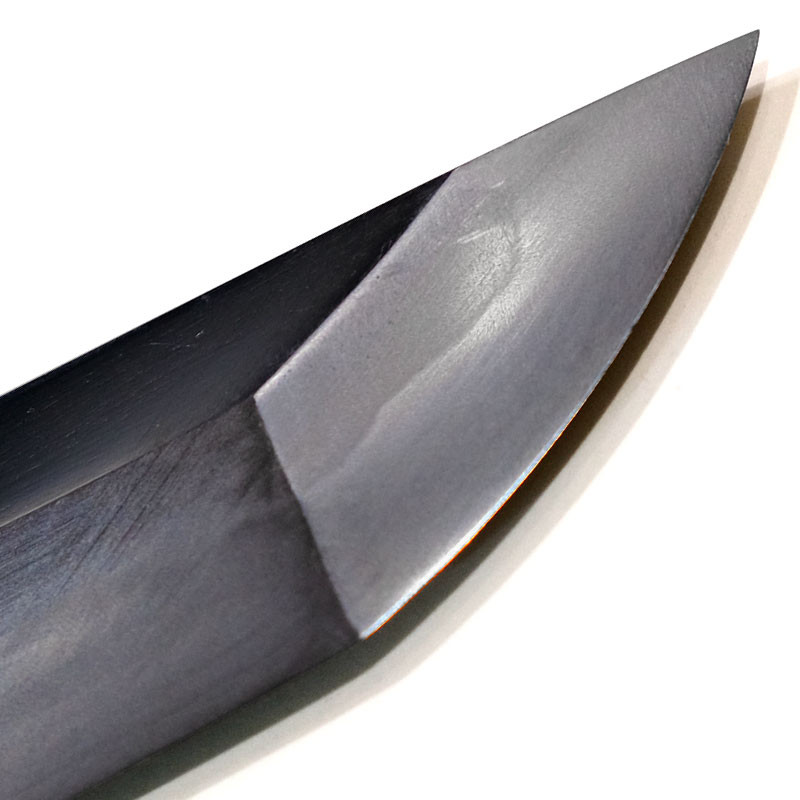
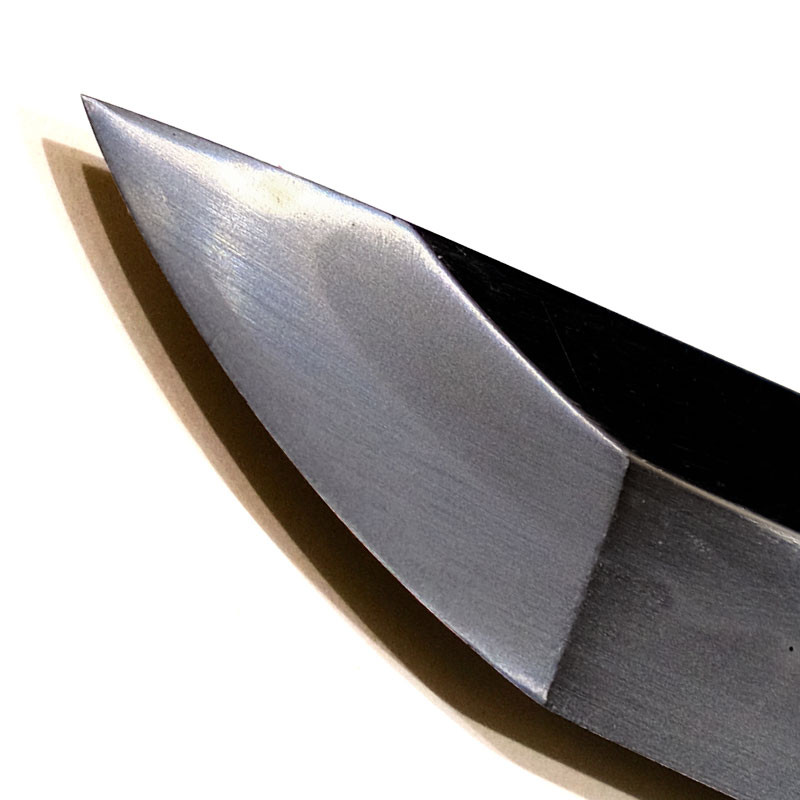
| Kissaki Length |
2.95 cm |
| Moto Haba |
3.10 cm |
| Saki Haba |
2.10 cm |
| Moto Kasane |
A = 0.69 cm
B = 0.70 cm |
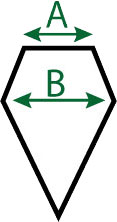 |
| Saki Kasane |
A = 0.54 cm
B = 0.56 cm |
| Curvature |
Koshi Zori / Bizen Sori (1st third of the blade) |
| Type Kissaki |
Chu Kissaki |
| Blade Structure |
Shinogi Zukuri (diamond shaped) in Funbari at the beginning of the blade. |
| Mune |
Iori Mune (triangular) |
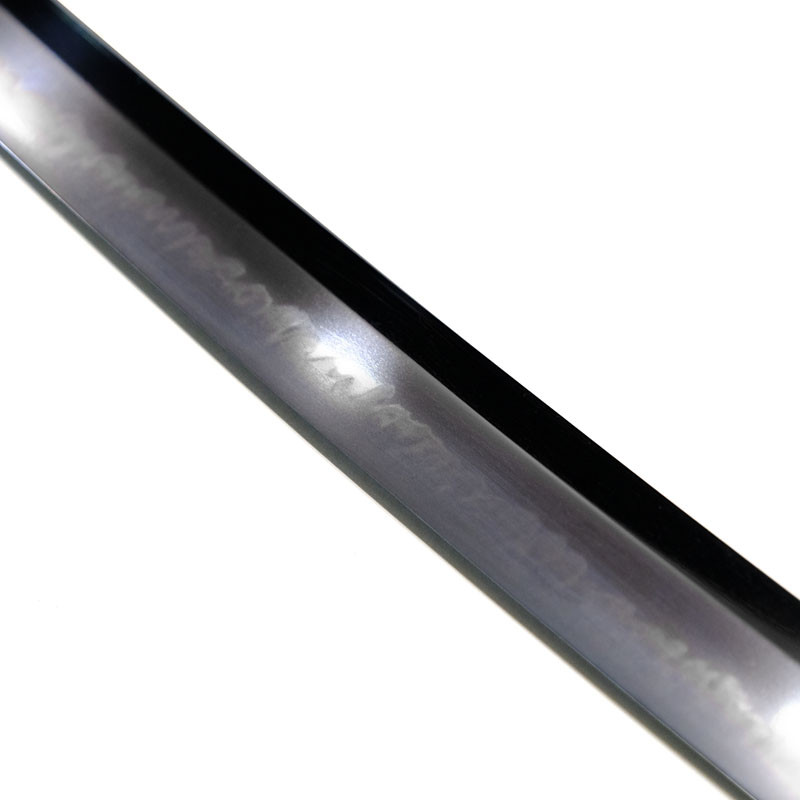
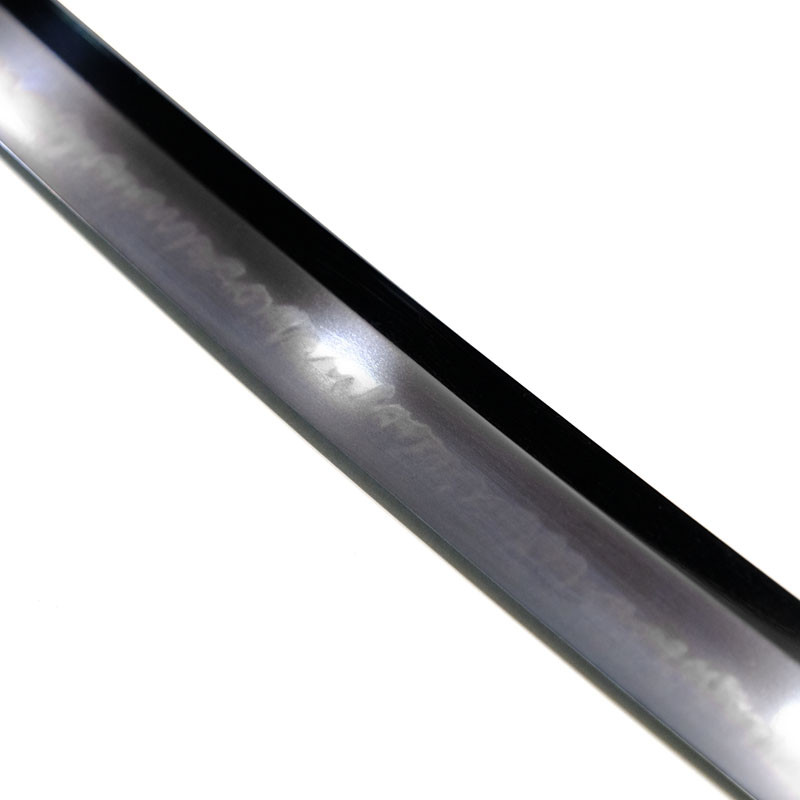
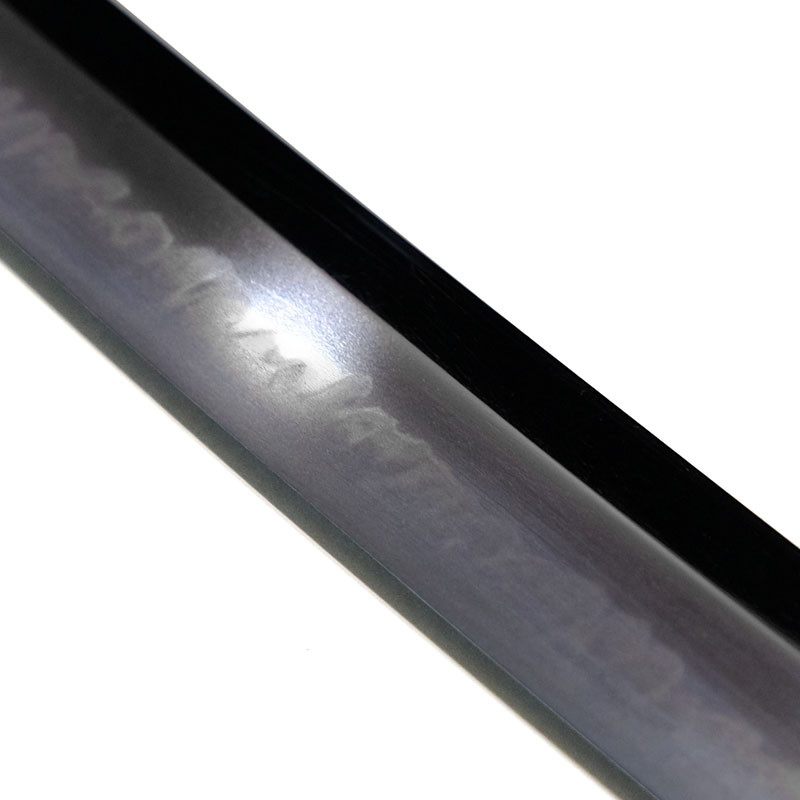
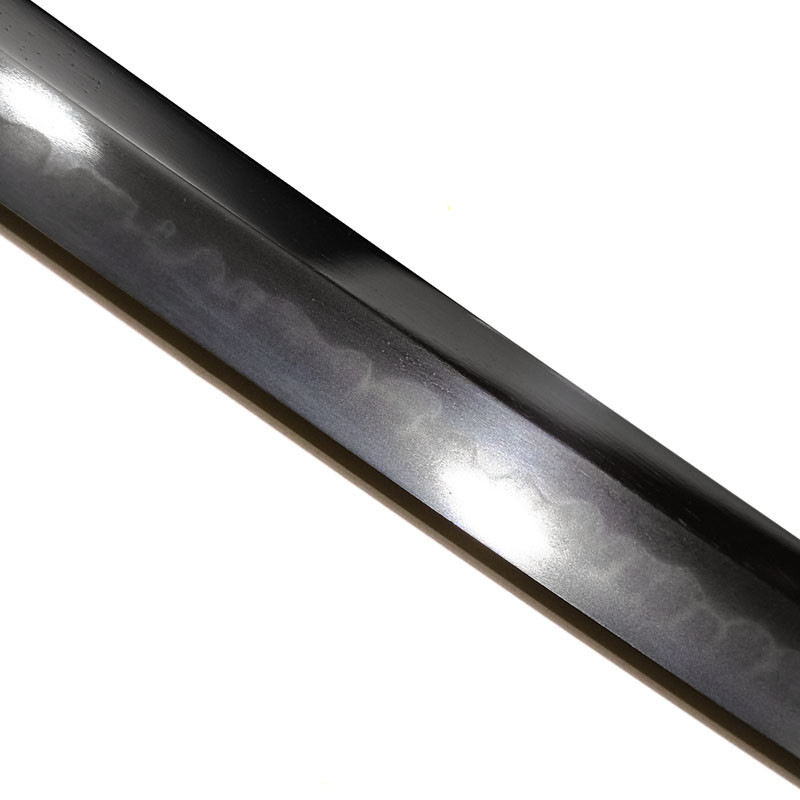
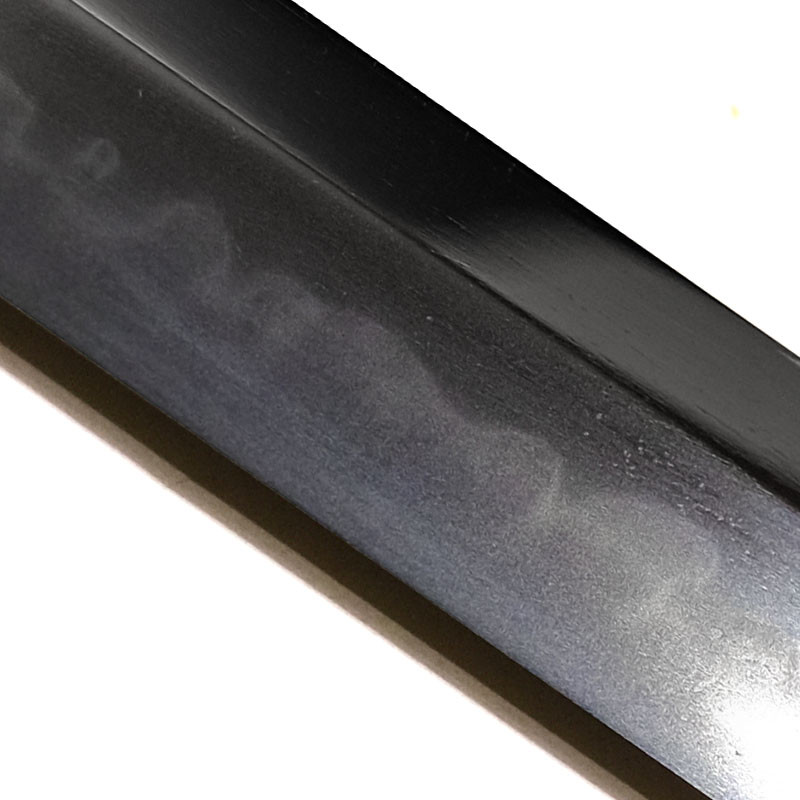
| Hamon |
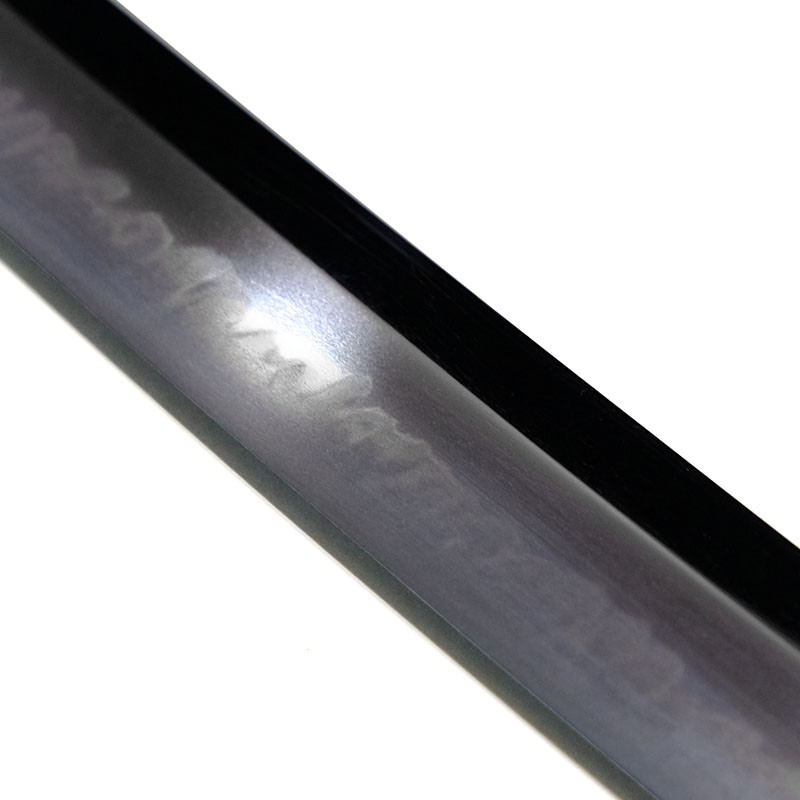
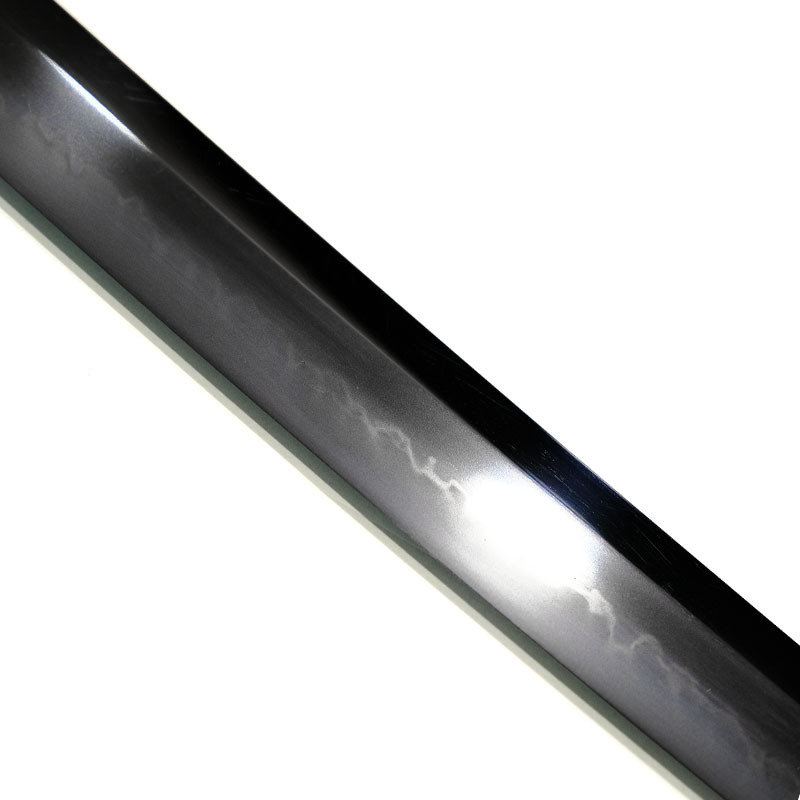
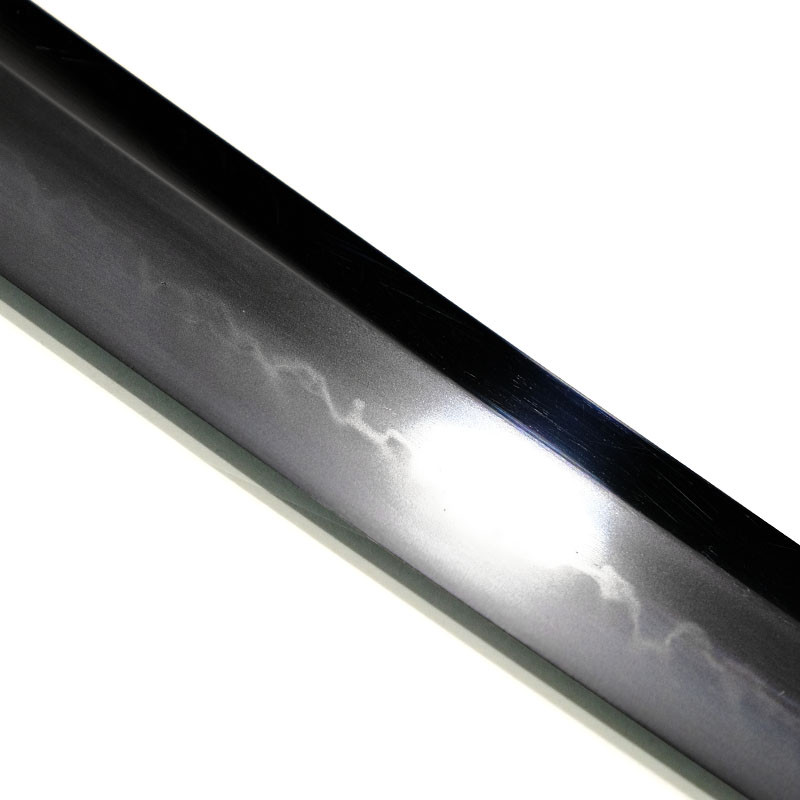
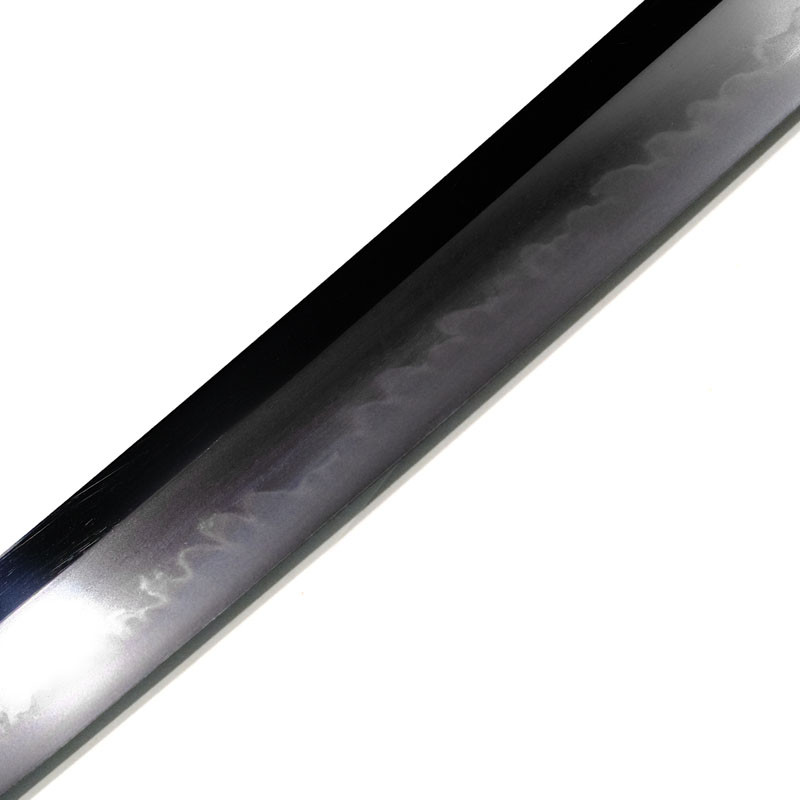
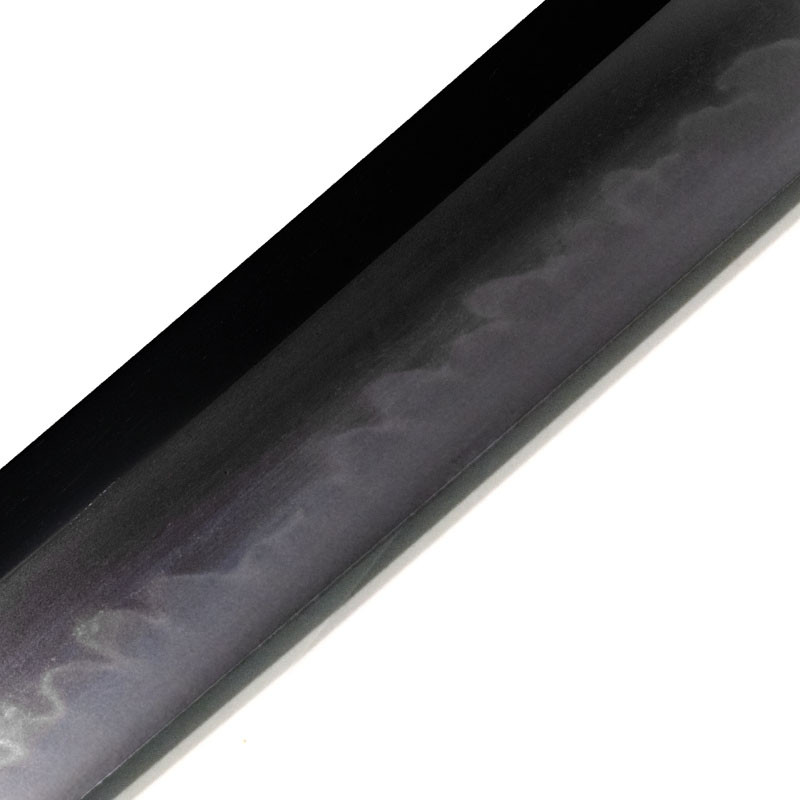
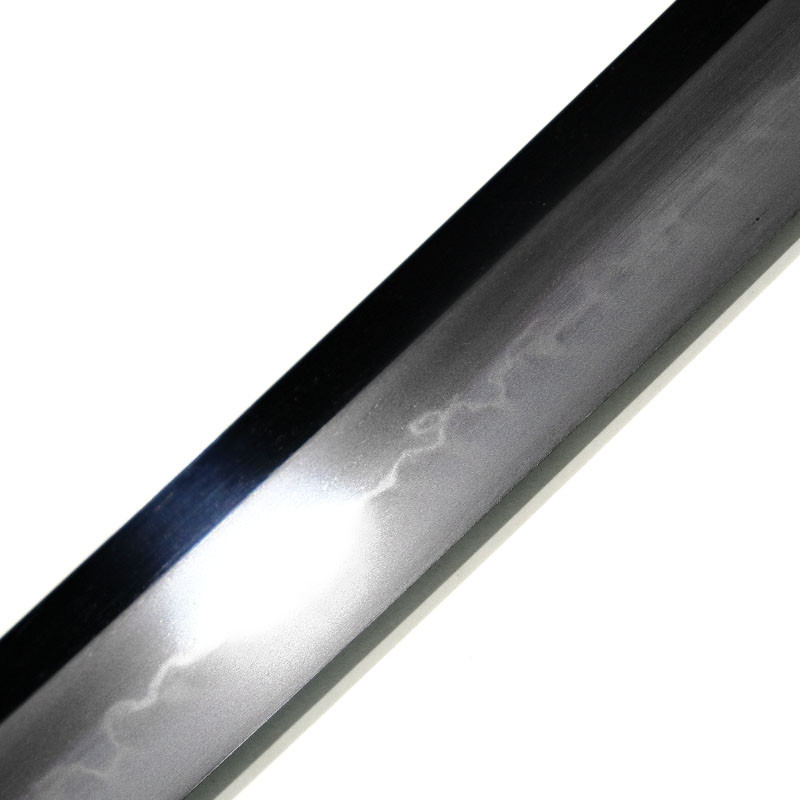
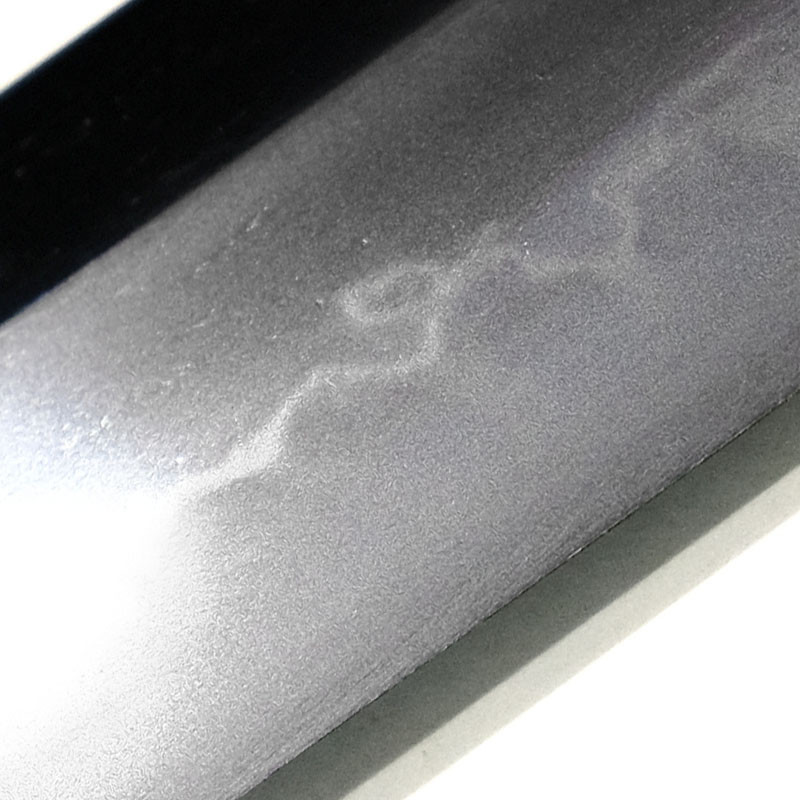
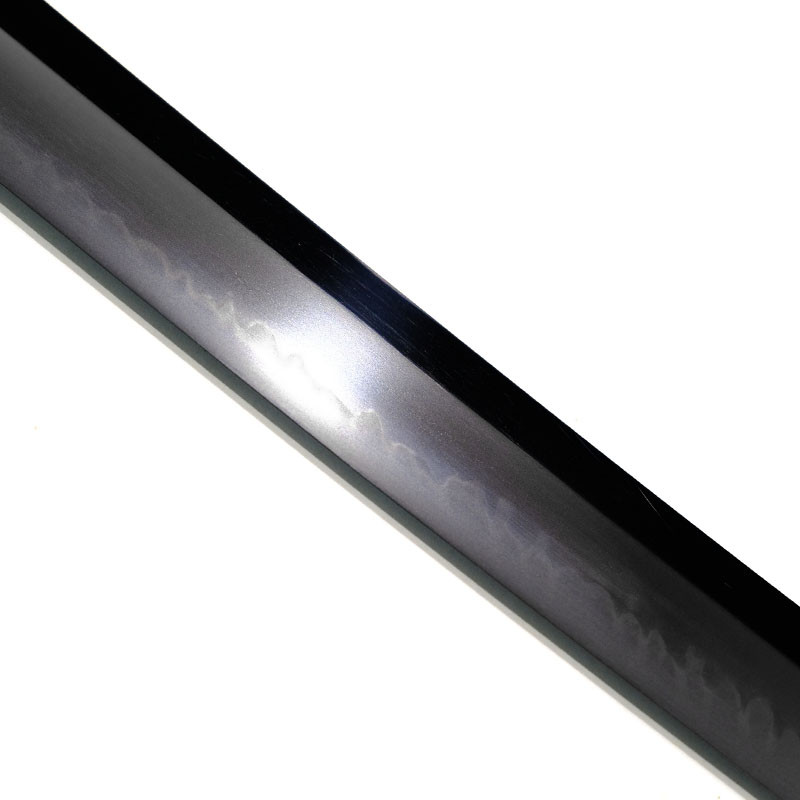
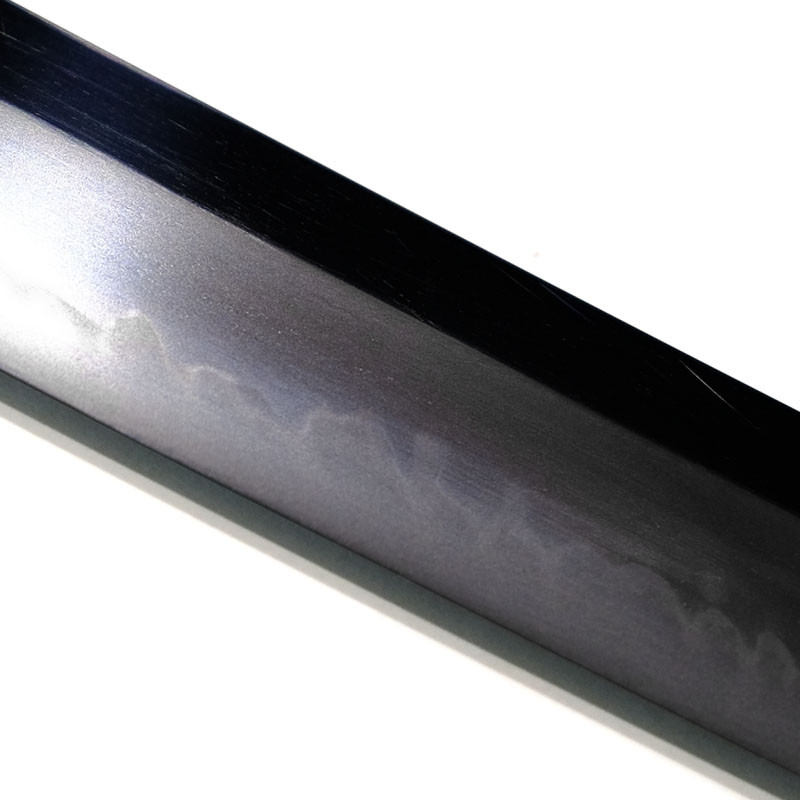
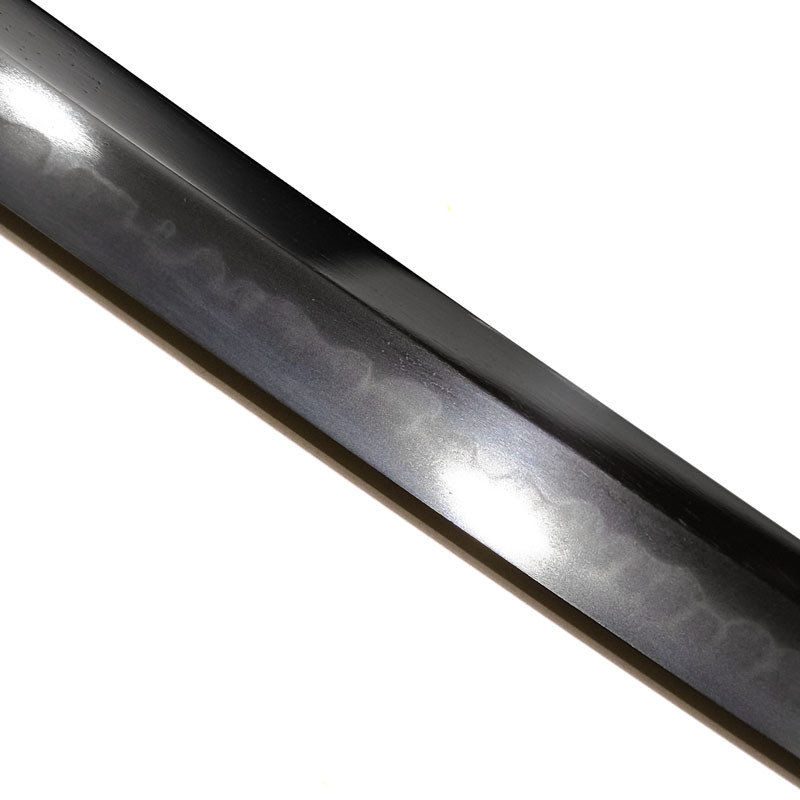
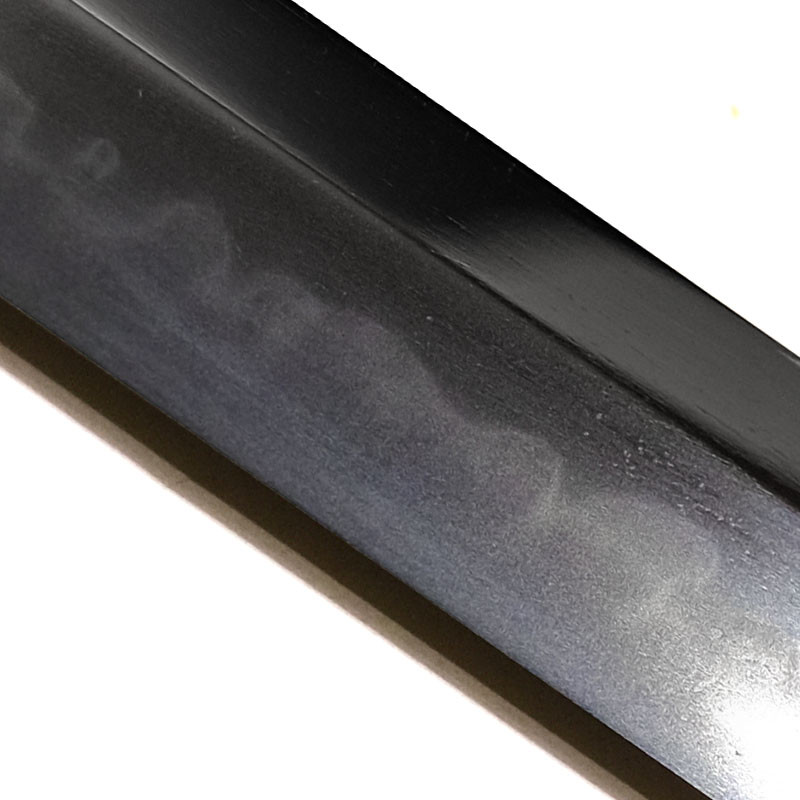
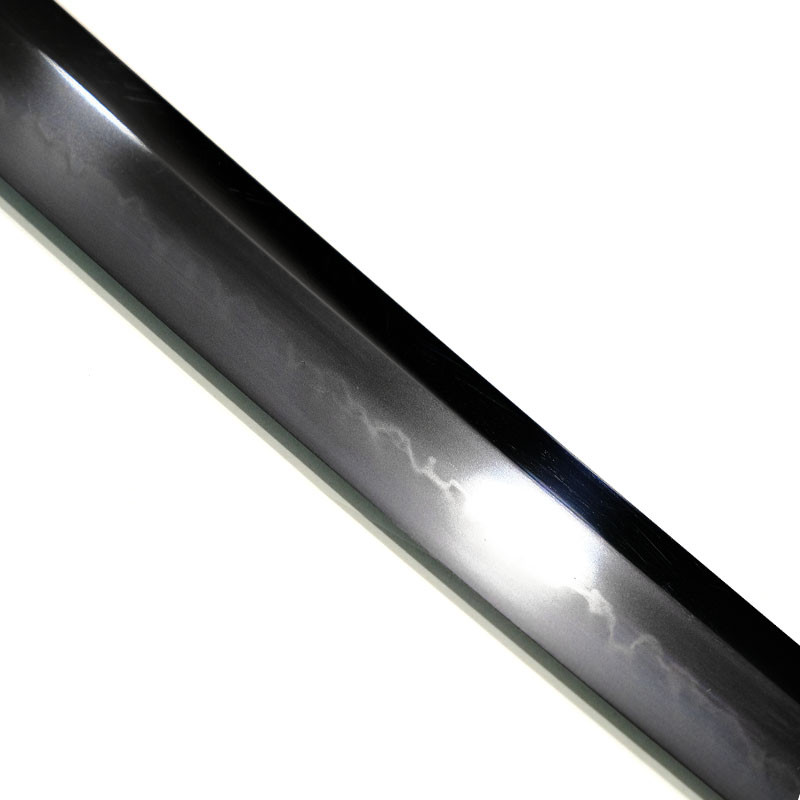
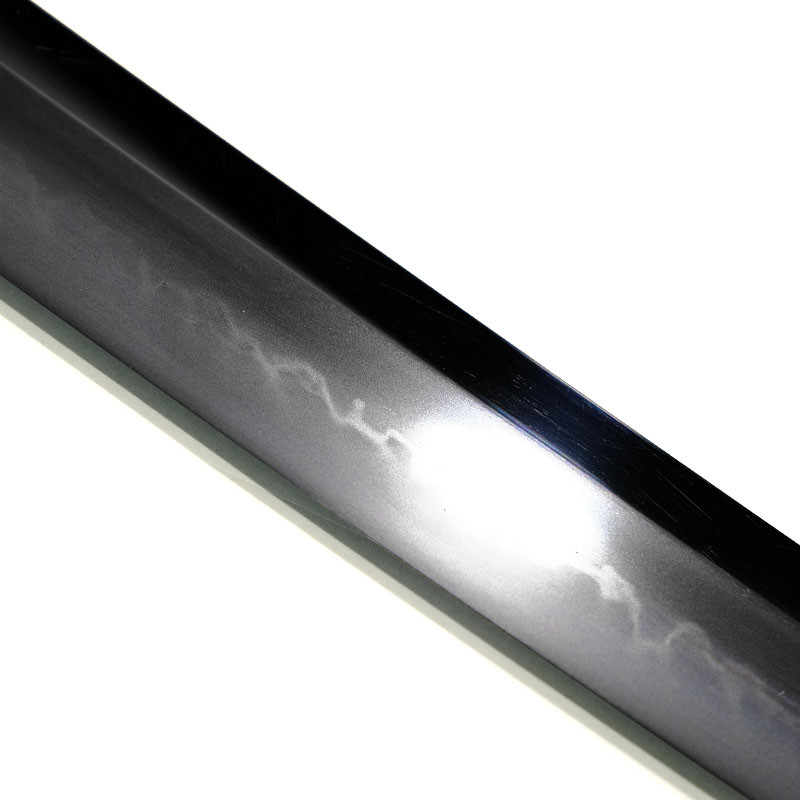
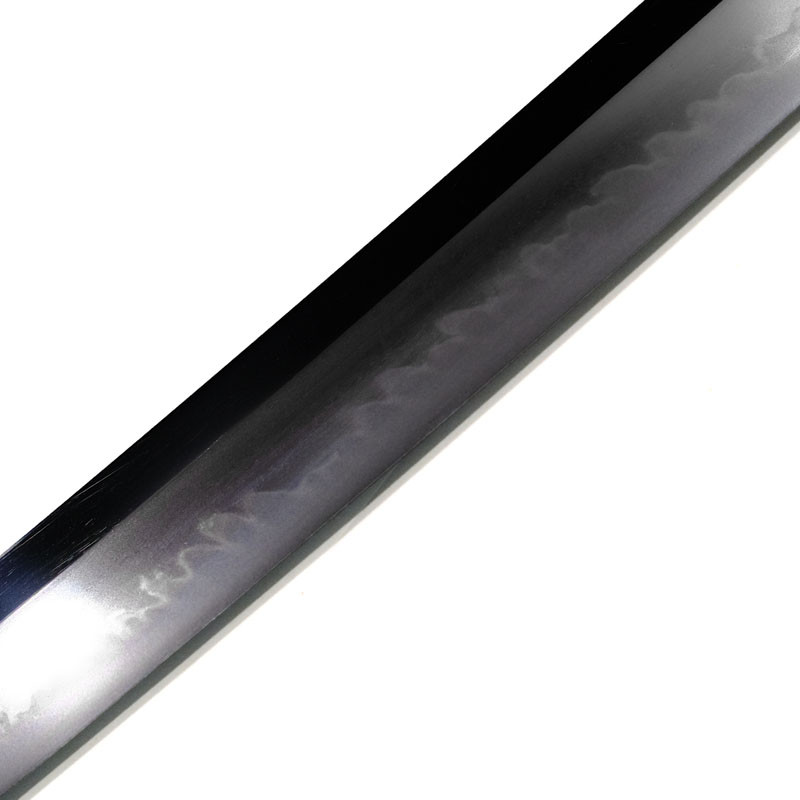
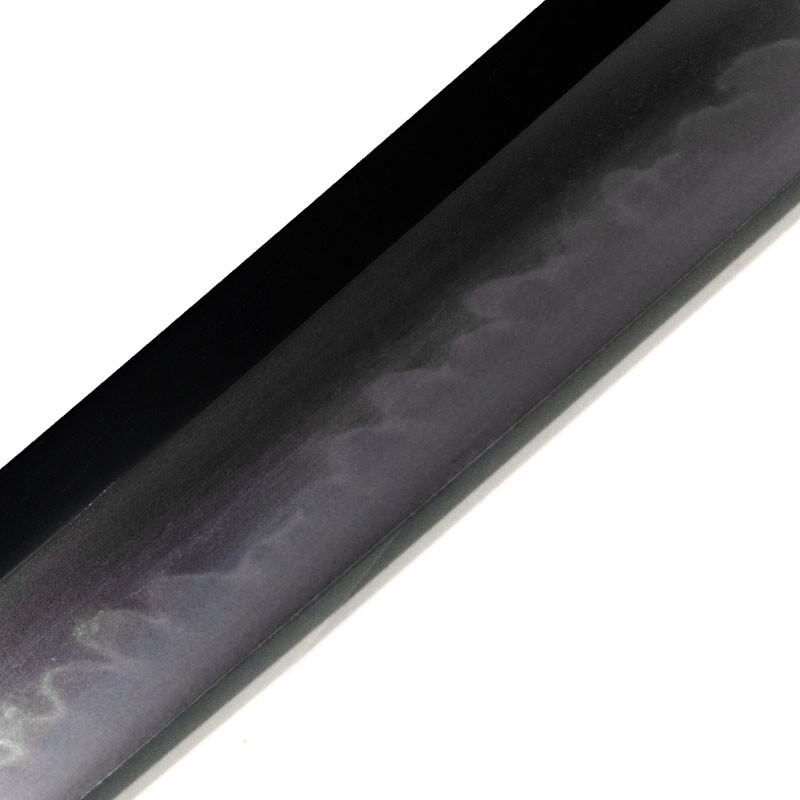
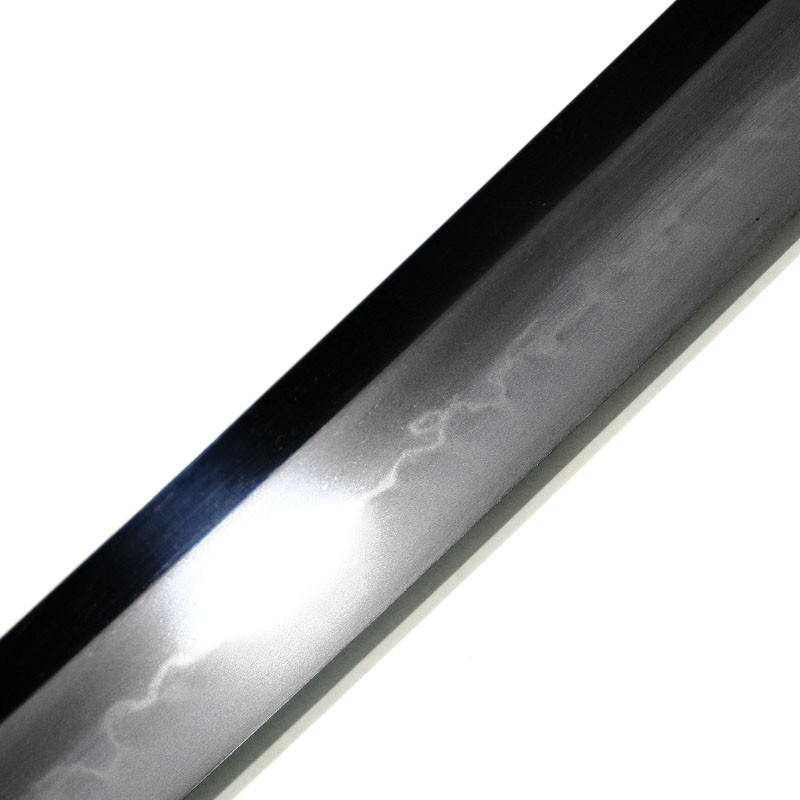
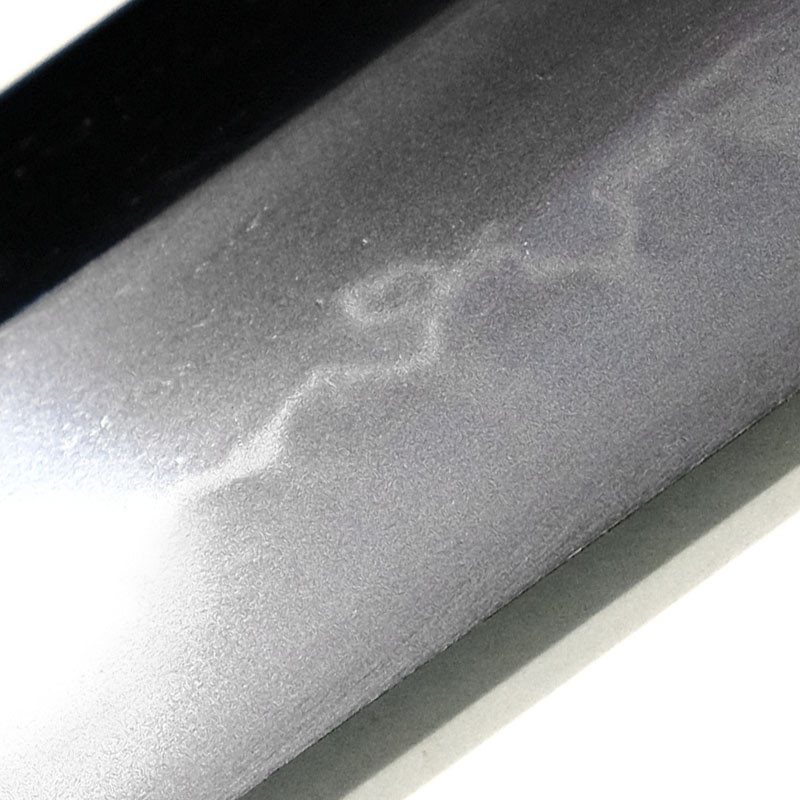
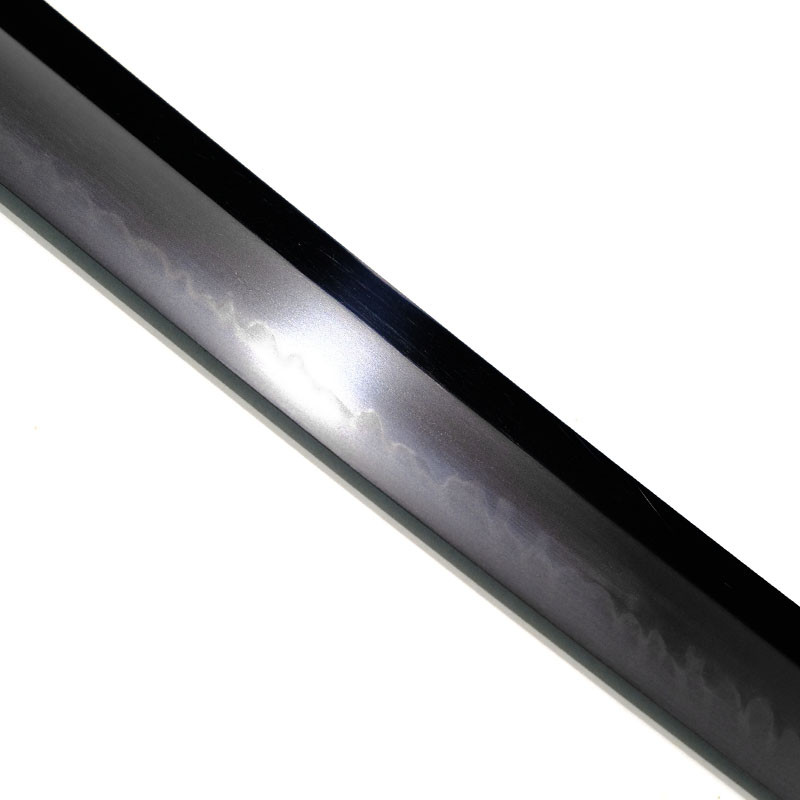
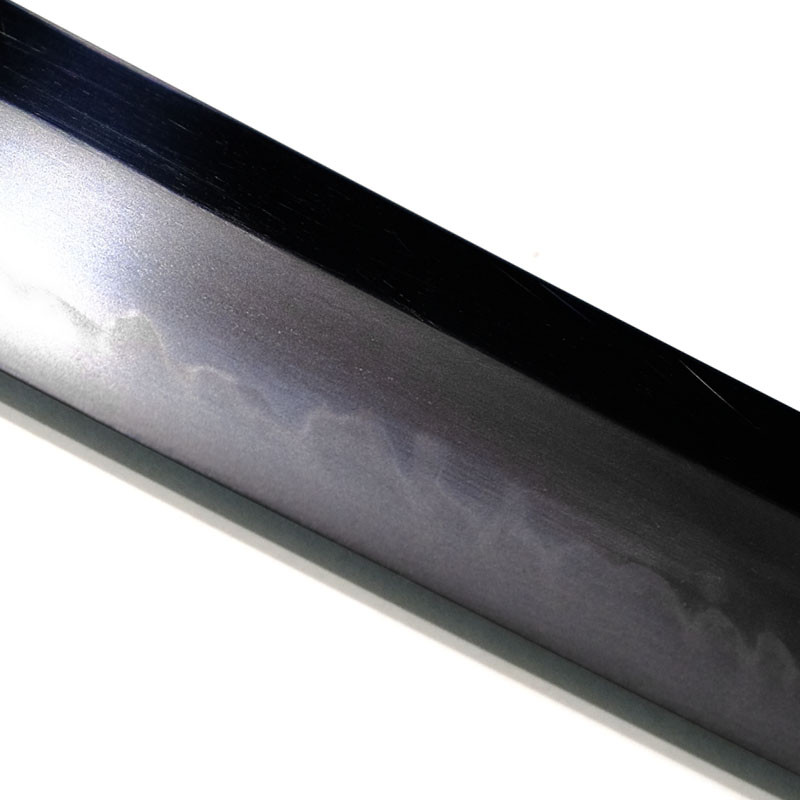
Saka Choji very active in Nie Deki. Presence of many Ashi and Yo. Presence of some Tobi Yaki |
| Hada |
Very fine Ko Itame |
| Boshi |
Ko Maru Kaeri |
| Nakago |
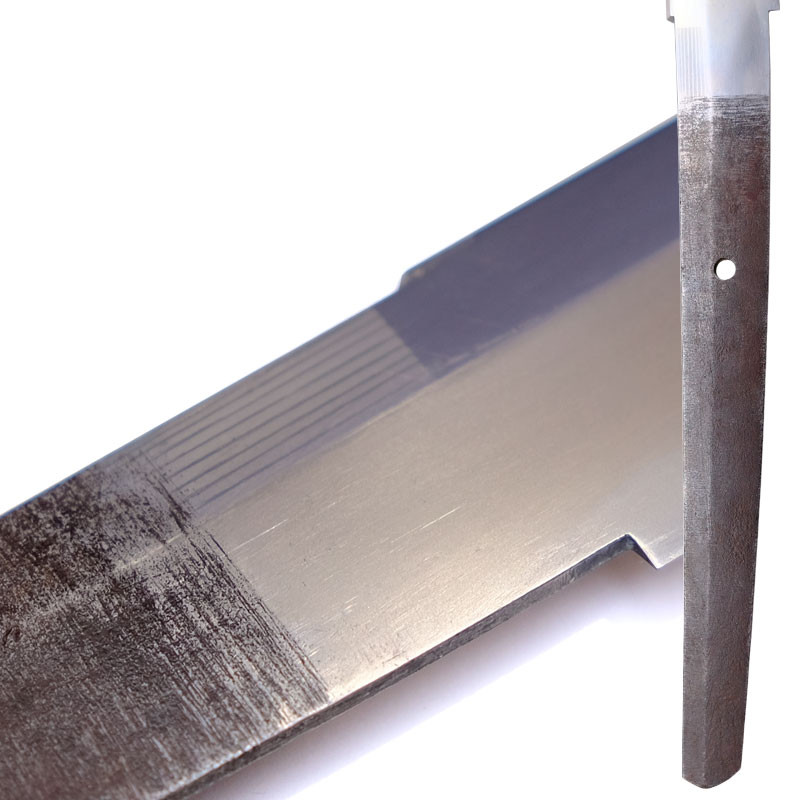
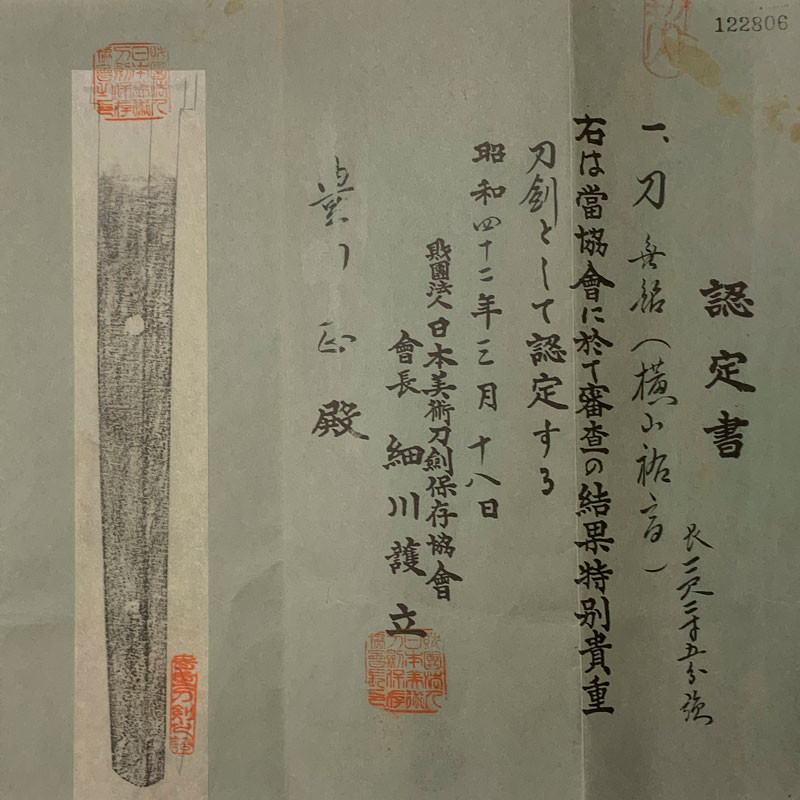
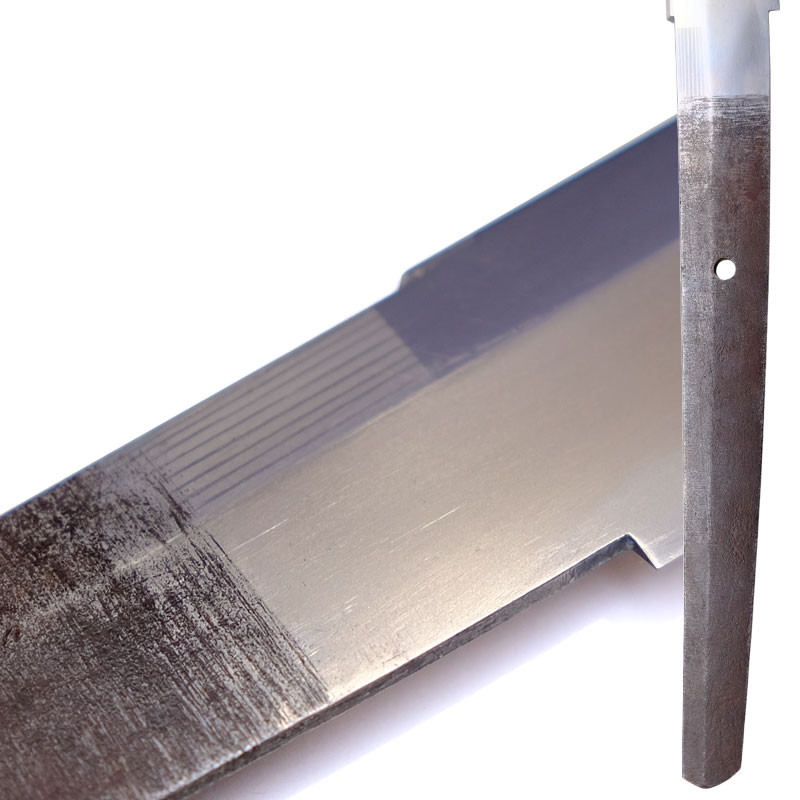
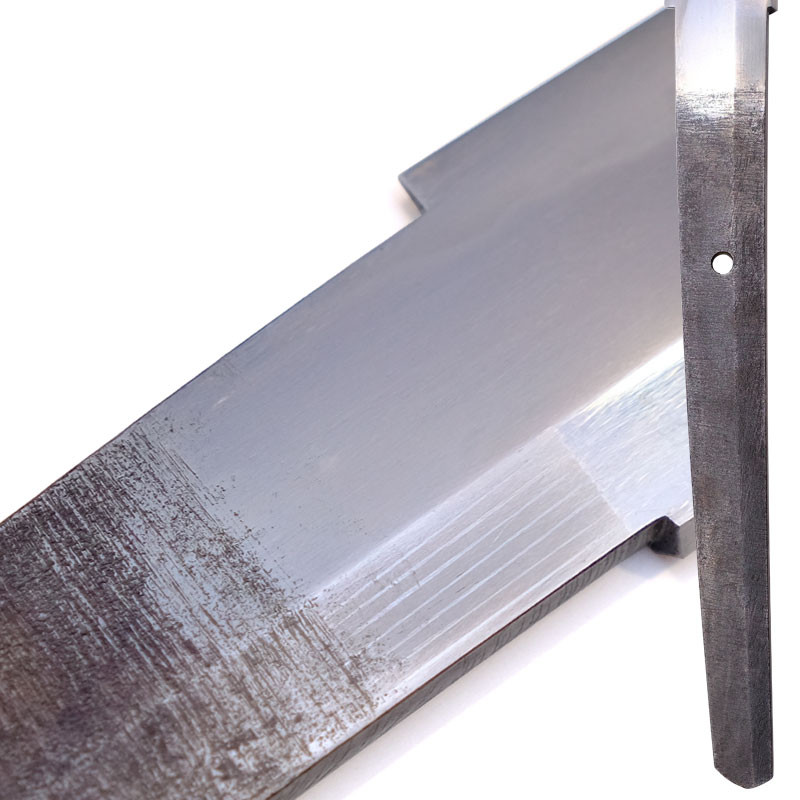
Ubu (original), Mumei (not signed), 1 Mekugi Ana, Kiri Yasurime (horizontal), end in Ha Agari Kurijiri (U dissymmetric), Classic Futsu Gata shape. |
| Saya |
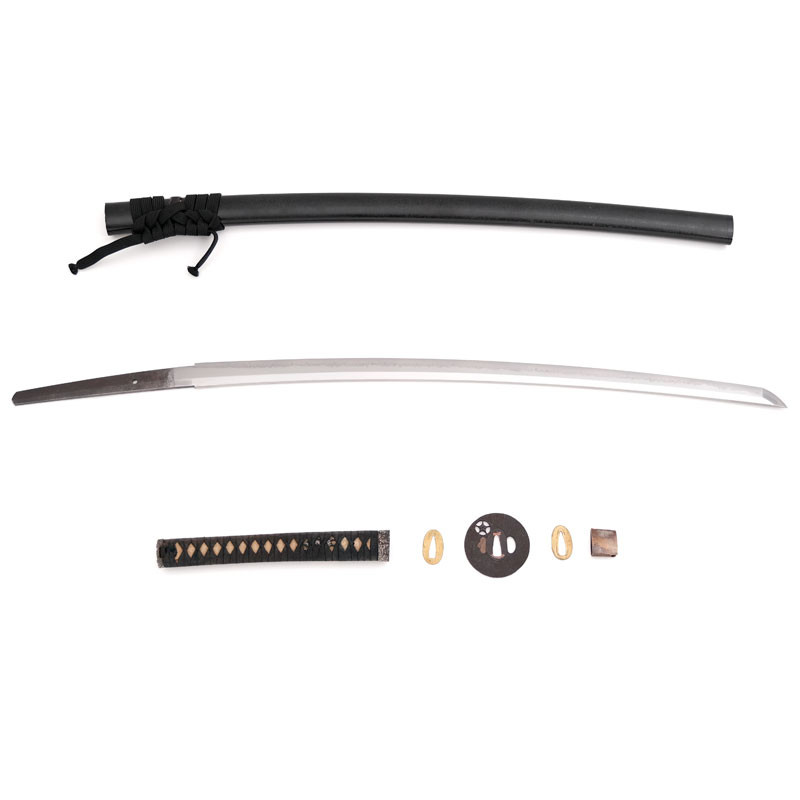
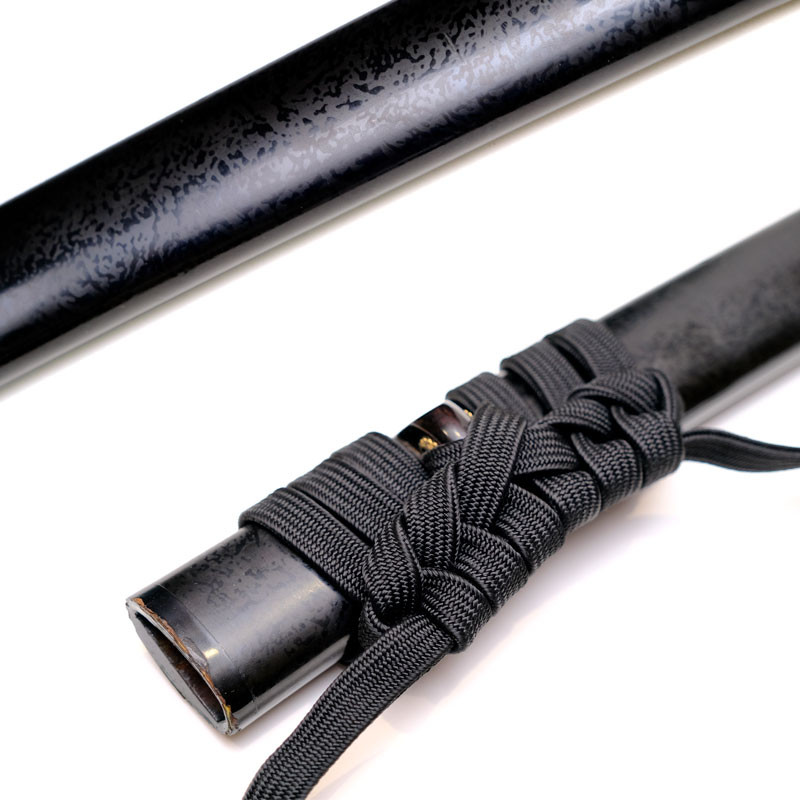
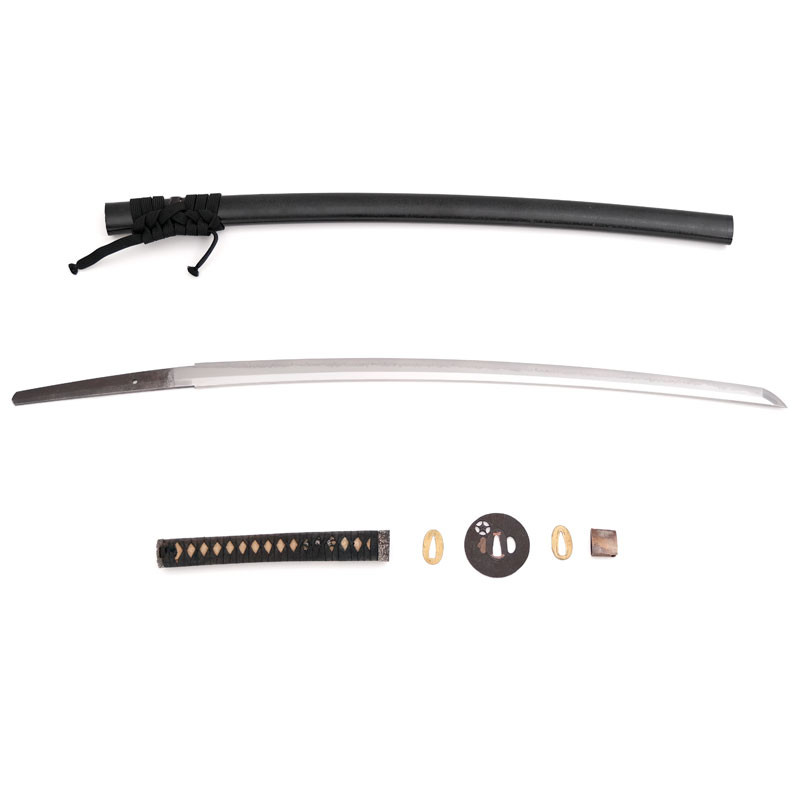
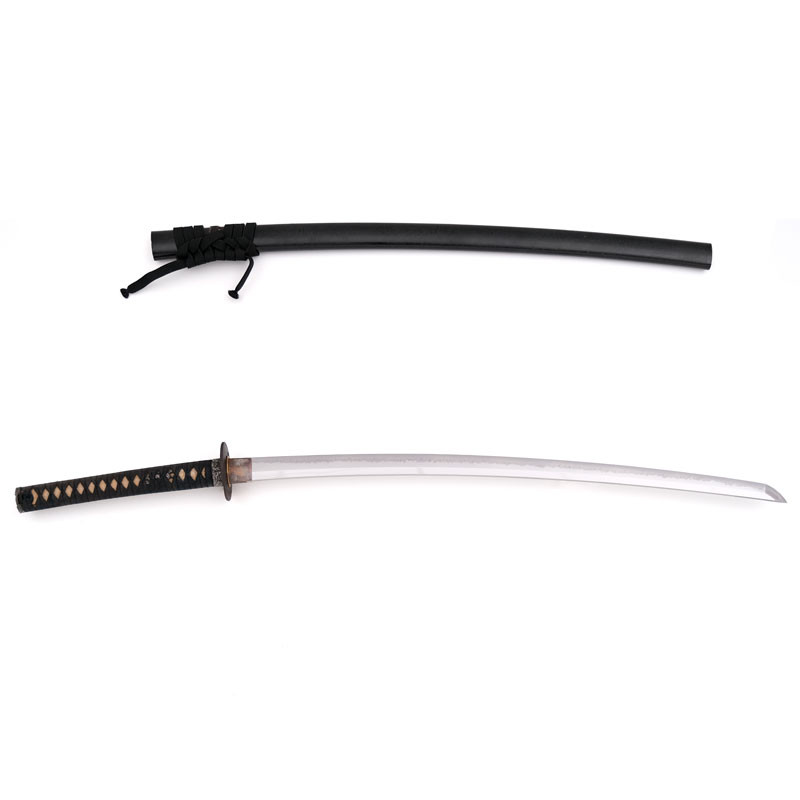
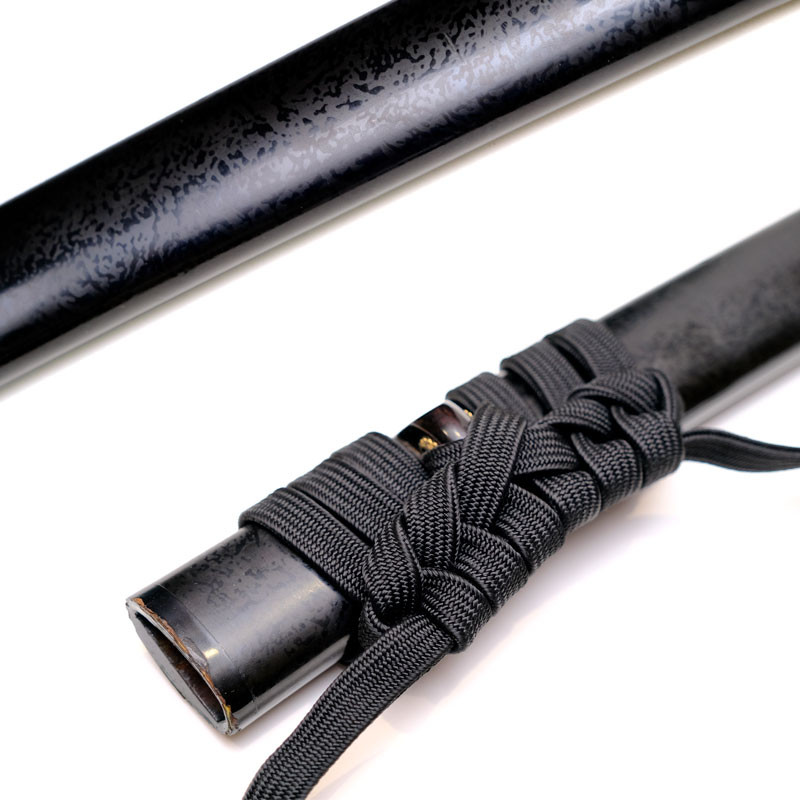
Length 74cm, weight 240g, Black lacquer Kawari nuri type with alternating matte and glossy, Silk black Sageo, golden Shitodome, reinforced Kojiri and Koiguchi. |
Tsuka
&
Tosogu
(Tsuba,
Menuki,
Fuchi Kashira) |
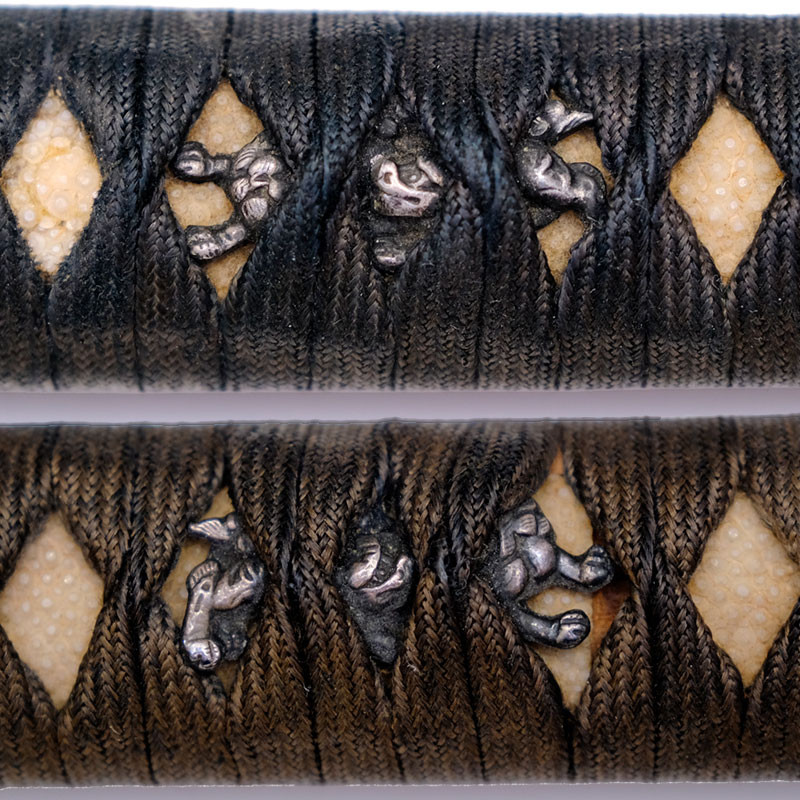
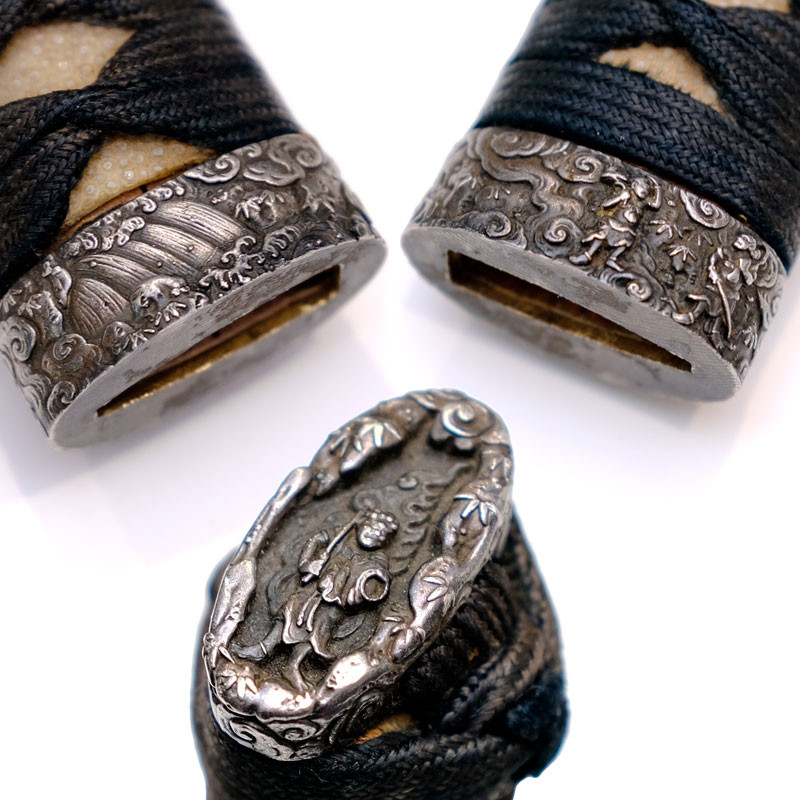
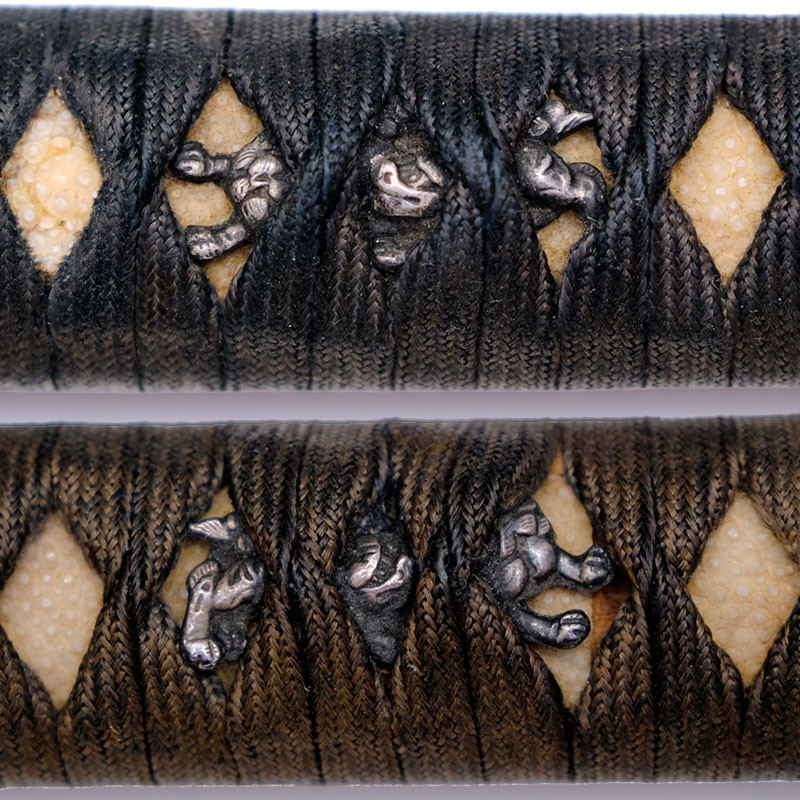
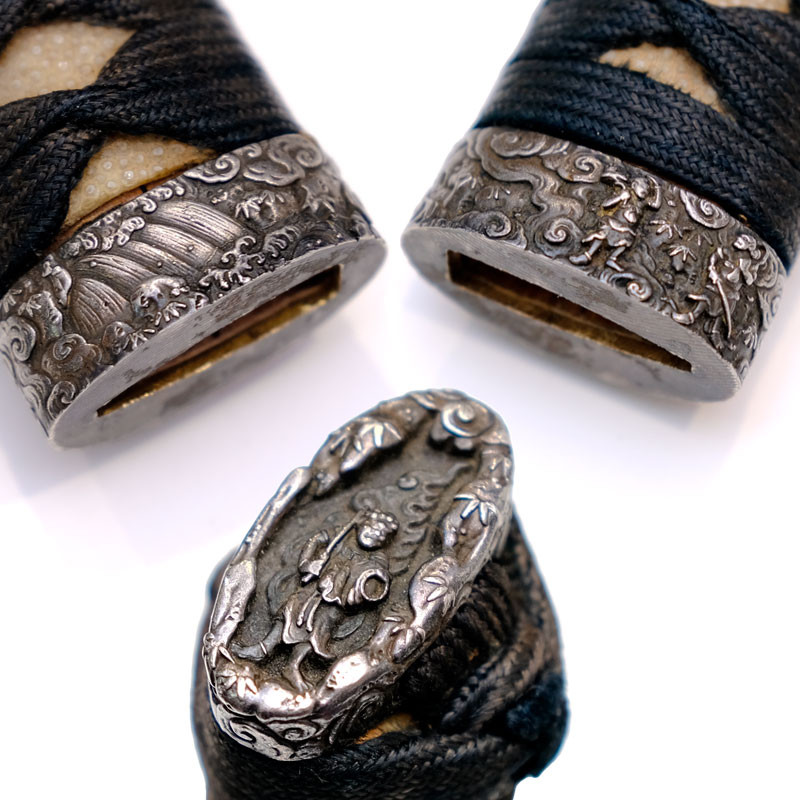
- Tsuka: length 26.3cm, weight 120g, Black cotton braiding, Same White, silver menuki with patterns of "Shishi" also called "Komainu" (Guardian Lions), silver Fuchi with the pattern of the 2 guardians Nioh 仁王 (Protective Warrior Buddhist Deities) on a background of clouds with waterfalls and bamboo forest, Kashira silver with the pattern of Fudo Myo 不動明王 on a background of bamboo forest as well.
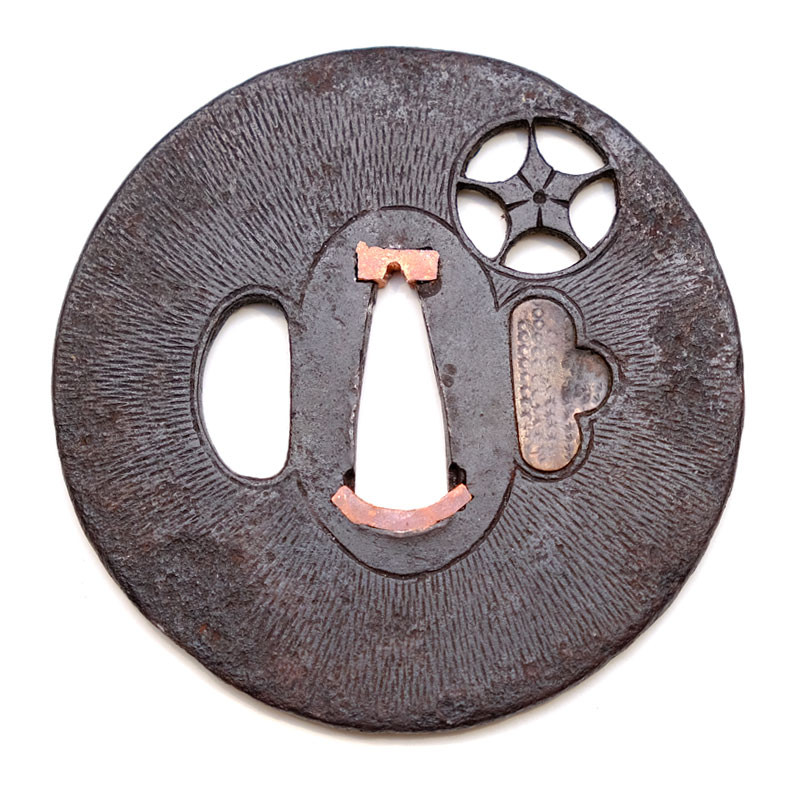
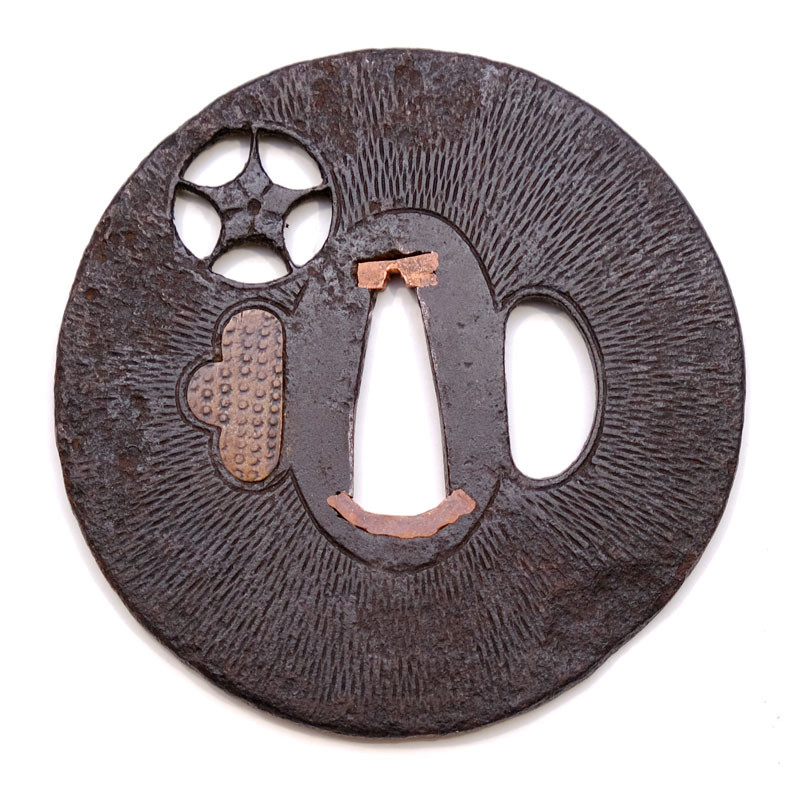
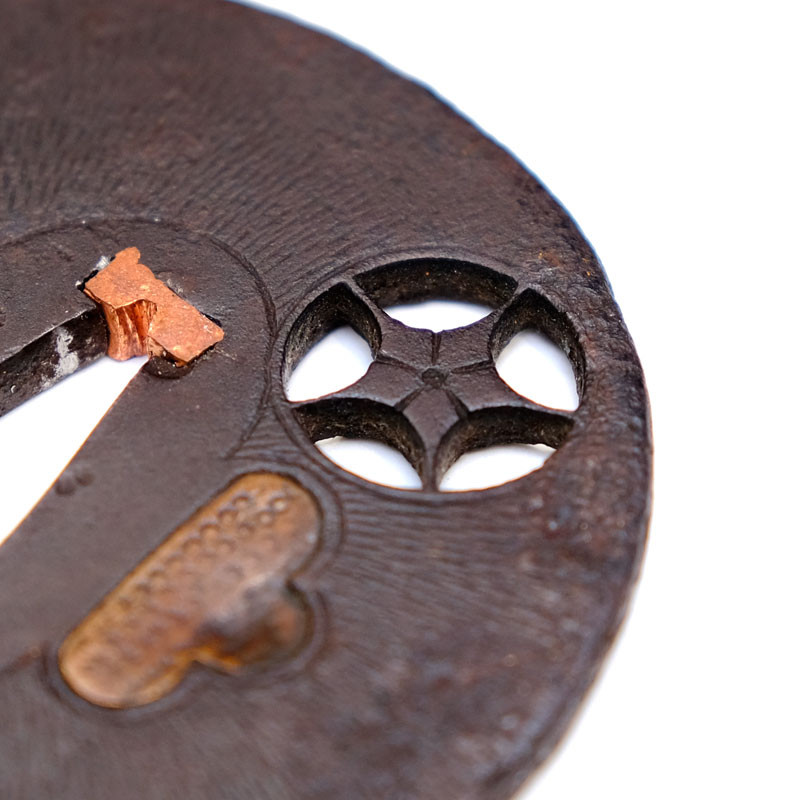
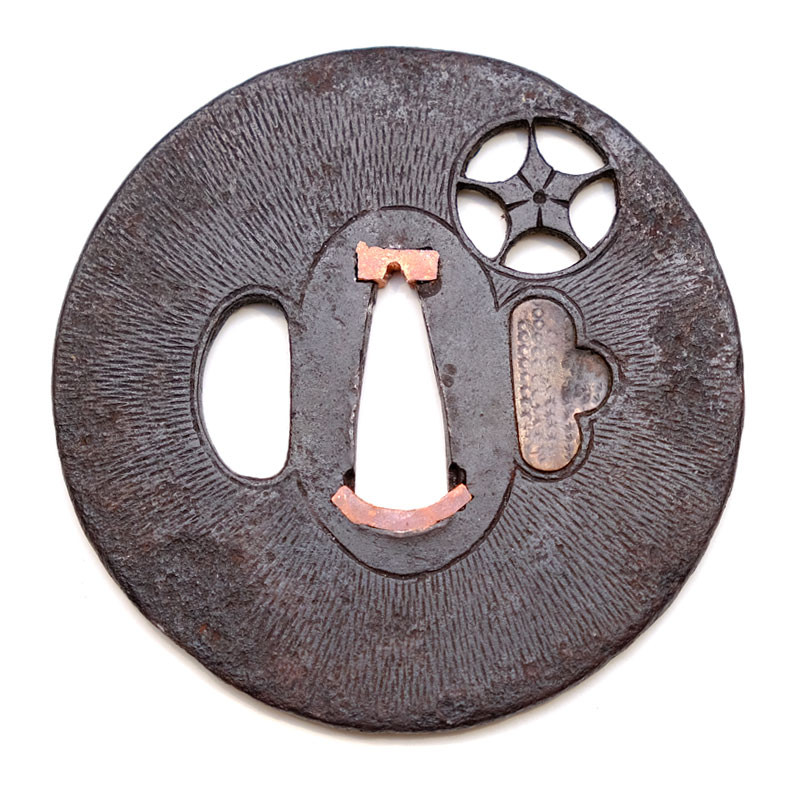
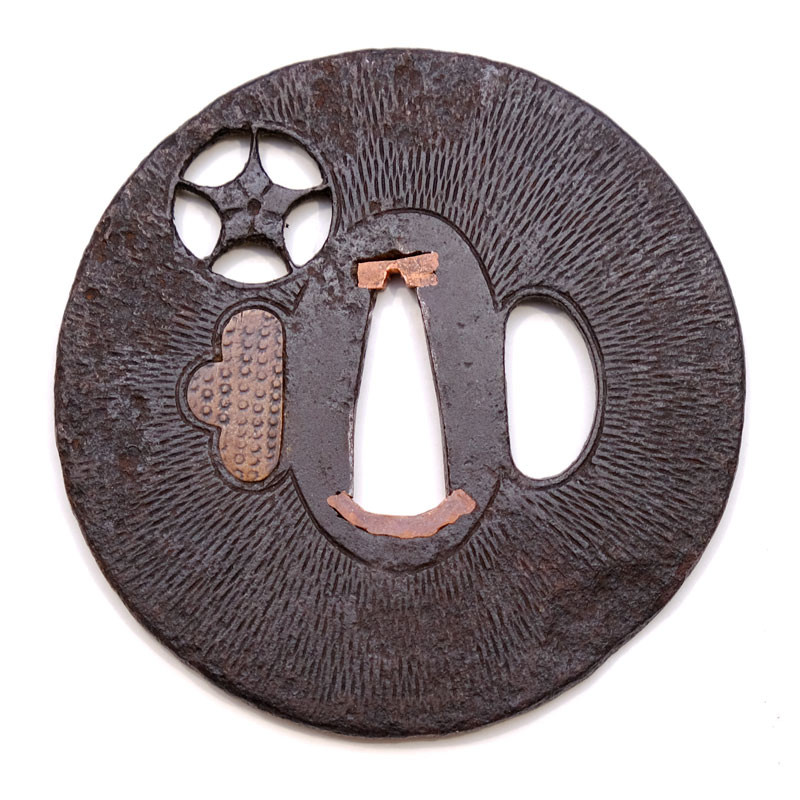
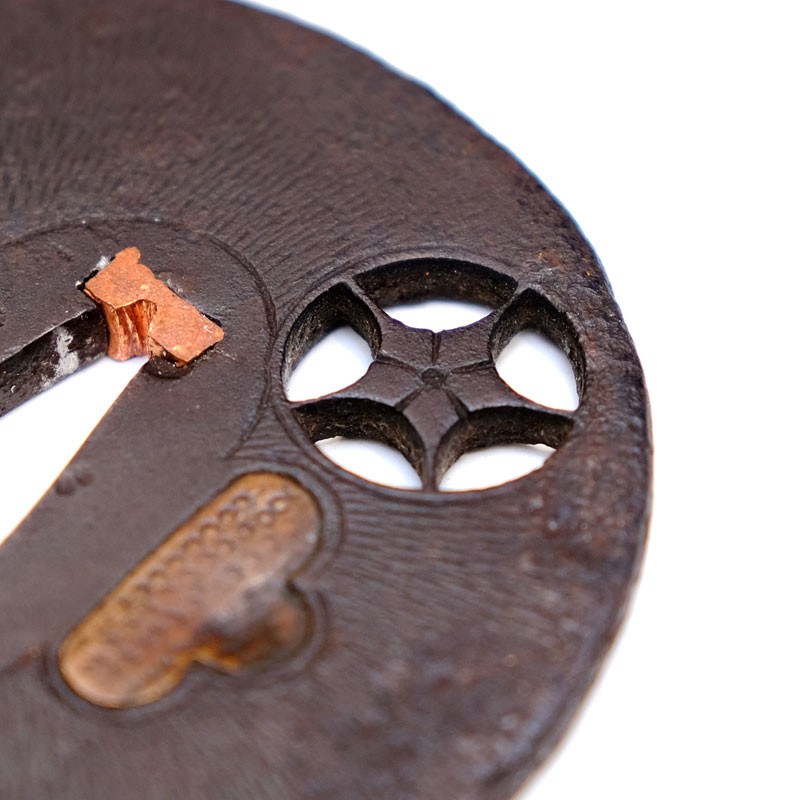
- Tsuba: Weight 115g, dimensions 7.45 x 7.45 x 0.45cm, round shape Maru Gata, right edge Kaku Mimi, Presence Kozuka Ana and Kogai Ana (Kogai Ana obturated by Histu Ume), surfacing with ray patterns, work in Sukashi opening with snowflake pattern or flower Kikyo type.
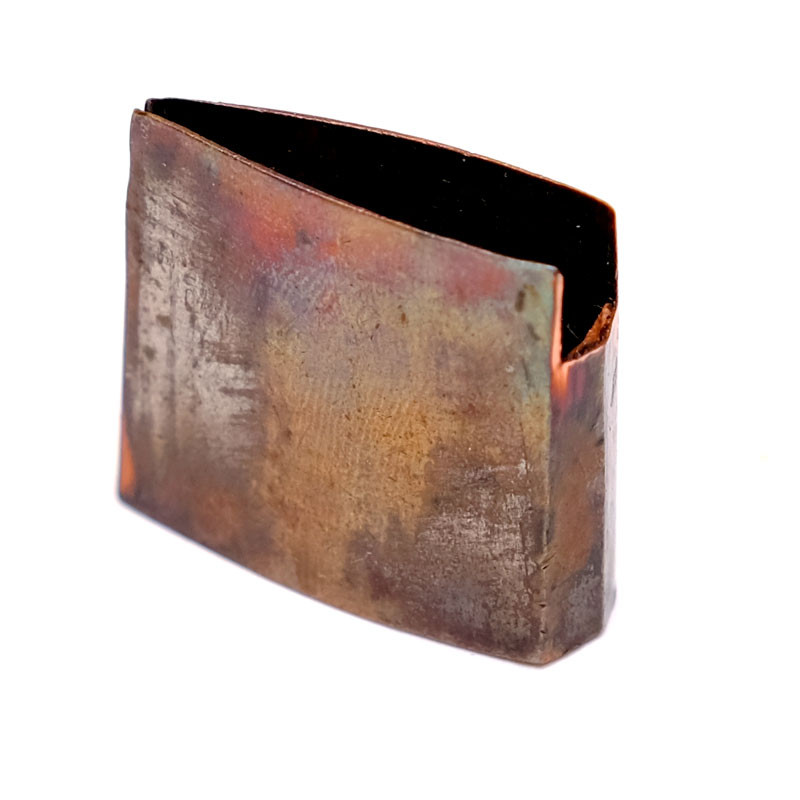
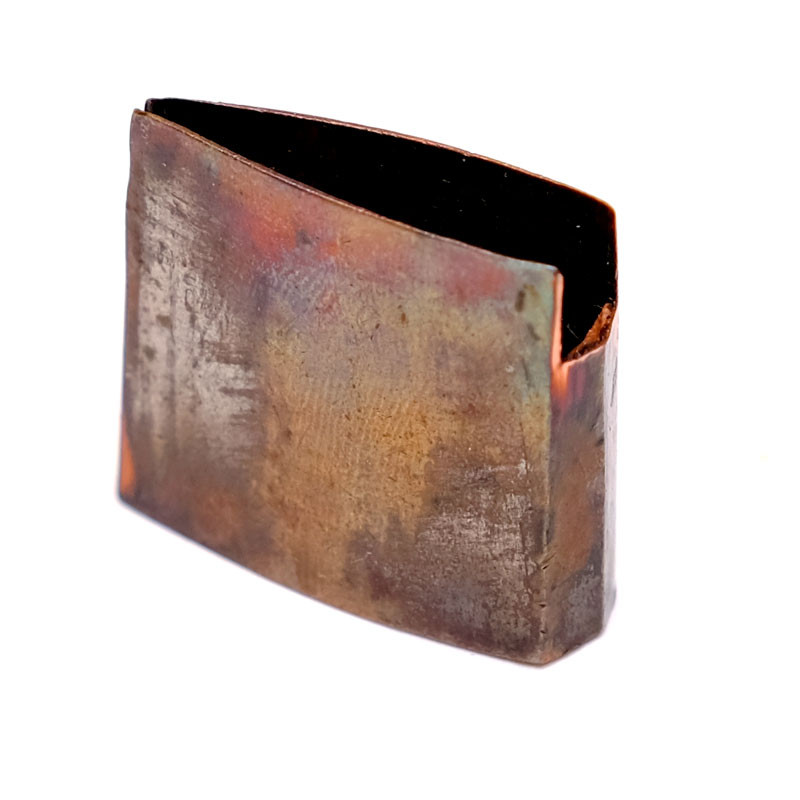
- Habaki: Weight 21g, in copper, Muji (without pattern)
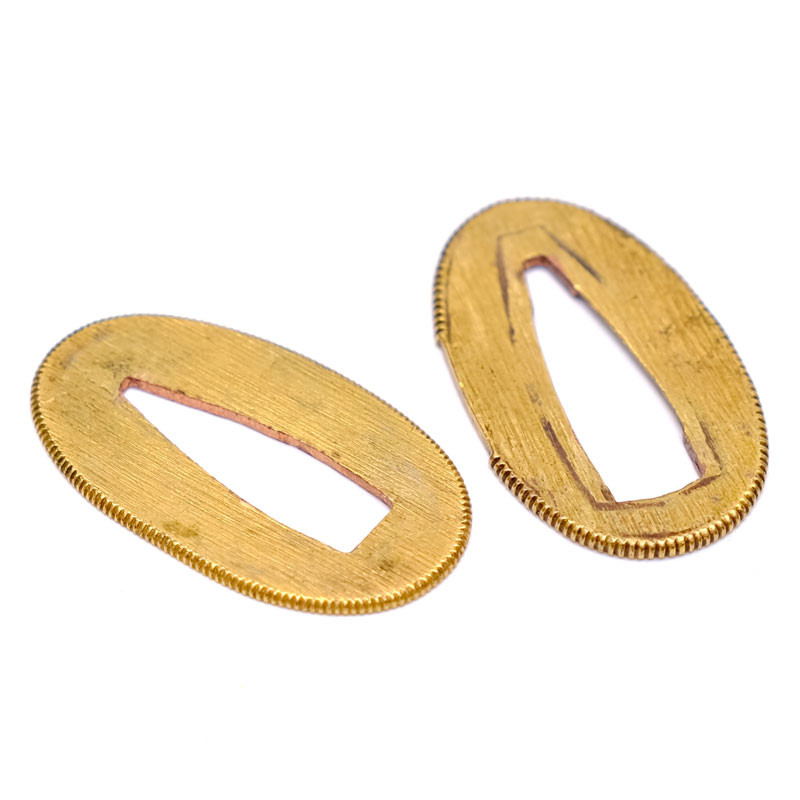
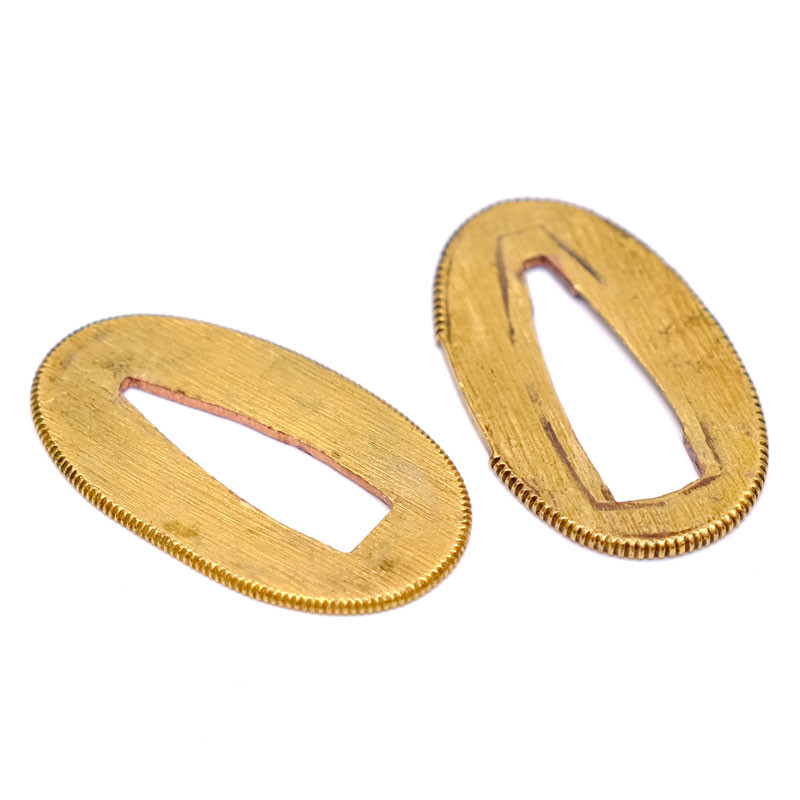
- Seppa: Weight 14g (2x7g), 2 Seppa crenellated in golden copper |
Study
&
Team Review |
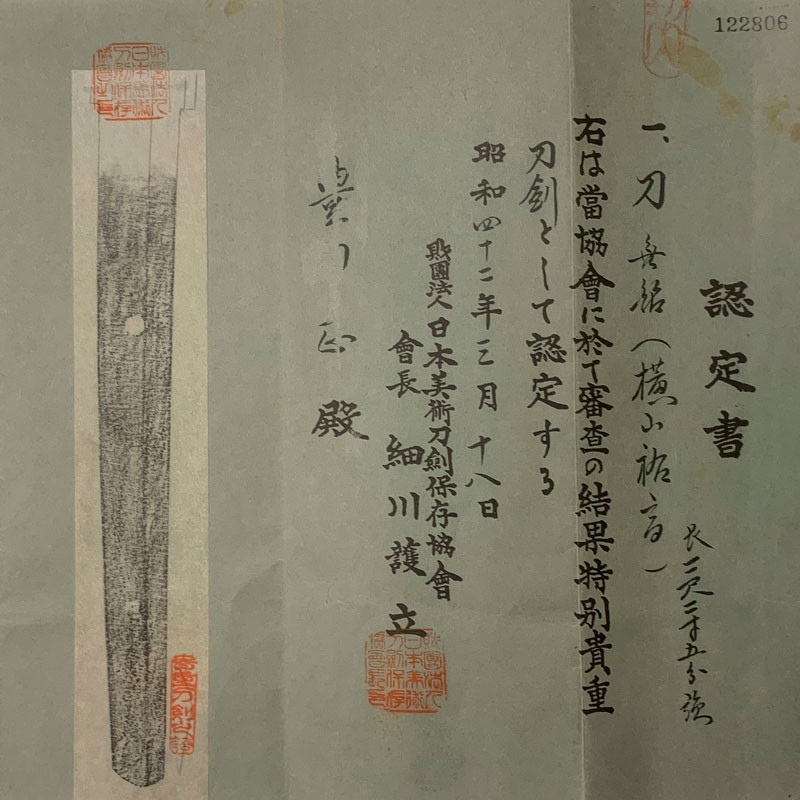
Yokoyama Suketaka 横山祐高
Traditional blacksmith from Bizen, active between 1865 and 1898.
Shinshinto blacksmith from the province of Bizen, today Okayama, in the southwest of Honshu. Its origins come from the line of blacksmiths Sukesada de Osafune, active during the Muromachi period.
Suketaka was the pupil of the first generation Sukekane (around 1834-1872). Sukekane Shodai considered himself the 58th direct descendant generation of the great historical blacksmith Tomonari.
Suketaka was therefore a student of Sukekane at the same time as the great Miyamoto Kanenori 宮本包則, recognized as a living National Treasure (Ningen Kokuho 人間国宝).
His productions are dated from the Keio period (1865-1868), he died in 1898.
Dans une publication de la ‘Japanese Sword Society Of United States, Inc’ de 1977/1978.
Suketaka aurait pour nom civil ‘Hisayama Mokuemon’, et est mentionné comme élève de Ise No kami Sukenaga (maitre de Sukekane).
Sukenaga étant décédé en 1951, on peut supposer que Suketaka commença l’apprentissage de la forge avec lui et devint ensuite élève de Sukekane.
The blacksmiths of Bizen produced many sabres during the Muromachi period, and particularly during the Sengoku Jidai period. The demand for weapons was then very strong among the powerful feudal lords.
However, the tradition of sword-forging in the province of Bizen almost disappeared due to the devastating flood of the Yoshii River (1591), which hit the school of Osafune hard. Despite this destruction, some blacksmiths survived. Among them was a group of blacksmiths signing the name Sukesada. The main representative of this school was Yokoyama Fujishiro Sukesada, fourth master of the Sukesada school. One of his sons was Shichibei no Jyo Sukesada (七兵衛尉祐定). They were among the pioneers who revived the art of sword-forging in the province of Bizen. Suketaka was a descendant of this Sukesada.
Suketaka began making sabres just before the ban on wearing the sword, the Hatorei 廃刀令 in 1876. The demand for sabres was then in very strong decline and the blades of this time are rather rare. He is considered the last blacksmith of the ancient lineage Bizen Osafune Yokoyama.
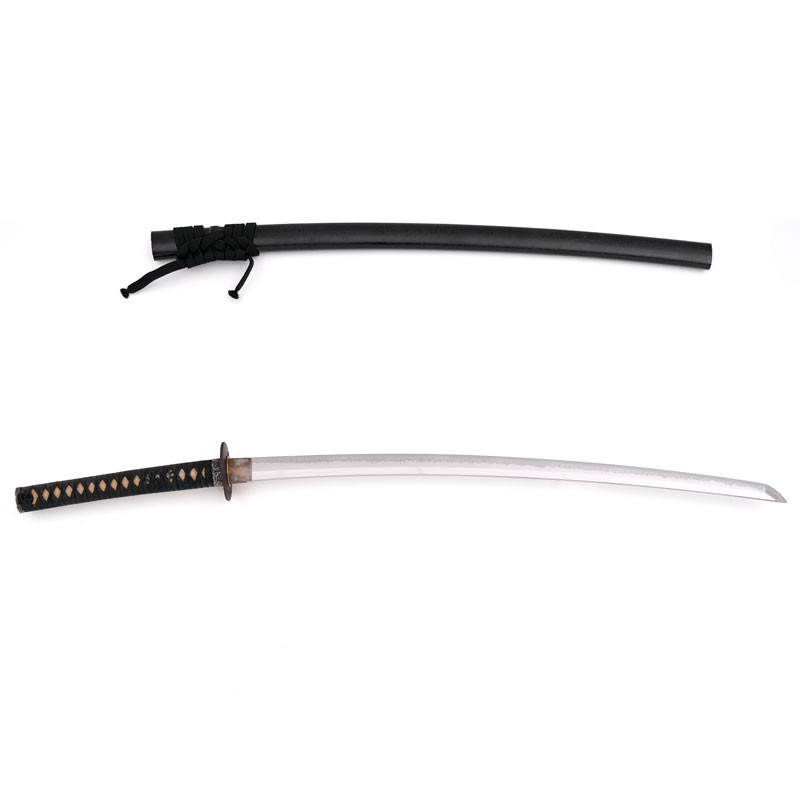
This is a very beautiful blade, a perfect example of the high-end productions of the blacksmiths of Bizen.
|



Share your opinion
error Your review appreciation cannot be sent
feedback Report comment
check_circle Report sent
error Your report cannot be sent