Tsuka
&
Tosogu
(Tsuba,
Menuki,
Fuchi Kashira) |
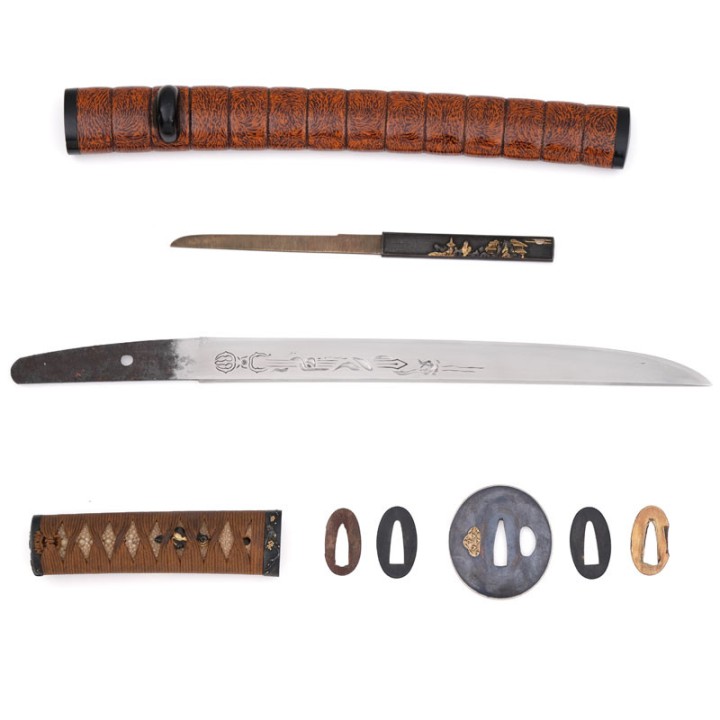
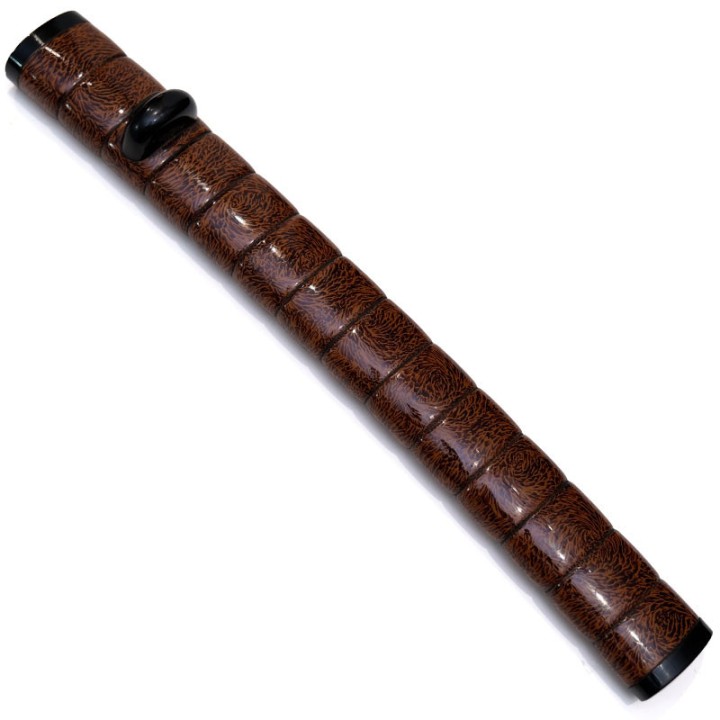
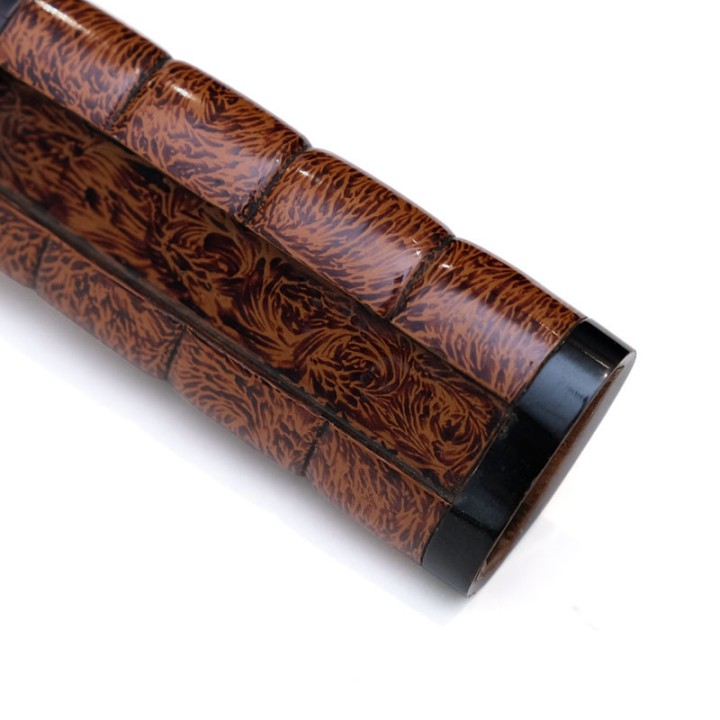
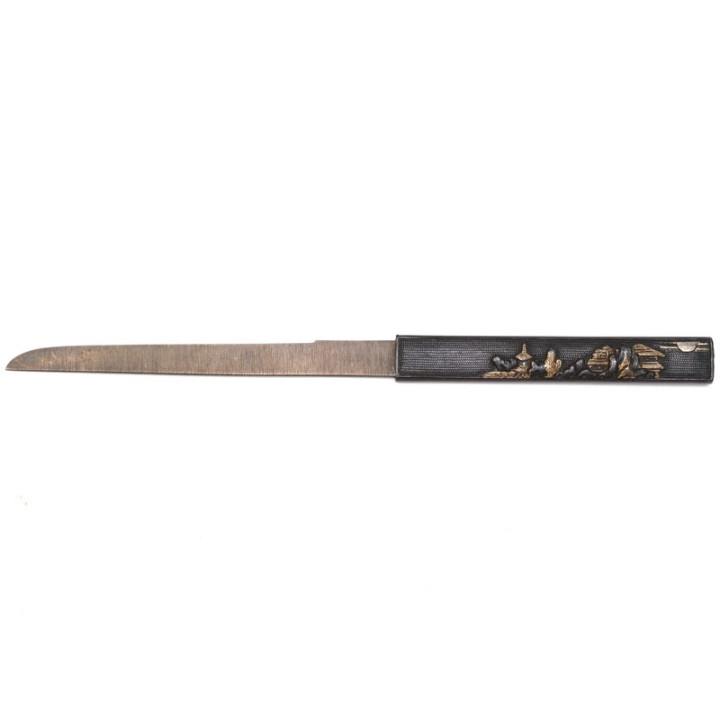
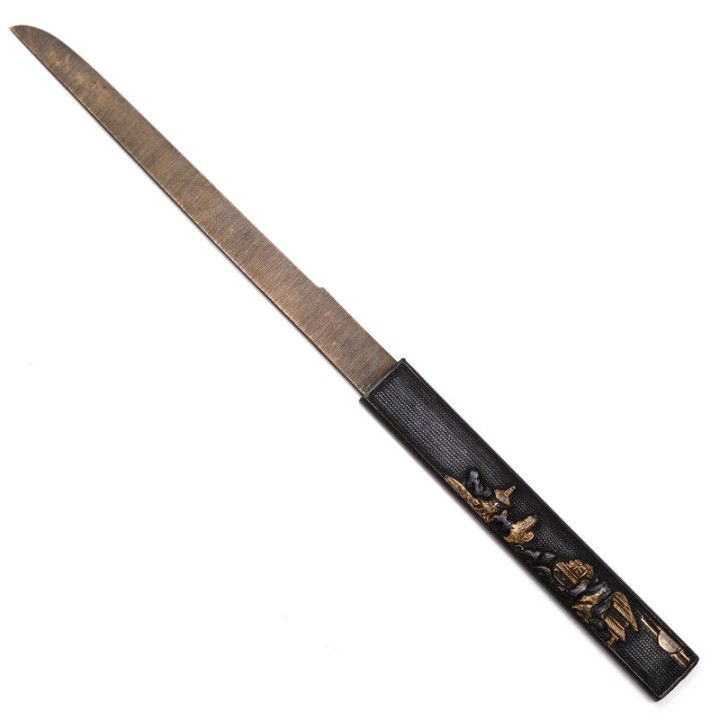
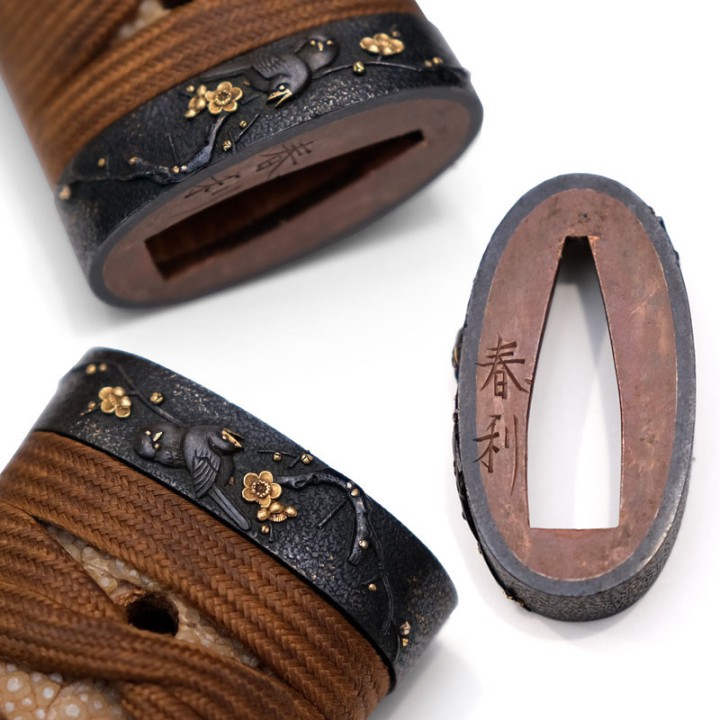
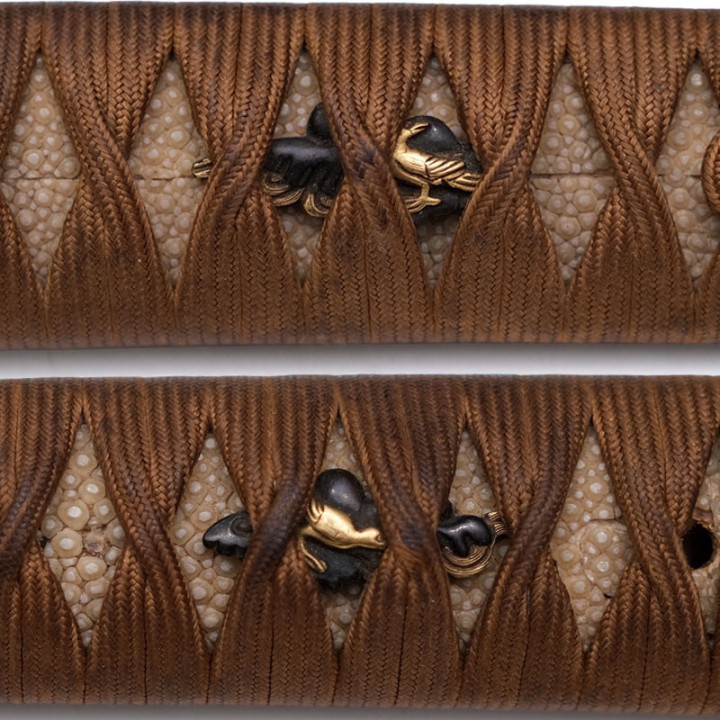
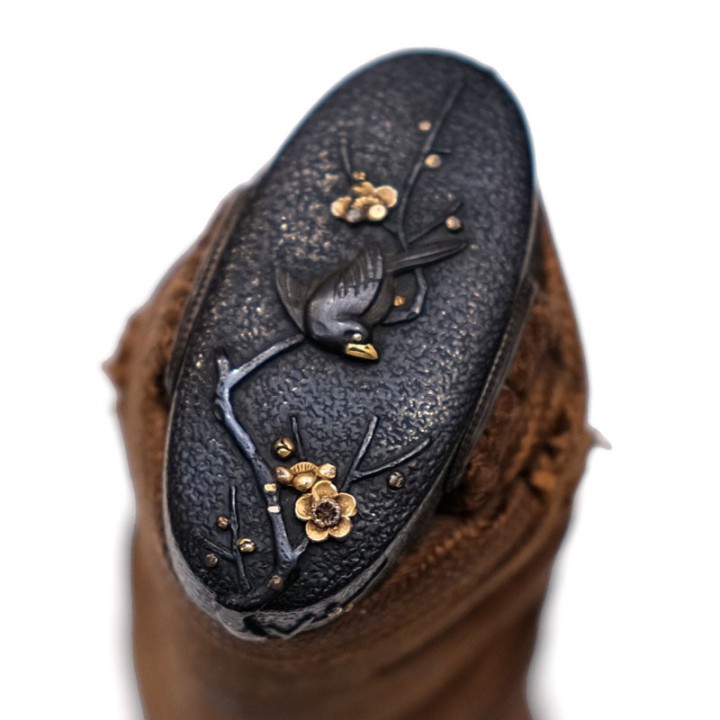
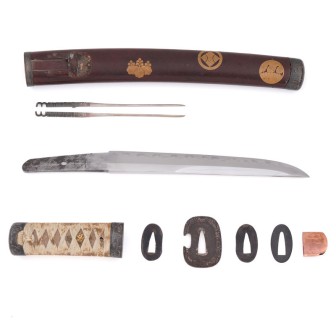
- Tsuka: Length 14.2cm, Weight 76g, Brown silk Tsumami Maki Braiding, high quality whole white Same, Menuki in Shakudo with Chidori (water hen) motifs, Fuchi Kashira signed by Harutoshi 春利 in Shakudo with passerine patterns on flowering plum tree branches, on a grainy Ishime-type background.
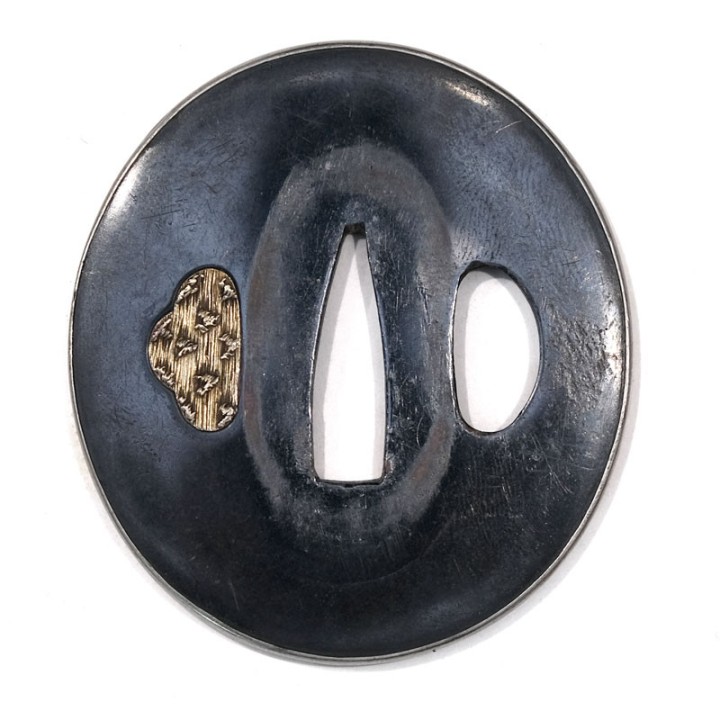
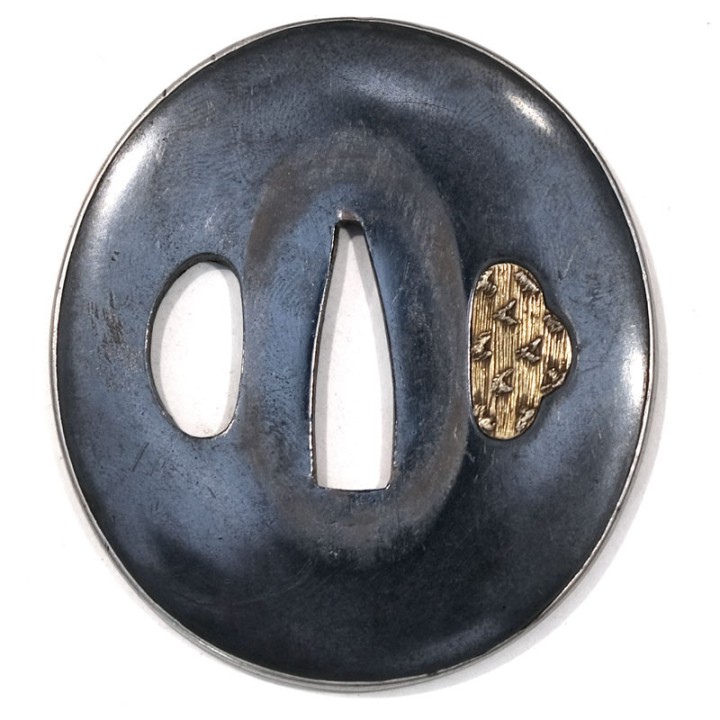
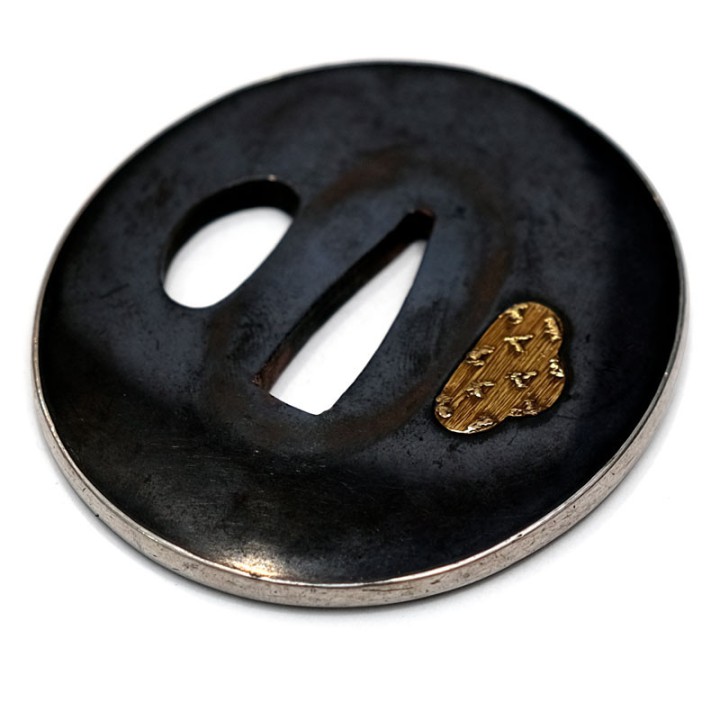
- Tsuba: Dimensions 6.5x5.88x0.45cm, weight 95g, oval shape Naga Maru Gata, Tsuba in Shakudo with silver hooping, Kogai Hitsu obturated by Hitsu Ume in gold.
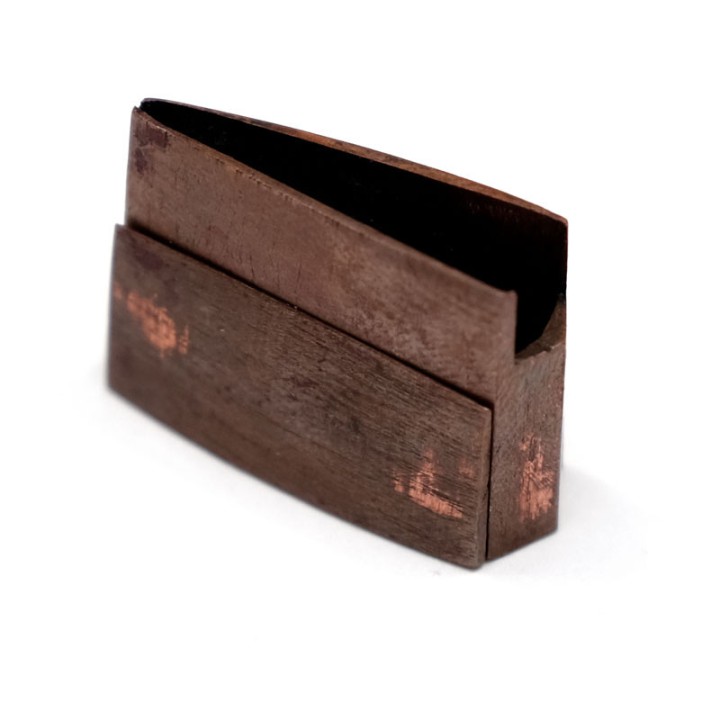
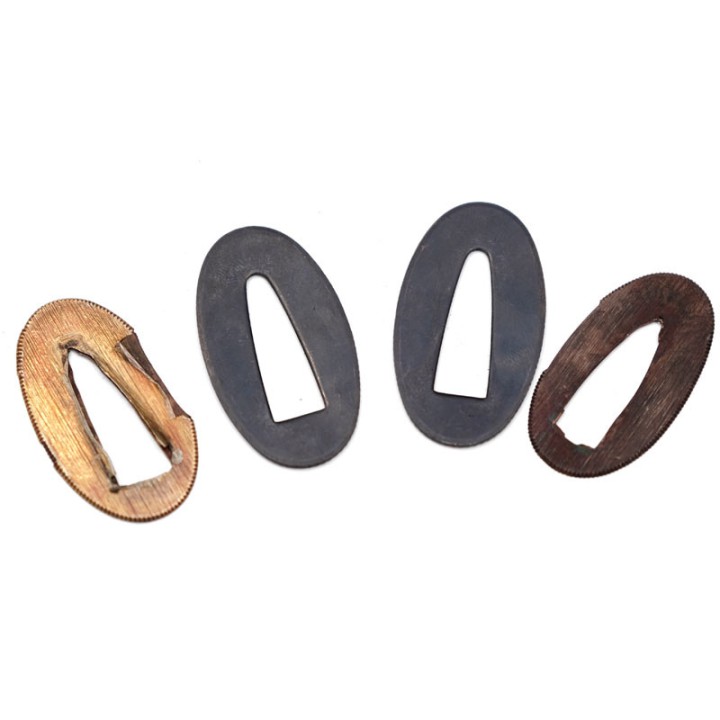
- Habaki: : Weight 11g, in copper, in two parts.
- Seppa: : Total weight 16g (4 Seppa), 2 Seppa in black patinated copper, 1 Seppa in copper, 1 Seppa in copper covered with a gold leaf. |
Study
&
Team Review |
The blacksmith lineage Nobukuni 信国 is native to Kyoto and from the Yamashiro forge tradition through affiliation with the blacksmith Ryokai 了戒, son of Rai Kunitoshi 来国俊.
It is considered that there were 2 branches of the Nobukuni lineage, the Yamashiro branch originally from Kyoto, and the Chikushi branch which settled in the province of Chikuzenduring the Muromachi era.
The works of the Yamashiro branch were heavily influenced by the tradition of Soshu. The branch of Chikuzen was, for its part, reverted to a more traditional ancient Yamashiro style.
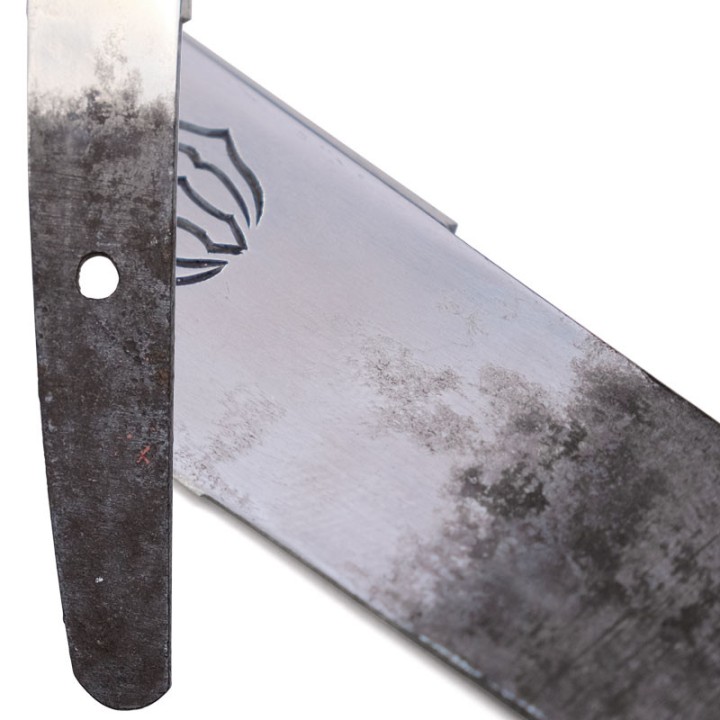
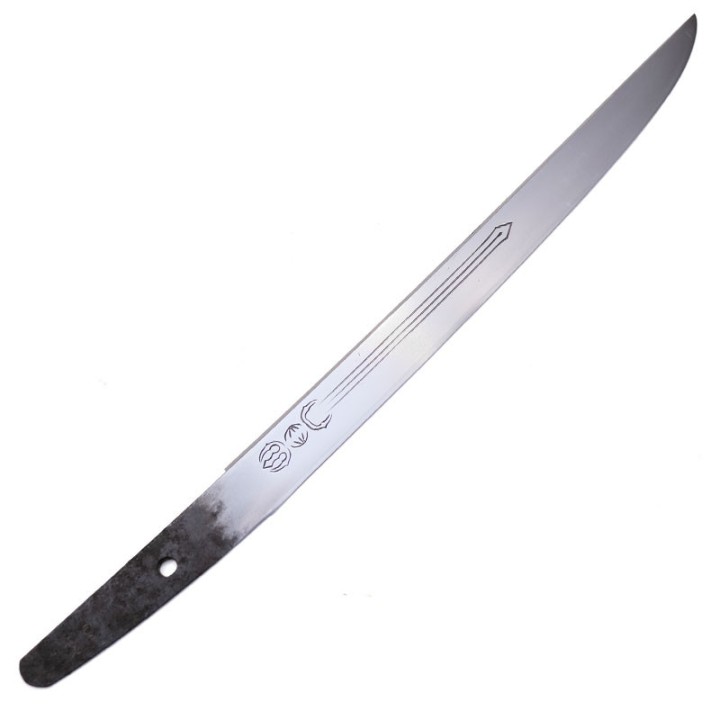
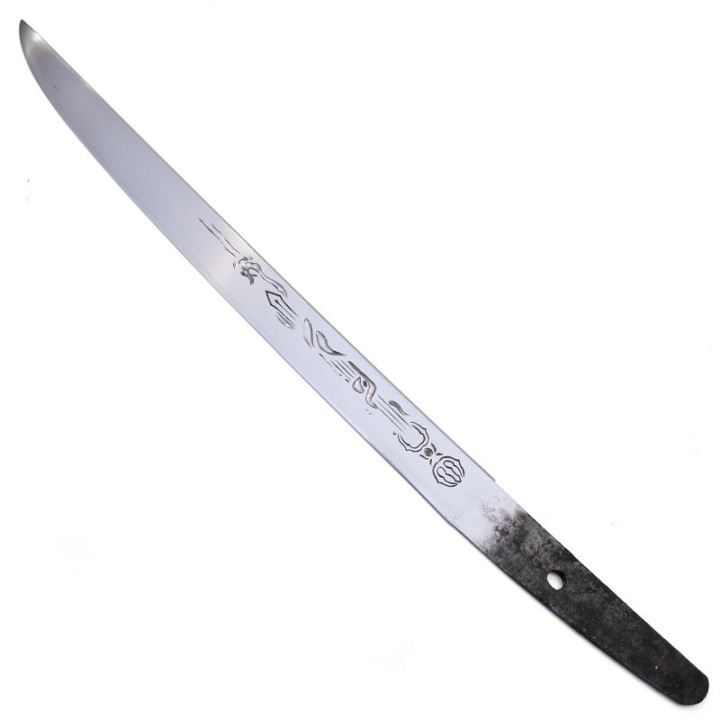
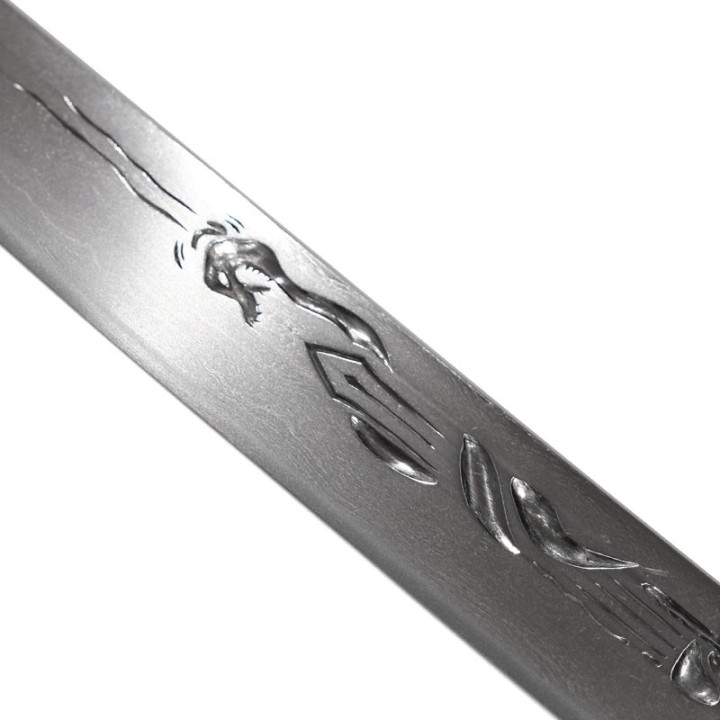
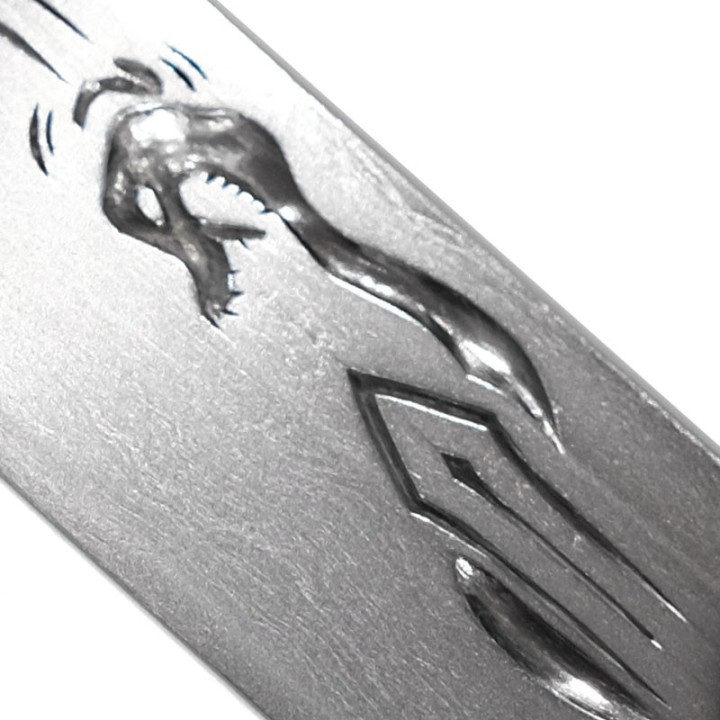
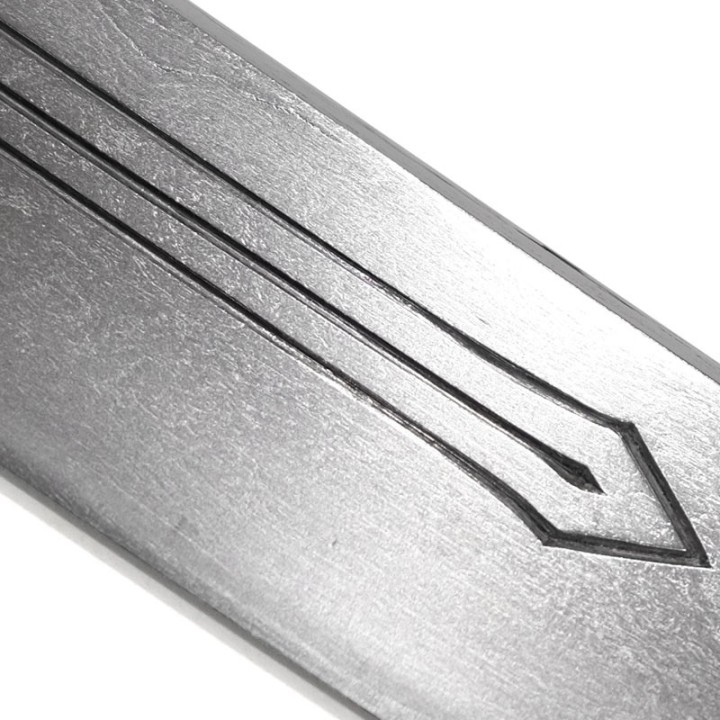
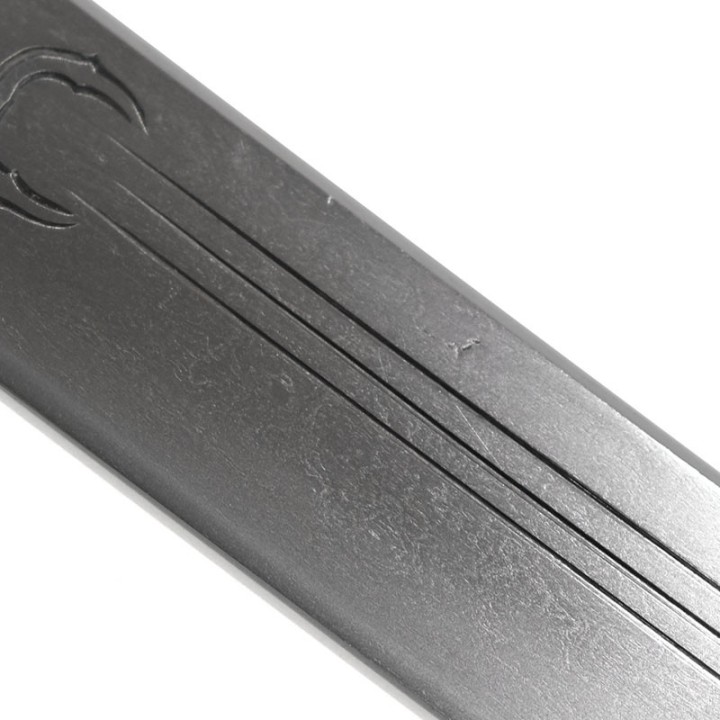
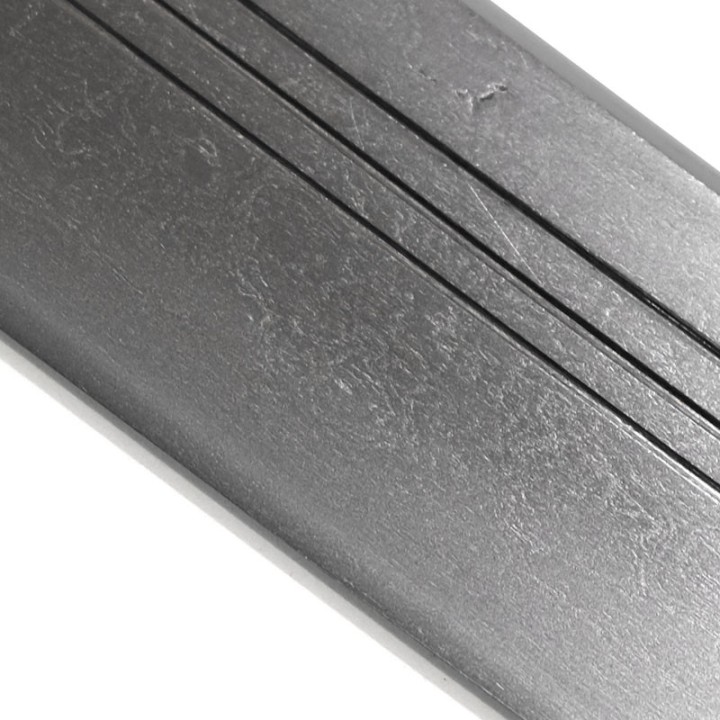
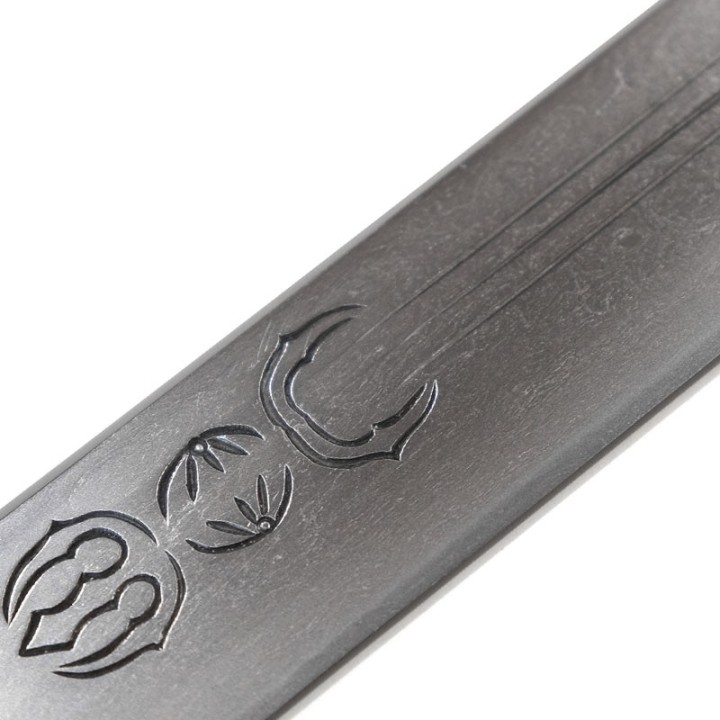
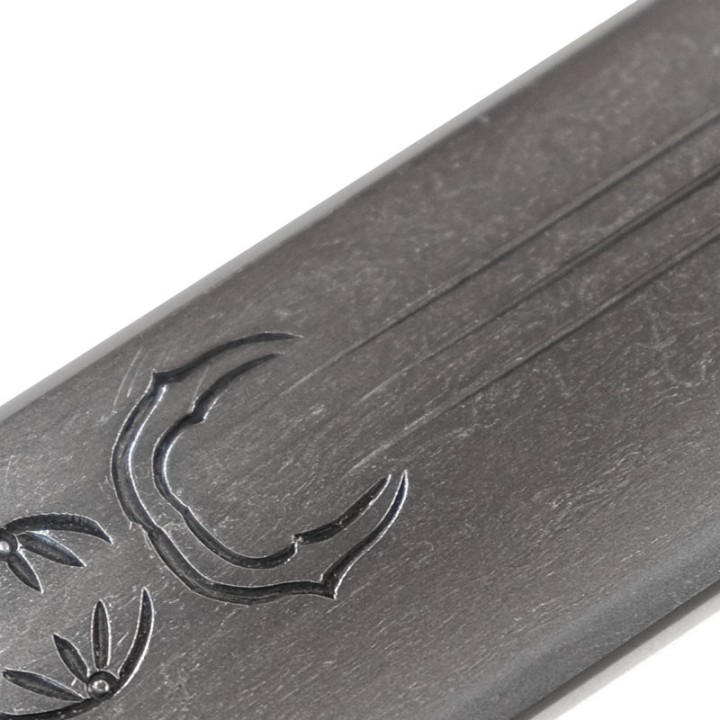
They were also known for their engraving skills, and their blades often featured Horimono, as on the blade presented.
The 1st generation Nobukuni began at the beginning of the 14th century. He was probably the son of Ryōkai Hisanobu (了戒久信), son of Ryokai, and seems to have been 1 of 3 students of Soshu Sadamune (相州貞宗).
Strongly influenced in his productions by the tradition of Soshu, he is sometimes classified in this tradition. He had a long life and lived from the beginning of the 14th century until the Oei era (1394-1428).
These early works were in the style of Ryokai and Yamashiro Den, much like the tanto presented. It was around 1360 that we see a change in his works, with characteristics typical of the Soshu den and more activeand broad soaks based on Nie.
The 2nd generation forged from the 2nd half of the 14th century, and the 3rd generation began during the Oei era, when the 1st generation died. The first 2 generations really had a style very marked by Soshu and stand out particularly from the following generations.
Following a main theory, the 3rd generation was represented by the 3 sons, Gyobu No jo, Saemon No Jo, and Shikibu No Jo. They forged from the end of the 14th century, during the Oei era (1394-1428). The school had already developed well, and it is from that moment that we speak of "Oei Nobukuni" generations.
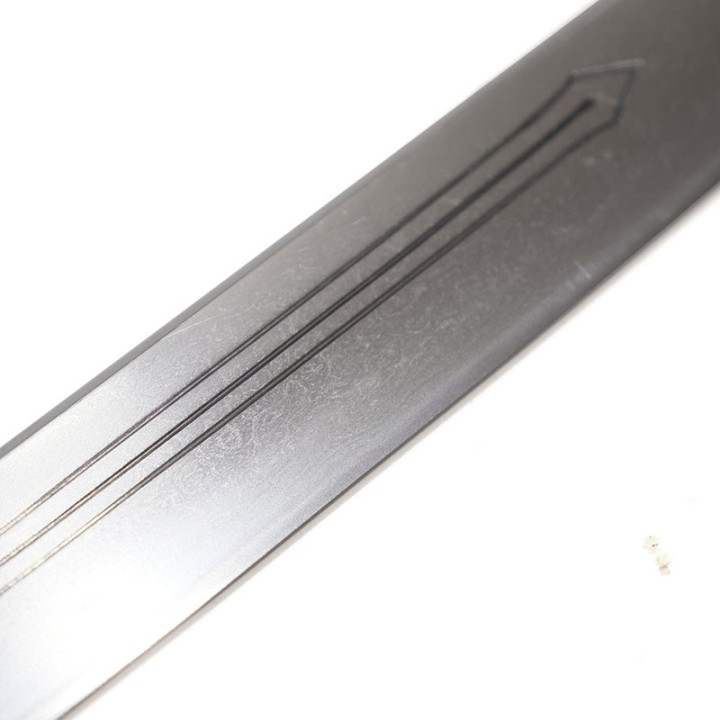
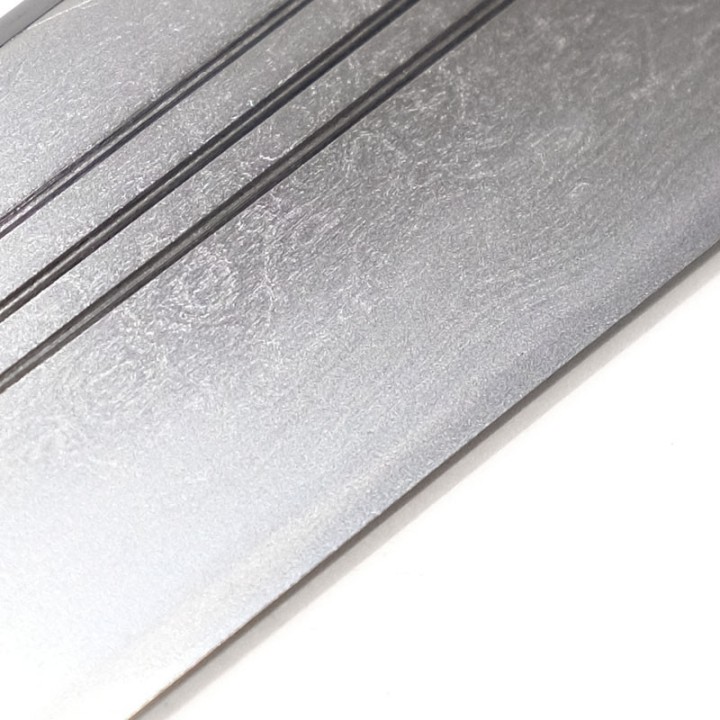
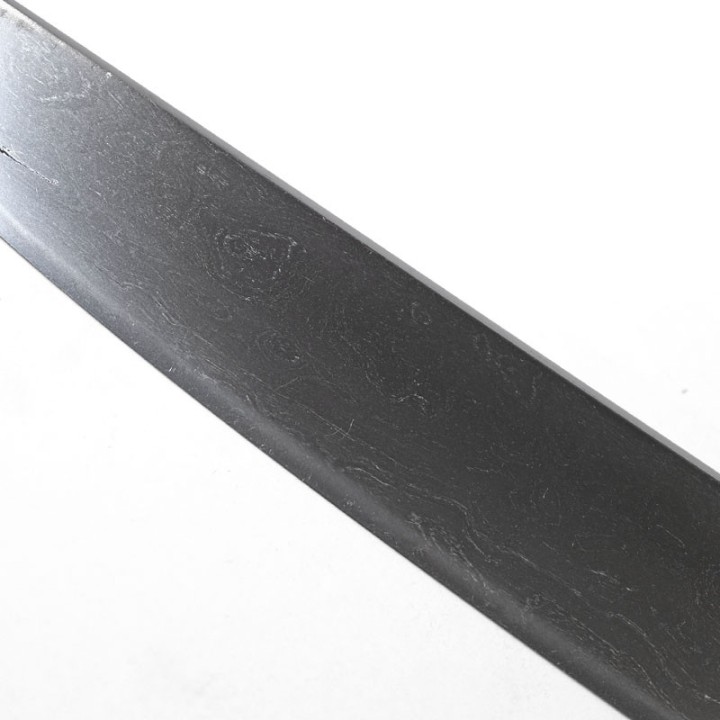
From these generations, we see developing traits of Bizen in their works, with Hamon Gunome, Yahazu, but still charged with Nie and with an hada composed of Itame sometimes mixed with Mokume and Masame, which differs from the fabrications «Oei Bizen».
Arrived then, from 1467 to 1477, the Onin War, a civil war that began in Kyoto. In 1467, the Yaman and Hosokawa clans clashed there and the city of Kyoto found itself partially in ruins. Those who could flee the city then, the famous Kyoto Exodus.
It was the same with forging schools, such as the Ryokai school (Tsukushi Ryokai), the Rai school (Enju), and the 4thgeneration of the Nobukuni school, Nobukuni Yoshihisa 信国吉久, who forged in the province of Buzen to the north east of Kyushu for the Ajimu family and later gave the school Chikushi Nobukuni from the beginning of the Edo era.
The late generations of Nobukuni, the Chikushi Nobukuni, were under the patronage of the Kuroda clan, in the domain of Chikuzen. This clan was originally from the province of Harima, northwest of Osaka, during the 14th century. During the Battle of Sekigahara in 1600, Kuroda Yoshitaka allied himself with Tokugawa Ieyasu, who won this battle. The Kuroda clan was then rewarded and obtained the domain of Fukuoka in the province of Chikuzen, north of Kyushu.
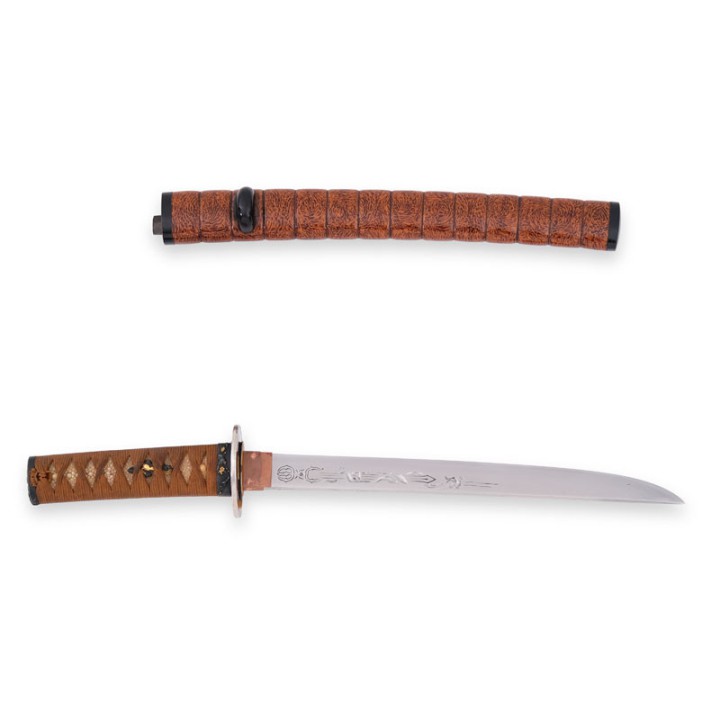
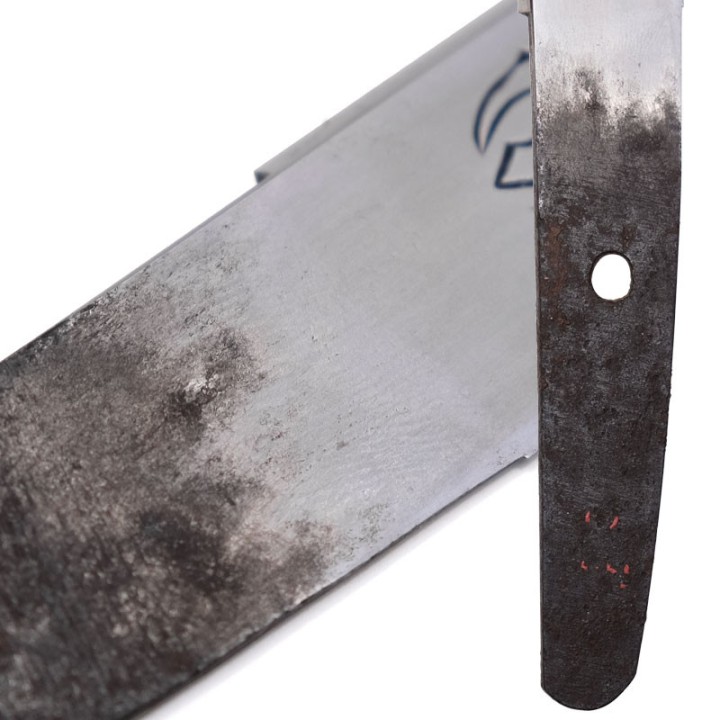
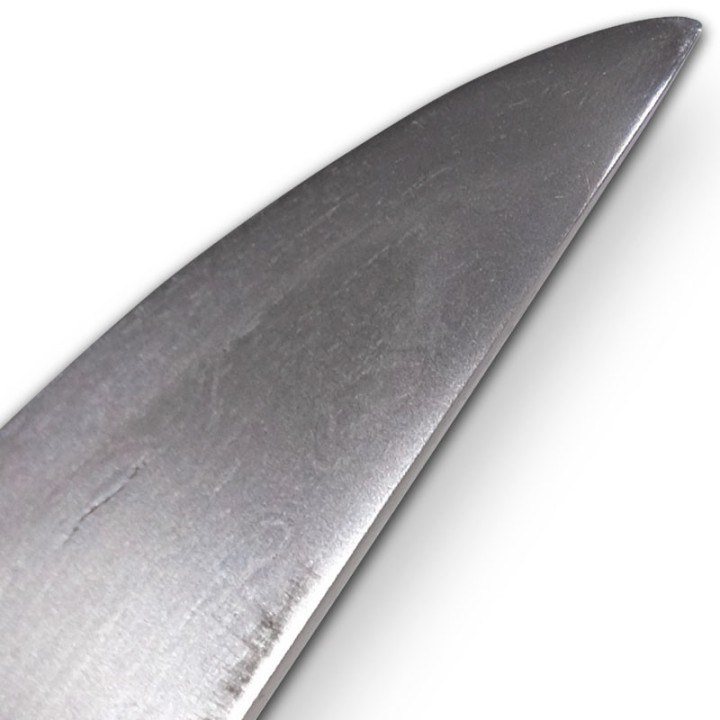
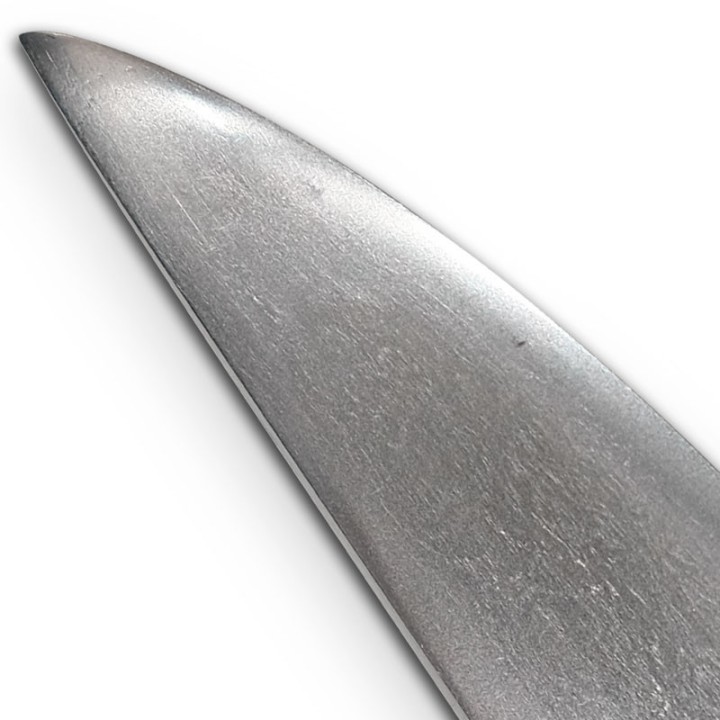
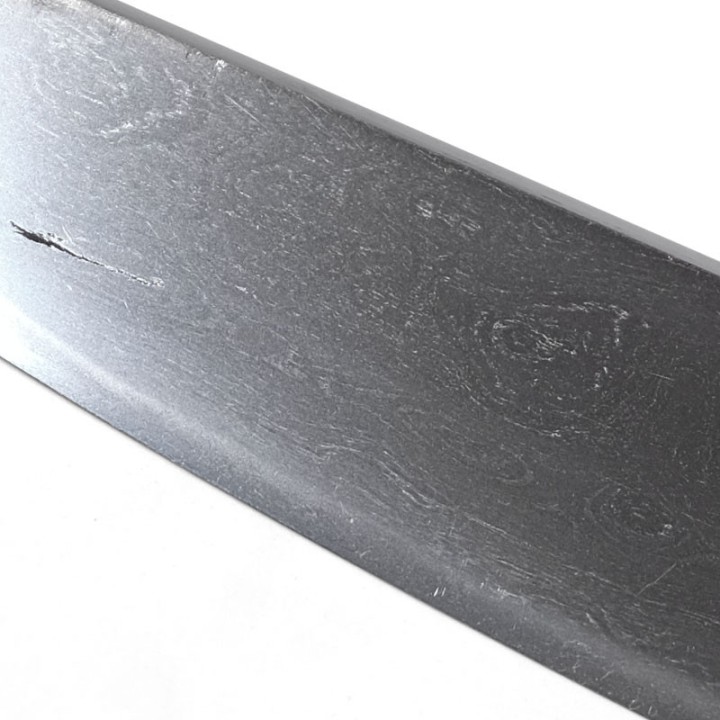
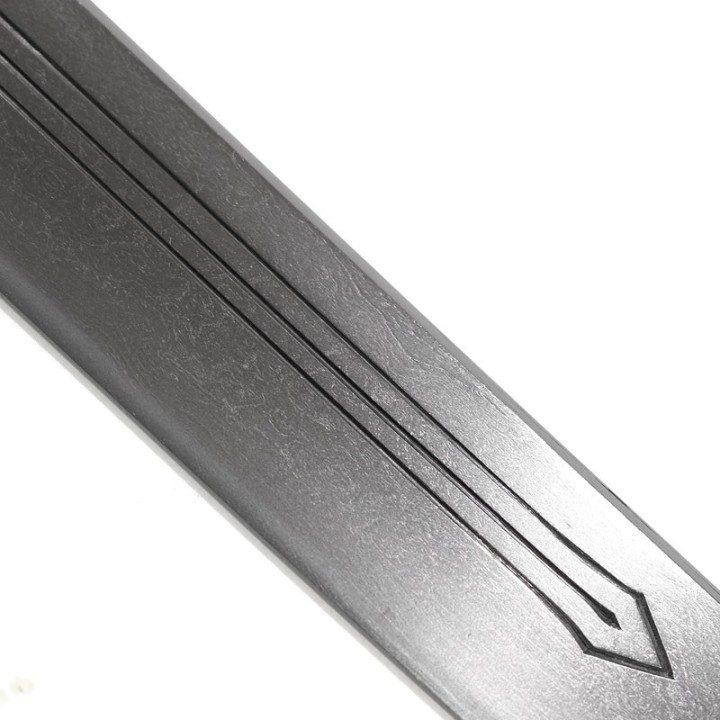
The tanto presented here, by its sugata (form/proportion) typified by the Muromachi period, its hoso suguha hamon and mixed hada typified by Yamashiro, and its Horimono (engravings) typical of the Nobukuni school, is a realization of the Chikushi Nobukuni branch of the Muromachi period (1336 - 1573).
|