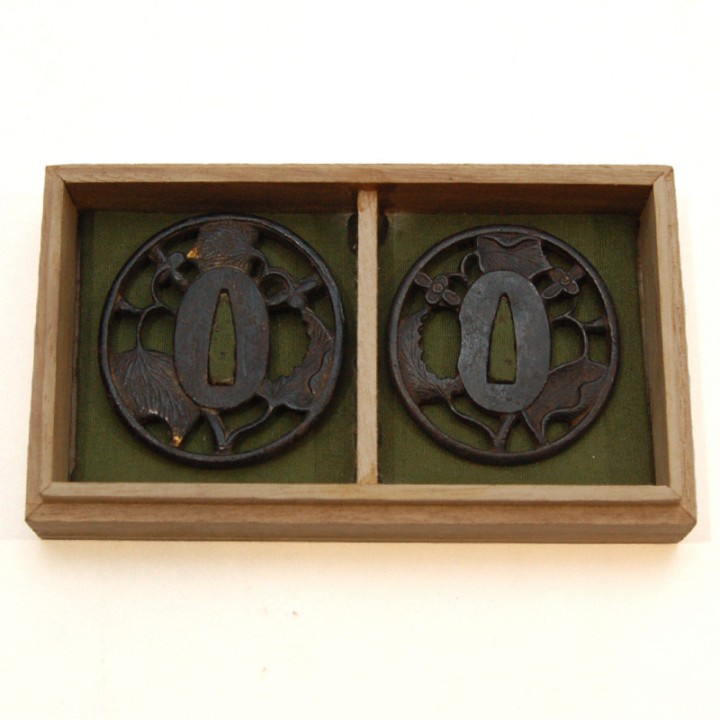
Tsuba Daisho Sukashi Maruni-Mitsubaaoi 三葉 葵 - Sold

Price €0.00 tax excl.

Price €0.00 tax incl.
Product availability: Out of stock

Notify me when available

Interested in this product? Drop us an email and we will let you know when it's available for order.

All details

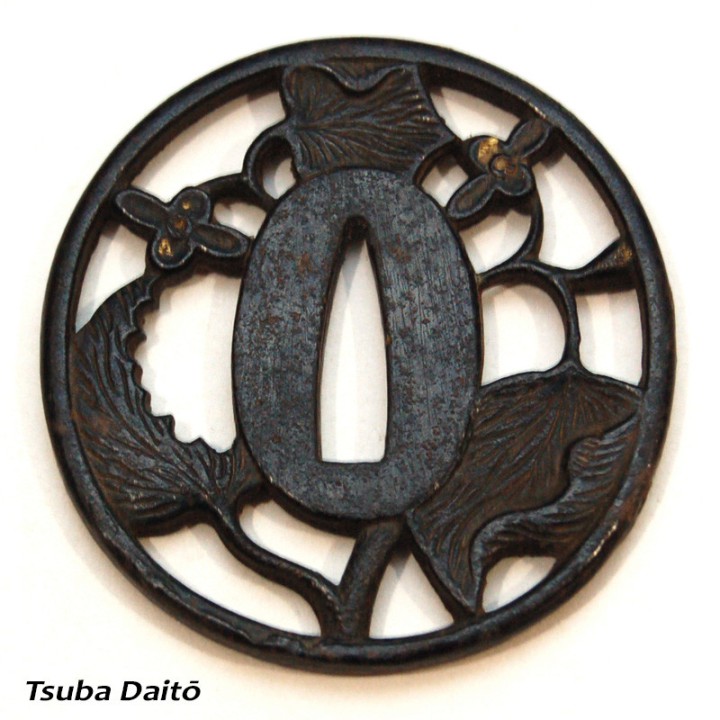
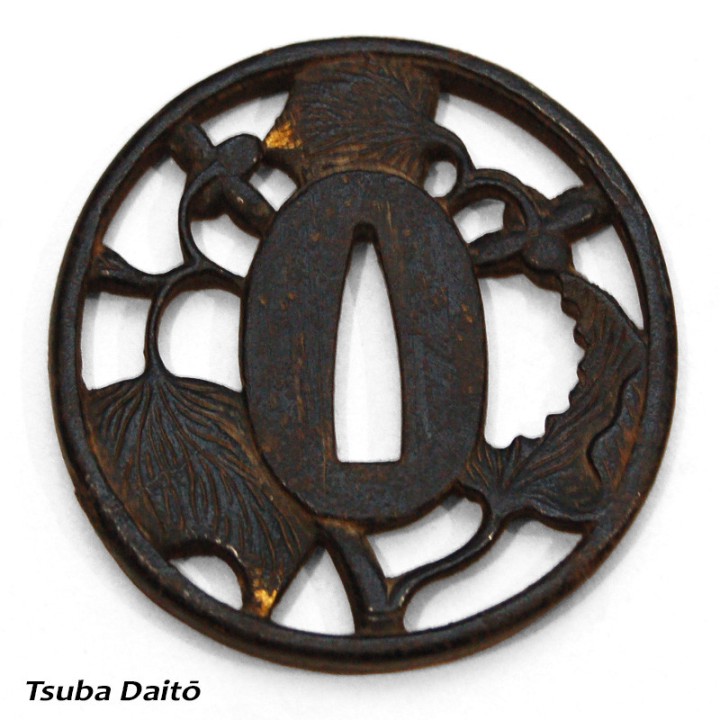
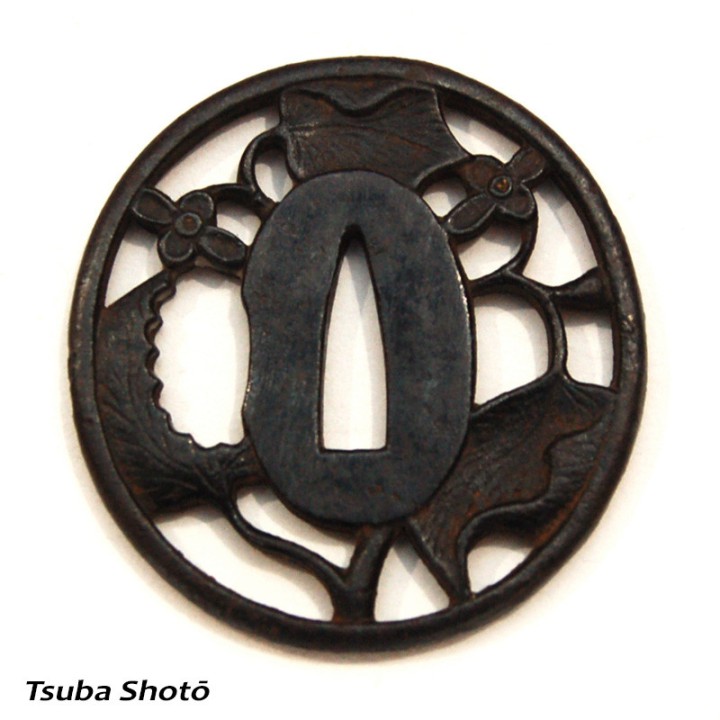
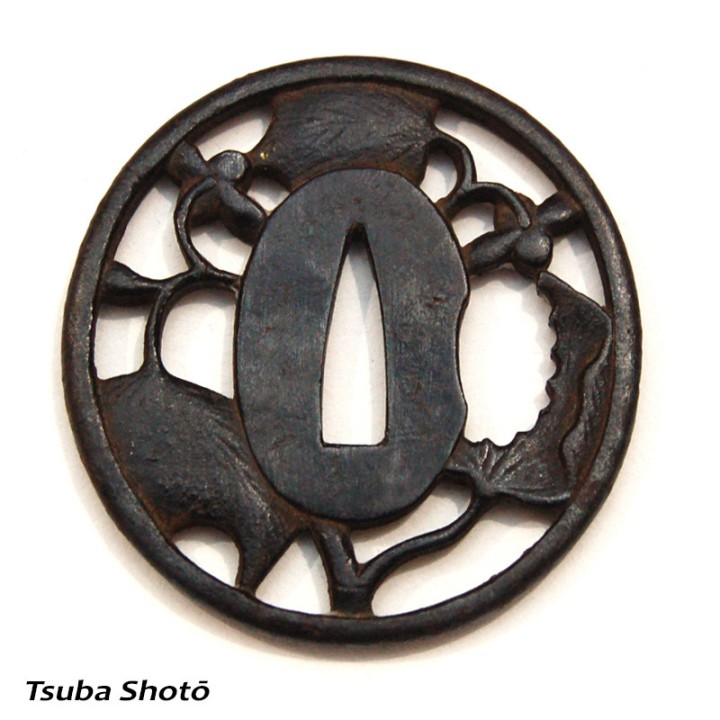
Tsuba Daisho Sukashi Maruni-Mitsubaaoi 三葉葵

Mumei (without signature - probably 六代高橋 Rokudai Takahashi - 6th Takahashi Generation)-
Echizen Kinai School - mid Edo


Tsuba DaitōTsuba Shotō
External dimensions 6 cm x 5.52 cm 5.68 cm x 5.38 cm
Nakago - Ana Dimensions 0.58 cm x 2.2 cm x 0.22 cm 0.58 cm x 2 cm x 0.22 cm
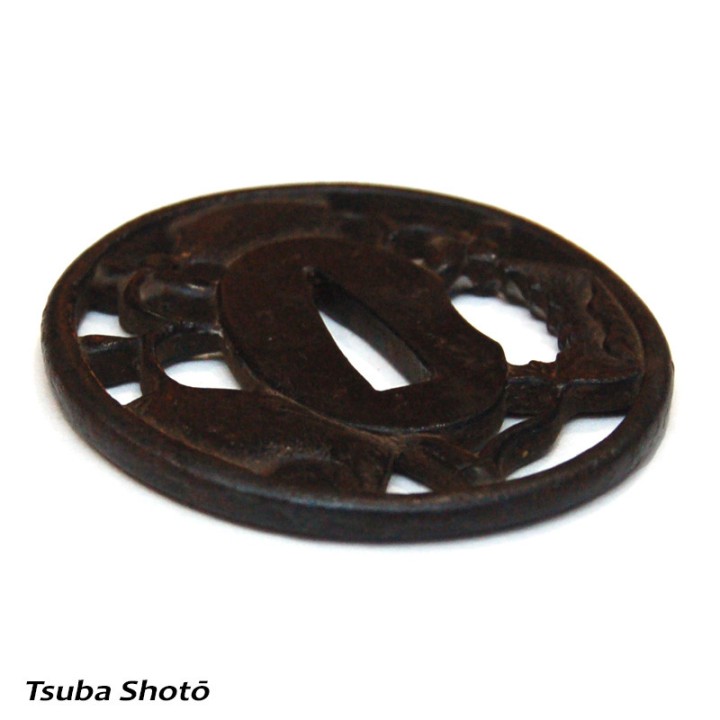
Thickness 0.42 cm 0.41 cm
Weight 50 g 45 g
Description Description:
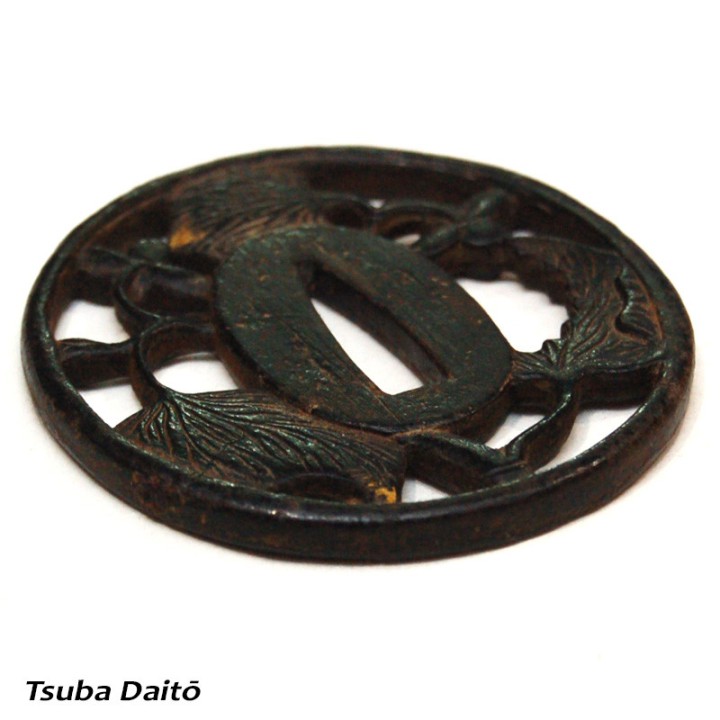
Tsuba set for Wakizashi in Iron, Maru-Gata shape (round), in Niku Bori Sukashi Bori (partial openwork), having for decoration the Maruni Mitsubaaoi (circle surrounding the 3 leaves of Aoi (Ginger asarum), symbol of Tokugawa). Partial inlays remaining in gold with Hira Zogan technique.

Special Features:
Tokugawa (Matsudaira) Clan Mon (Emblem), Aoi Mitsuba (三葉葵) or “Triple Hollyhock”. Often associated and translated as «hollyhock rose pattern», this Mon actually symbolizes Asarum ginger leaves.
The full name «Mitsu Ba Aoi» consists of three parts, Mitsu meaning 3, Ba meaning leaf and Aoi, ginger.
The symbolism of the three leaves is also related to the «Gosanke Tokugawa», the three houses of the Tokugawa. These are the three branches of the Tokugawa clan, the three sons of Ieyasu Tokugawa, Yoshinao (Owari Province), Yorinobu (Kii Province) and Yorifusa (Mito Province).
This Mon has become easily recognizable, a symbol not only of the clan, but of all Tokugawa shogunate.
This Mon is usually used to suggest the moment of the Edo period history. During the Bakumatsu period, it was used to identify characters loyal to the shogunate, in opposition to my chrysanthemum motif is symbol of imperial family and loyalists.

4 other products in the same category

Viewed products

Loading...